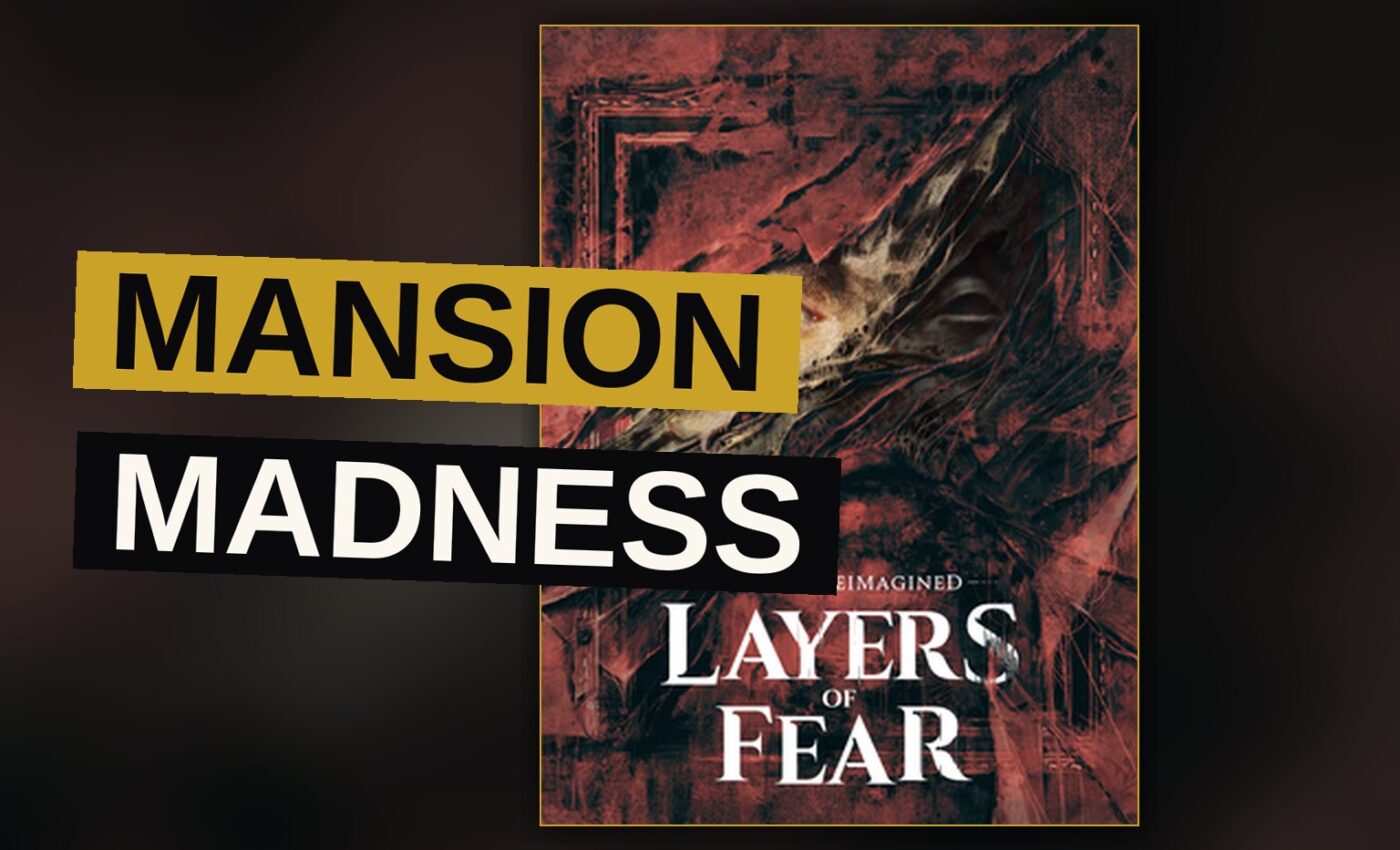
Layers of Fear came out in 2016 with a promise: a haunted house that rearranges itself every time you look away. Bloober Team built that house, and for long stretches it works. You play a painter who returns to his Victorian mansion after World War I to finish the one painting that will redeem him. The house does not want him to finish. Halls loop. Doors open onto the same room you just left. The camera itself is the weapon — turn your head and the geometry resets.
That is the whole trick, and it is a good one.
Trailer, via IGDBcom.
The Painter’s Victorian Mansion
The setup is thin on purpose. The painter is unnamed in the source material, described only as troubled and insane, and the game keeps him that way. You walk the halls in first person, single player, hunting the materials for his magnum opus. Letters, objects and flashbacks surface as you go. Piece by piece they assemble the tragedy that took his wife and family and broke his mind.
Layers of Fear wears its influences openly. The game says it draws on masterpiece paintings from past centuries and on nineteenth-century architecture and decor. You can see the debt in the frames: heavy drapes, gilt, long corridors that look composed rather than built. The shifting house is the payoff. Each move of the camera can change your surroundings, and the game leans on that until the mansion feels less like a place than a symptom.
The genre label is accurate but incomplete. Layers of Fear is filed as puzzle, adventure and indie, with horror and mystery as its themes. It plays closer to a haunted walk than a puzzle box. You solve small things, you open small doors, but the real work is looking.
A House That Warps and Rearranges
Where Layers of Fear earns its reputation is in the way it withholds. The story arrives in fragments — letters, objects, flashbacks — and the house dredges up the painter’s past without ever explaining it outright. The tragedy that befell his wife and family is the spine of the thing, and the game trusts you to assemble it.
That trust is also the game’s weakness. The shifting-house gimmick is genuinely unsettling the first dozen times. By the twentieth, you learn the rhythm. You learn that the corridor will fold, that the room will repeat, that the scare is coming. A horror game lives on surprise, and Layers of Fear spends its surprises early.
The pace is deliberate to a fault. Long stretches pass with nothing but footsteps and wallpaper. That is the point — the game wants you on edge for the remainder of the run — but edge without escalation goes numb. The game is at its best when the house does something you did not ask for, and at its weakest when it makes you walk.
Bloober Team’s First-Person Horror
The technical reach is wide. Layers of Fear shipped on PlayStation 4, Linux, PC, iOS, Mac and Xbox One, developed by Bloober Team and EXNOA LLC and published by Bloober Team. That is an unusually broad spread for a 2016 indie horror game, and it helped the title find an audience beyond the usual PC crowd.
- Platforms: PlayStation 4, Linux, PC (Microsoft Windows), iOS, Mac, Xbox One
- Genres: Puzzle, Adventure, Indie
- Themes: Horror, Mystery
- Modes: Single player
- Perspective: First person
- Developer: Bloober Team, EXNOA LLC
- Publisher: Bloober Team
The first-person camera is the right call. A third-person view would have killed the trick outright, because you need to be the one turning your head. The game understands that the player’s own movement is the mechanism, not the monster.
What the Remake Changed
Bloober Team did not leave the 2016 game alone. In June 2023 the studio released Layers of Fear, a remake that folds the original and its 2019 sequel Layers of Fear 2 into one package with new content, for macOS, PlayStation 5, Windows and Xbox Series X/S. It came to the Nintendo Switch 2 on December 19, 2025, and it drew generally favourable reviews.
The remake restructures the story around a new character, the Writer, who ties the earlier games together. Players move through the Painter’s story first, then the Actor’s story from Layers of Fear 2. Three DLC chapters sit inside the Writer’s path: Inheritance, about the Painter’s daughter; The Final Note, about the Painter’s wife; and The Final Prologue, about the Director from the Actor’s story.
That is a lot of scaffolding around a game that was originally about one man and one house. The 2016 Layers of Fear did not need a Writer to explain it. It needed the painter, the mansion, and the courage to leave the rest unsaid.
The 7.6 Verdict
Layers of Fear earns a 7.6 of 10, matching the published critical aggregate across 17 outlets. That number is fair. The game is a genuine achievement in atmosphere and a partial one everywhere else. The shifting house is the best idea Bloober Team has had, and the studio has spent a decade returning to it — first with the 2019 sequel, then with the 2023 remake that swallowed both.
What holds the 2016 game back is not ambition. It is restraint in the wrong places. The painter’s madness is the subject, but the game keeps him at arm’s length, letting letters do the work that a character should. The wife and family exist as fragments. The tragedy lands as information rather than as grief.
Still, the house. The house is worth the ticket. Few horror games of that era committed so hard to the idea that space itself is the antagonist, and fewer executed it with this much craft. Layers of Fear is not a masterpiece. It is a very good first draft of one, and the studio knew it — which is why it went back and painted over it twice.
KEY FACTS
– Title: Layers of Fear
– Release year: 2016
– Developer: Bloober Team, EXNOA LLC
– Publisher: Bloober Team
– Platforms: PlayStation 4, Linux, PC (Microsoft Windows), iOS, Mac, Xbox One
– Genres: Puzzle, Adventure, Indie
– Themes: Horror, Mystery
– Modes: Single player
– Perspective: First person
– Score: 7.6 of 10 (IGDB critic aggregate, 17 outlets)
– Remake release: June 2023 (macOS, PlayStation 5, Windows, Xbox Series X/S)
– Switch 2 release: December 19, 2025
Get the Notebook.
The day's best stories and every fresh verdict, in plain English, in your inbox by seven. One email a day, no more.