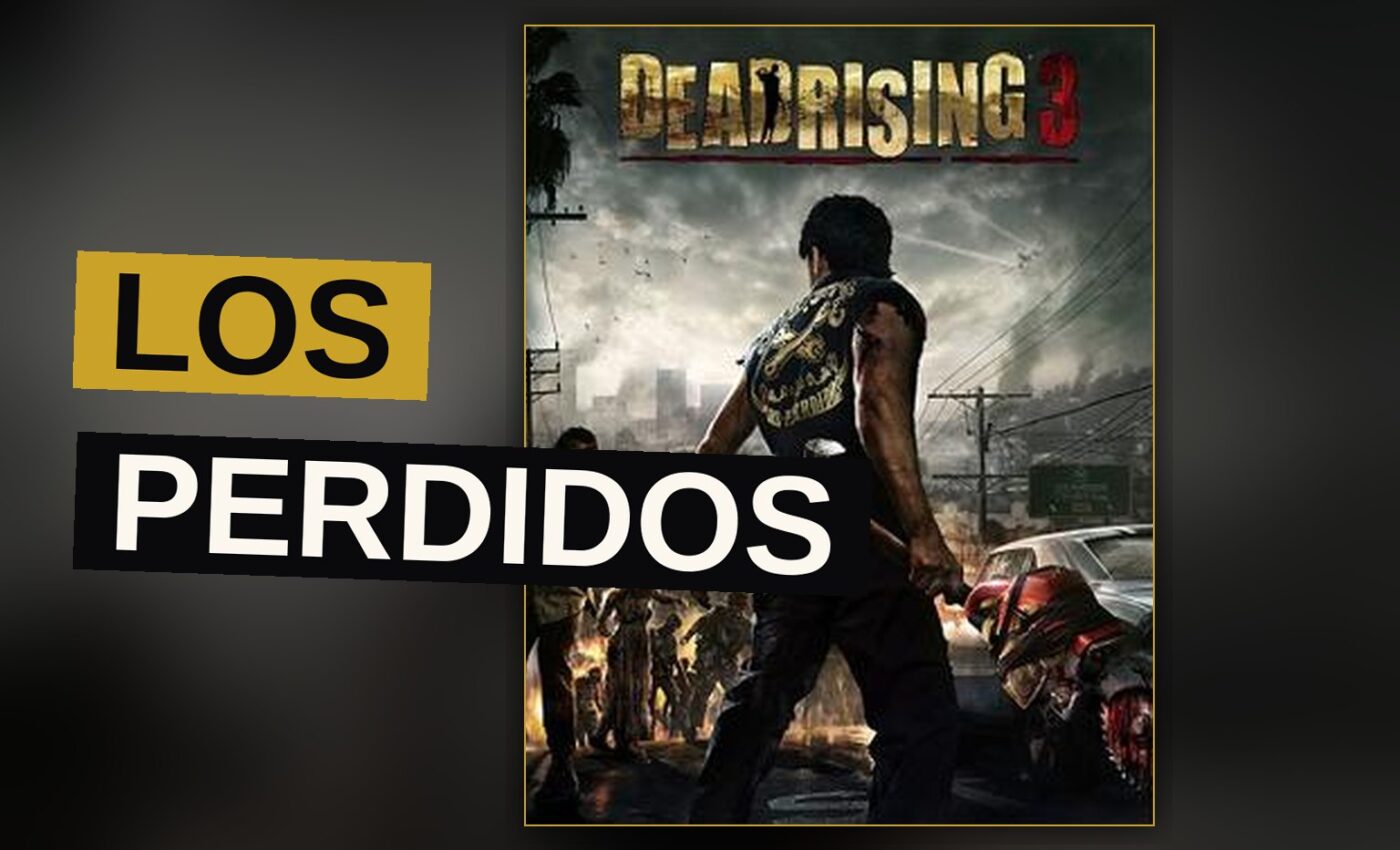
Dead Rising 3 arrived on November 22, 2013 as a launch title for the Xbox One, a console that needed a reason to exist. It gave players one: a Los Perdidos, California, packed with more zombies than the two previous games could render combined. Capcom Vancouver built a bigger sandbox, moved crafting out of the workbench, and handed the whole thing to a new protagonist, Nick Ramos. The result is the best pure zombie-clearing toy in the series and the weakest story it has told.
Trailer, via XBOX.
Nick Ramos and the Six-Day Bomb
The setup is blunt. Dead Rising 3 takes place in 2021, ten years after the Fortune City outbreak in Dead Rising 2 and fifteen years after Willamette. Nick is a young mechanic with a strange tattoo and a mysterious past, and he has six days before the government bombs Los Perdidos to stop the outbreak. The game begins three days after the initial outbreak, so the clock is already running when the player takes control.
The plot moves through a diner, an auto shop, a military checkpoint, a crematorium and an old museum. Nick’s boss Rhonda survives the diner attack. Annie, Dick, Peter and Peter’s mother are there too, and the zombies kill Peter and his mother before the group escapes. Annie runs back to her own people. A rogue biker gang ambushes the survivors at the checkpoint. Nick’s old friend Diego, now a soldier, tells him about a plane at the museum that can be fixed and flown out.
Then a zombie bites Nick. He goes looking for Zombrex at the crematorium and meets Gary, who is hunting a girl on his boss’s orders. No Zombrex turns up. What turns up instead is a healed wound, which reveals that Nick is immune to turning. Gary figures out the girl is Annie, and Nick agrees to help retrieve her in exchange for fuel for the plane.
RollerHawg and the Open City
The mechanics are where Dead Rising 3 earns its keep. The open world is larger than the maps of Dead Rising and Dead Rising 2 combined, and the engine can render three times as many zombies on-screen at once as its predecessor. Players save anywhere, not just in toilets, and the game has no load times. Nightmare Mode restores the traditional time limit and save rules for anyone who wants the older pressure back.
The crafting system is the real change. Combo weapons no longer need a workbench, so Nick builds them on the fly. Combo vehicles are new, and the example the game gives is the RollerHawg, a motorcycle fused with a steamroller. Each combo vehicle has two seats and a secondary blue attack built for co-operative play. Blueprints for new combo weapons and vehicles are scattered around Los Perdidos to find and unlock. Driving is part of exploration, not a menu.
The Kinect and Xbox SmartGlass features are optional and strange. Kinect gives zombies a level of situational awareness, so loud noises from the player’s room can trigger a rush. Shouting at zombies through the microphone distracts them. The sensitivity is tuned to what the developers called “a threshold that makes sense,” so drawing a crowd feels like a decision rather than an accident.
A Bigger Sandbox, a Smaller Story
The criticism that stuck to Dead Rising 3 in 2013 was not about the size of the crowd. It was about everything around it. The art direction lost the neon casino glare of Fortune City and went grey and military. The characters are thin — Rhonda, Annie, Dick, Diego and Gary are errands with names attached, and Nick’s immunity reveal lands as a plot device rather than a turn. The technical side had problems at launch, and the changes to the core loop split the people who had spent years learning the old rules.
Those complaints are fair, and they still are. But the changes are also the reason the game holds up. Saving anywhere and cutting load times removes the friction that made the earlier games feel like paperwork. Crafting on the fly turns every street into a workshop. The RollerHawg is absurd, and it is supposed to be. Dead Rising 3 is at its best when it stops asking the player to care about Nick and lets them drive a steamroller through a crowd.
What the Launch Title Proves
Dead Rising 3 is a 7.6 of 10. That score is not a compromise between a great game and a bad one. It is what a game looks like when the systems are excellent and the writing is not. The open world, the combo vehicles, the on-the-fly crafting and the zombie density are all genuine advances on Dead Rising 2. The plot, the cast and the grey art direction are all steps back from it.
The franchise’s future is the part worth watching. Capcom Vancouver proved here that the sandbox could scale up without collapsing. What it did not prove is that the series could tell a story worth the six-day countdown it keeps setting. Dead Rising 3 is a great toy with a bad script, and the next game has to fix the second half of that sentence.
The Numbers Behind the Score
- Release date: November 22, 2013 (Xbox One); September 5, 2014 (Windows)
- Developer: Capcom Vancouver
- Publishers: Microsoft Studios; Capcom (Windows port)
- Platforms: Xbox One, PC (Microsoft Windows)
- Setting: Los Perdidos, California, in 2021
- Score: 7.6 of 10, the critic aggregate on IGDB across 16 outlets
Release Schedule
| Date | Platform | Publisher |
|---|---|---|
| November 22, 2013 | Xbox One | Microsoft Studios |
| September 5, 2014 | PC (Microsoft Windows) | Capcom |
Verdict: 7.6 of 10.
Get the Notebook.
The day's best stories and every fresh verdict, in plain English, in your inbox by seven. One email a day, no more.