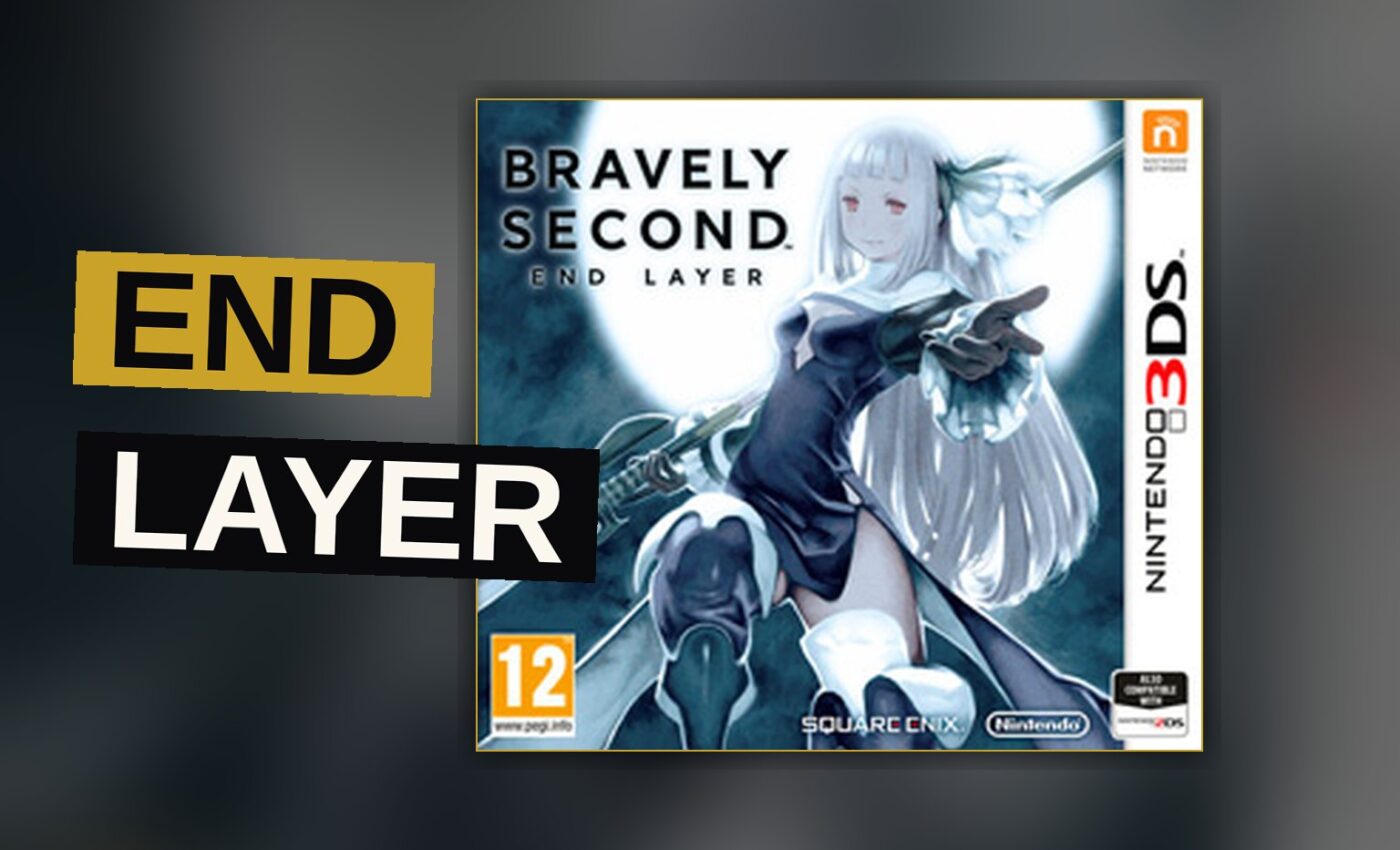
Bravely Second: End Layer arrived on the Nintendo 3DS in Japan on April 23, 2015, and in North America, Europe and Australia the following year. It is the direct sequel to Bravely Default, and it keeps almost everything that made the first game work. It also keeps almost everything that made the first game drag.
Square Enix published it in Japan; Nintendo handled the English release. Silicon Studio developed it. The pitch is simple: two and a half years after Bravely Default, Agnès Oblige has been elected Pope of the Crystal Orthodoxy, and a peace treaty ceremony in Gathelatio is interrupted when Kaiser Oblivion and his cryst-fairy companion Anne abduct her.
Trailer, via スクウェア・エニックス.
Yew Geneolgia and the Crystalguard
You play as Yew Geneolgia, leader of Agnès’ Crystalguard protectors. He wakes a week after the attack and sets out to rescue her with two fellow Crystalguard leaders, Janne Engarde and Nikolai Nikolanikov. Both turn out to be moles for the Glanz Empire. That betrayal lands early and it lands hard, which is the game’s smartest structural choice.
From there Yew assembles a party:
- Edea Lee, captain of the Eternian Ducal Guard and daughter of Grand Marshal Braev Lee
- Magnolia Arch, a Ba’al Buster from the moon and the sole survivor of an attack on her village
- Tiz Arrior, a former comrade of Agnès and Edea who has been comatose for two and a half years
Magnolia carries an hourglass capable of localized time manipulation. Tiz waking up is the emotional hinge the story keeps reaching for, and it mostly earns the reach.
Brave Points and the chain battle
The battle system returns intact. Characters build up Brave Points, or BP, which determine how many turns a character can take at once. On any turn a character can Default, or guard, and bank an extra BP for a burst later. It remains one of the better risk systems in turn-based role-playing, because the game punishes greed without ever feeling unfair about it.
New here is the chain-battle feature. Defeat a random encounter and you can keep fighting in succession for greater risk and greater reward. The payoff is real: up to three times the experience and money, plus Job Points for leveling each character’s Jobs. There are up to 30 Jobs, each tied to an asterisk usually held by another character in the world.
Sidequests have been revamped. You encounter two Eternian asterisk holders arguing about an ethical dilemma, and you resolve the conflict. The reward is the loser’s asterisk, which locks out the other one until much further progress. It is a genuinely interesting trade, though the game never quite makes the locked-out path feel like a loss worth mourning.
Rebuilding the moon
Bravely Default had players reconstruct Norende. Bravely Second swaps that for rebuilding Magnolia’s homeland on the moon. It is the same loop with a new coat of paint, and it is the clearest sign that this sequel is content to refine rather than reinvent.
The story runs on a hunt. The party pursues the Skyhold, the Empire’s floating fortress, across Luxendarc, guided by Agnès through a crystal shard she dropped when she was kidnapped and by a mysterious “man with a purple pen.” The Kaiser obtains a compass of space and time. The party learns about the Sword of the Brave, a cursed blade that took the right arm of Yew’s older half-brother Denys, who was disinherited and vanished soon after. At the Fire Temple in Eisenberg, after an encounter with the mysterious Kyubi, the group finds the Fire Crystal has been disturbed.
That is a lot of plot, and the game moves through it at a clip that sometimes outruns its own emotional beats.
What the sequel gets right
The returning cast is the strongest asset. Edea and Tiz were the best parts of Bravely Default, and pairing them with Yew and Magnolia gives the party a lived-in feel that a fresh roster would not have managed. Magnolia’s moon origin and her hourglass give the game its strangest, most memorable texture.
The chain-battle system is the best new mechanic. It turns trash encounters into a decision, and decisions are what the Brave Point system was always about. The asterisk sidequests add weight to a structure that used to be purely collectible.
Where Bravely Second stumbles
The game is inferior to its predecessor, and it is not close. Bravely Default felt like a correction to a genre that had gone soft. Bravely Second feels like a victory lap. The moon reconstruction is Norende with a different sky. The Jobs are more numerous but not more surprising. The pacing sags in the middle stretch, when the party is chasing the Skyhold and the plot is mostly logistics.
The betrayal of Janne and Nikolai is the sharpest thing in the script, and the game never finds a second moment to match it.
Release dates
| Region | Publisher | Release date |
|---|---|---|
| Japan | Square Enix | April 23, 2015 |
| North America | Nintendo | 2016 |
| Europe | Nintendo | 2016 |
| Australia | Nintendo | 2016 |
Bravely Second: End Layer is a good role-playing game and a lesser sequel. It has a strong cast, a battle system that still rewards nerve, and a chain-battle addition that belongs in the series going forward. It also has a reconstruction minigame that repeats the last game and a story that mistakes movement for momentum. If you played Bravely Default, you will enjoy this and you will remember less of it. If you did not, start there.
Get the Notebook.
The day's best stories and every fresh verdict, in plain English, in your inbox by seven. One email a day, no more.