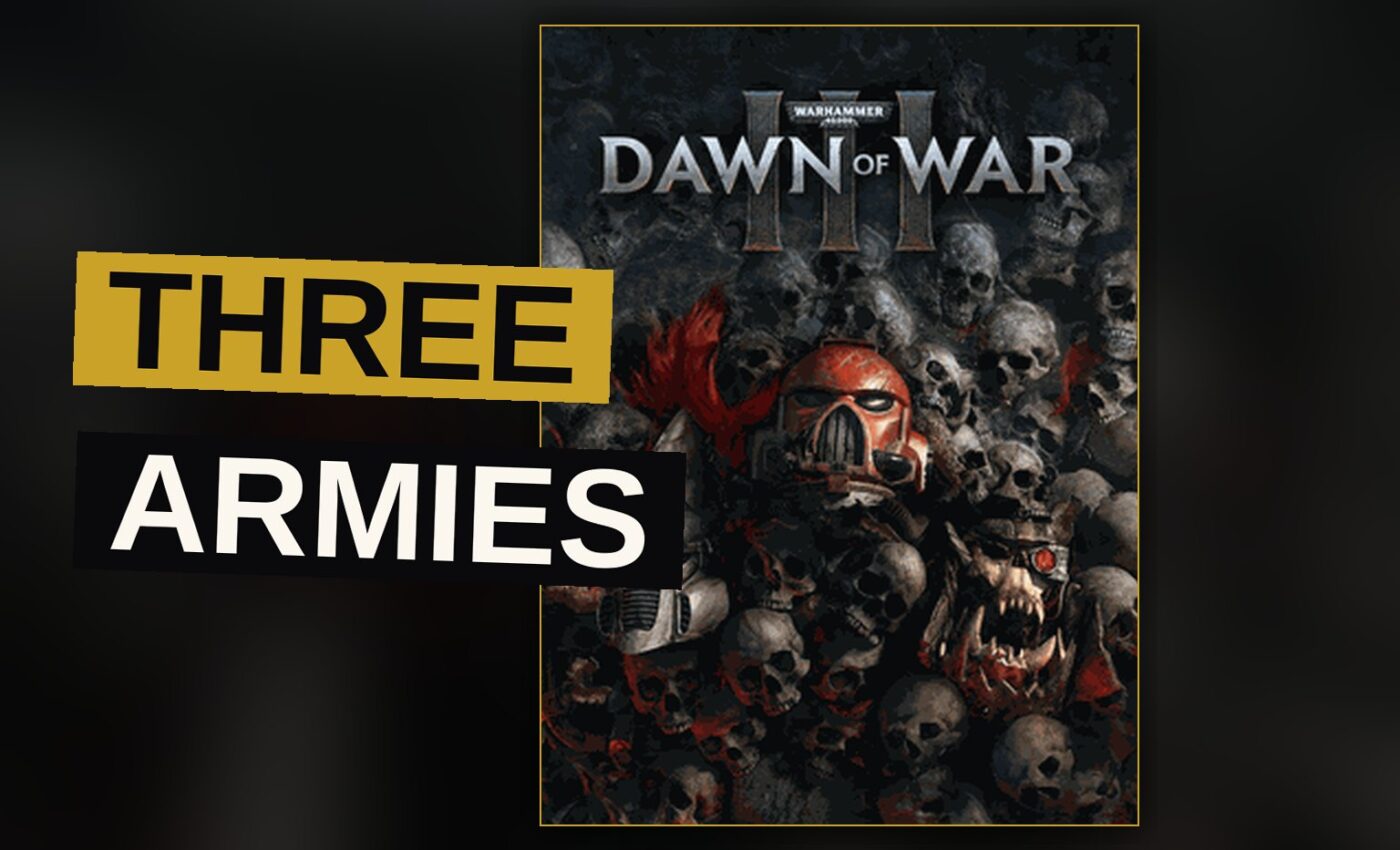
Warhammer 40,000: Dawn of War III puts three factions on the battlefield at once, and that ambition shows in both good ways and bad ones. The game lands on PC, Mac and Linux, and it asks players to fight across the galaxy as one of three armies: Space Marines, Orks and Necrons. It is a fast, loud game built for quick skirmishes rather than long campaigns, and that design choice shapes nearly everything about it.
Trailer, via IGDBcom.
Three Armies, One Battlefield
Each faction plays differently. The Space Marines rely on strong units and careful positioning. The Orks rush forward in wild, uncontrolled masses. The Necrons hit hard and then retreat to heal. That variety keeps early matches fresh, since switching armies changes the whole feel of a fight.
The campaign mode is short by comparison. It exists mostly to teach the controls and set up the story between the three forces. Most players will find themselves drawn to the multiplayer arena, where the game’s best ideas come together.
Command Points and the Economy
Dawn of War III introduces a new resource called Command Points. Players earn them by holding territory, and spend them to build new structures or call in reinforcements. This economy adds depth to each match, forcing players to balance expansion with defense. It is a clever system, though it can also slow down matches when players get stuck managing resources instead of fighting.
The game’s emphasis on command points means the focus shifts away from raw aggression toward strategic thinking. That shift will please some players and frustrate others.
Multiplayer and Match Length
Matches tend to move quickly. Battles resolve in minutes rather than hours, which suits the platform well. The game supports online play, and the matchmaking system keeps finding opponents fast. For a game this size, that speed is a notable strength.
The fast pace comes at a cost. Some fights feel rushed, with players making decisions based on instinct rather than careful planning. That can make the game less satisfying for those who want deep tactical engagement.
Sound Design and Presentation
The audio stands out. Battle sounds are loud and detailed, and the music swells during key moments. The visuals are solid but unremarkable, doing enough to distinguish the three armies without pushing the series forward visually.
Where It Falls Short
The campaign is thin. Its main purpose is to set up the multiplayer arena, so anyone hoping for a long story will be disappointed. Some matches also suffer from technical issues, with occasional frame drops and load times that break the flow.
Here are the main complaints:
- The campaign is short and mostly filler
- Technical issues break the experience during multiplayer
- The command point economy can slow matches down
- Matches sometimes feel rushed rather than satisfying
Final Word
Warhammer 40,000: Dawn of War III succeeds as a quick, engaging multiplayer game but falls short as a full package. Its three-faction setup and command point economy add real depth to the strategy, and the fast matches keep sessions short and easy to fit into a busy day. The campaign and occasional technical hitches hold it back from greatness.
Get the Notebook.
The day's best stories and every fresh verdict, in plain English, in your inbox by seven. One email a day, no more.