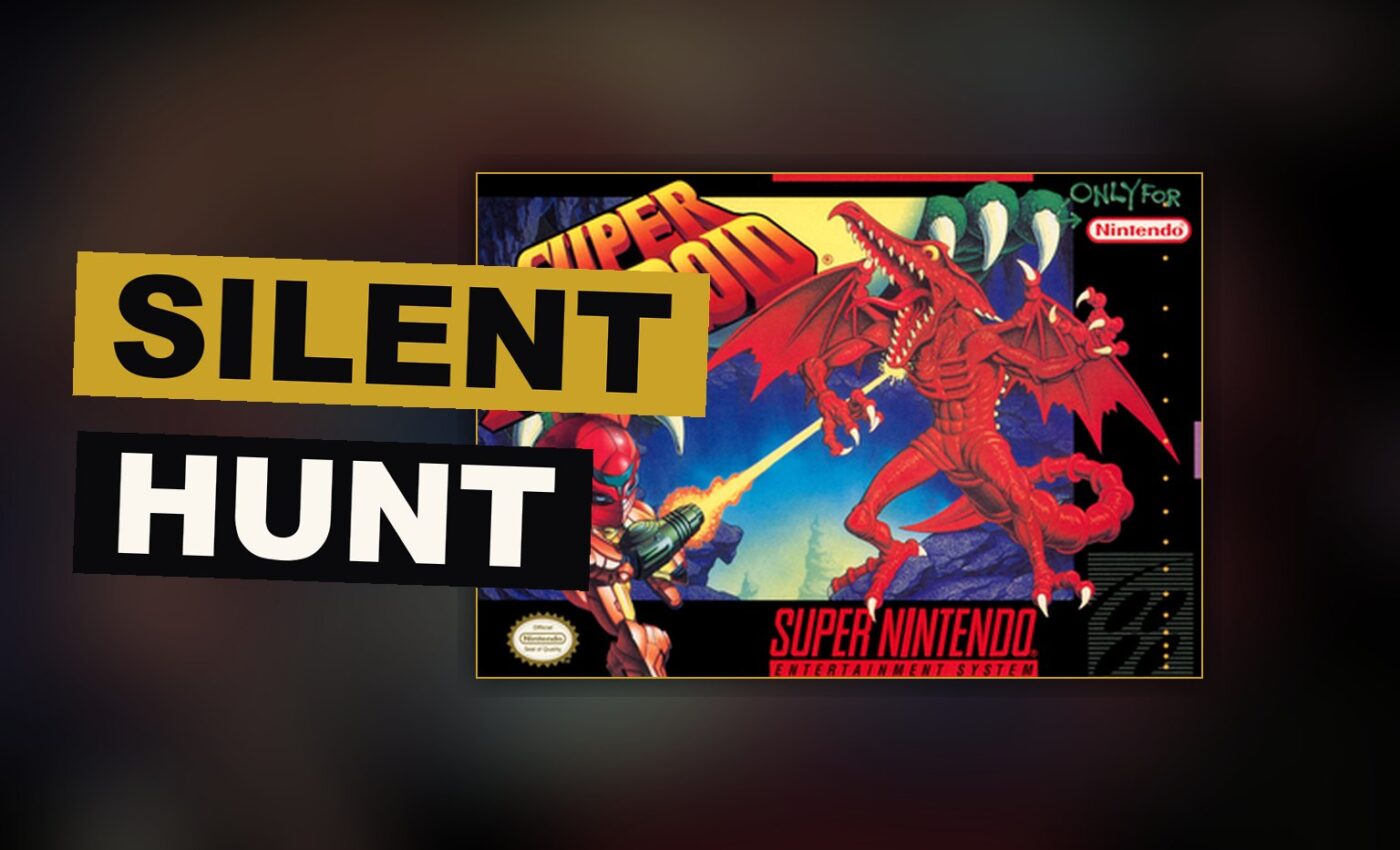
Nintendo’s R&D1 studio spent two years building Super Metroid, and the result is the game that taught an industry how to explore. Released in 1994 for the Super Nintendo Entertainment System, it is the third Metroid game, following Metroid II: Return of Samus on the Game Boy in 1991. It carries a published critical score of 9.1/10, and that number holds up.
Samus Aran Returns to Zebes
The setup is lean and it wastes nothing. Samus Aran has eradicated the Metroid population on SR388 as the Galactic Federation commanded, sparing only one hatchling she nicknamed “Baby.” She brings the larva to the Ceres space colony for study. Researchers find its energy-producing abilities could be harnessed for the good of civilization.
Then Ridley arrives. The Space Pirate leader slaughters the scientists and takes the capsule. Samus repels him in a brief fight, but he triggers a self-destruct sequence on the way out. She escapes the explosion, and he flees to Zebes. She follows.
That is the whole hook, and it is enough. The game does not bury you in exposition. It gives you a planet, a stolen creature, and a reason to move.
A Planet Built From Locked Doors
Super Metroid takes place on Zebes, the same open-ended world from the original game, with areas connected by doors and elevators. The design idea is simple and ruthless: show the player a passage they cannot reach, then hand them the tool that opens it.
The power-ups do the work. Here is what the planet hands you:
- The Morph Ball curls Samus into a ball to roll into tight places.
- The Bomb power-up lets her plant explosives in that form.
- The Spring Ball adds a jump while balled up.
- The Speed Booster runs her at high speeds through barriers and enemies.
- The Hi-Jump Boots raise her jump.
- The Space Jump lets her jump continuously in midair.
- The Grappling Beam lets her swing across large chasms.
- The X-Ray Scope reveals secret passages.
The Moon Walk, named after the dance move, lets her walk backwards while firing or charging her weapon. A few of these matter more than the rest. The Grapple Beam and the X-Ray Scope are the two that change how the planet reads. One turns empty space into a route. The other turns a wall into a lie.
What the Heads-Up Display Does
The interface is where Super Metroid quietly outclasses its predecessors. The heads-up display shows Samus’s health, the supply mode for Reserve Tanks, icons for weapons, and a map showing her location and surroundings. The inventory screen lets the player enable and disable weapons and abilities.
That last part is not a small thing. Beam weapons can be combined, but the Spazer and Plasma beams cannot be used simultaneously, so the player has to make choices rather than stack everything. It is a rare case of a game trusting its audience to manage a loadout.
The game also introduced the inventory screen, the automap, and the ability to fire in eight directions. Samus can run, jump, crouch, and fire in those eight directions. She can wall jump, kicking from one wall to another in rapid succession to reach higher areas.
The controls are exact. When a jump fails in Super Metroid, it is your fault, and the game knows you know it.
The Metroidvania Debt
Super Metroid is credited, alongside Castlevania: Symphony of the Night, with establishing the Metroidvania genre. That credit is earned. The genre’s entire grammar, the gated map, the ability that retroactively rewrites the level, the map that fills in as you go, starts here in a form that later games have mostly failed to improve on.
The development staff from previous Metroid games returned, including Yoshio Sakamoto, Makoto Kano and Gunpei Yokoi. They wanted to make a true action game and set the stage for Samus’s reappearance. The two-year build shows in the enemy variety and the world design.
The game shipped 1.42 million copies worldwide by late 2003. It has been re-released on several Nintendo consoles, including the Wii, Wii U, and New Nintendo 3DS. It was followed in 2002 by Metroid Fusion and Metroid Prime.
Ridley, Mother Brain, and the Baby
The back half of Super Metroid is where it stops being a great action game and becomes something stranger. Samus defeats three bosses across Zebes, then confronts Ridley in his lair. She wins. She finds the capsule shattered and the larva gone.
She heads for Tourian, the heart of the Space Pirates’ base, and fights several Metroids that have reproduced. Then the larva ambushes her. It has grown enormous. It attacks and nearly kills her, then stops.
The reason is the best writing in the game. Samus was present at its hatching on SR388. The Metroid has imprinted on her and recognizes her as its mother.
As Samus was present at its hatching on SR388, the Metroid has imprinted on Samus, and recognizes her as its “mother”.
She then fights a resurrected Mother Brain, the biomechanical creature that controls the Zebes systems. Mother Brain overpowers her. The Metroid larva intervenes, crippling Mother Brain and healing Samus. Mother Brain rises and kills the Metroid. In death, the Metroid gives Samus the Hyper Beam, strong enough to kill Mother Brain. Samus escapes as Zebes self-destructs.
That sequence is the reason people still argue about this game. It is not a cutscene bolted onto a shooter. It is the payoff of a mechanic, an enemy type, and a bond the game spent hours establishing without a word of dialogue.
What the Score Actually Measures
Super Metroid earns its 9.1/10. The atmosphere, the music, the graphics, and the exploration all still land. The game is often cited as one of the greatest video games of all time, and that is not nostalgia talking. It is the map.
What matters most is the discipline. Nintendo R&D1 did not pad the planet. Every room does a job, every power-up changes what the map means, and the eight-direction firing and wall jumping give the movement a precision that most modern entries in the genre still chase.
The weak point is the opening hours. Zebes is hostile in a way that will read as slow to players raised on faster games. That is a feature of the design, not a flaw in it, but it is a real barrier.
The part worth watching is the ending, and the reason it still works is narrower than people admit. The game spends its runtime teaching you to survive alone, then hands you a companion, kills it, and turns its death into your best weapon. What makes that land is not the twist. It is that the Hyper Beam arrives as a power-up, in a game where power-ups are the only language Samus has ever spoken to the player. The Metroid gives her one last upgrade on the way out. That is the whole trick, and no sequel has matched it.
Get the Notebook.
The day's best stories and every fresh verdict, in plain English, in your inbox by seven. One email a day, no more.