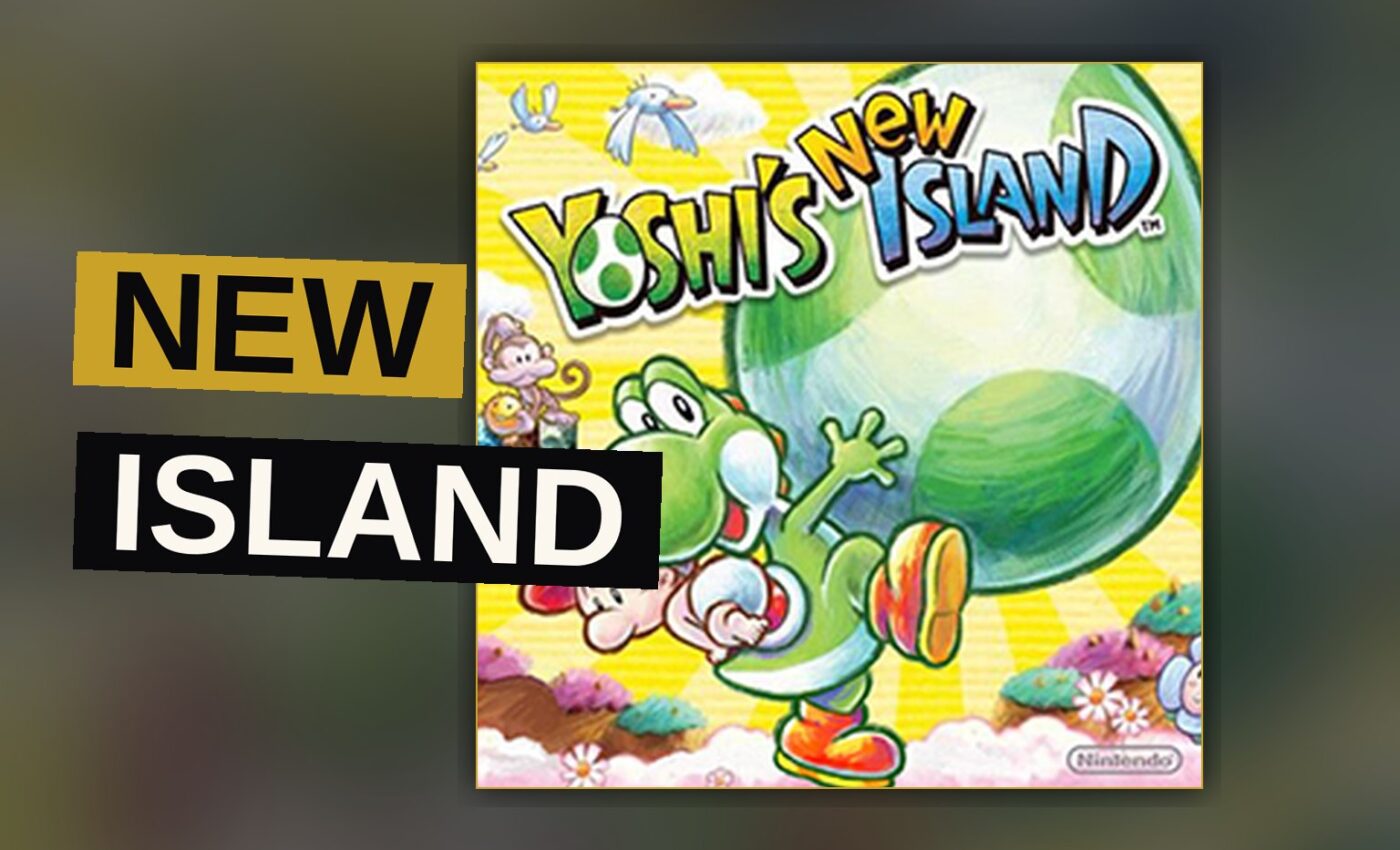
Yoshi’s New Island is a strange case. It is a 3DS remake of a game made for the Game Boy, and it mostly succeeds at doing what it set out to do. Mostly. The problem is that what it set out to do was not very ambitious, and the new island it builds around itself is small enough that it feels more like a curiosity than a full game.
Trailer, via Nintendo of America.
A Familiar Island
The core of Yoshi’s New Island is the same as the original game it remakes: Yoshi jumps, eats enemies, and clears stages with eggs. That formula still works. The controls feel solid, the level design is clever, and the game never asks you to learn anything new. If you liked the original, you will find much to enjoy here.
The island itself is where the game tries to set itself apart. Each stage is built around a central idea, and some of those ideas are genuinely clever. One stage has you riding a moving platform while avoiding obstacles. Another has you clearing a maze of enemies and traps. These levels are short, but they are often clever in ways that the original game rarely reached for.
Small Scope, Big Problem
The trouble starts when you look at the scope. Yoshi’s New Island is short. Very short. Most players can finish it in under four hours, and there is no real reason to return once you have done so. There is no extra content, no hidden extras, no reason to keep playing after the credits roll.
That brevity is a problem for a game whose premise is a new island to explore. An island should feel large, varied, and full of secrets. Instead, it feels thin and exhausted before it even gets started. The game announces a grand adventure and then delivers a brief one, and the contrast between the two is jarring.
The Look of the Island
Visually, Yoshi’s New Island is a step forward. The 3D effect is used well, giving the game a sense of depth that the original could not manage. The character models are expressive, and the animation is smooth. The colors are bright and cheerful, and the game looks good on a handheld screen.
But the visual style is also limited. The island is green, blue, and yellow, with occasional red and purple thrown in for variety. The game does not attempt a wide range of settings, and the same grassy plains and rocky hills repeat across most of the levels. This is not a technical failure, but it is a creative one, and it makes the game feel less varied than it should.
Comparing the Two Games
| Feature | Original Game | Yoshi’s New Island |
|---|---|---|
| Length | Short | Very short |
| Scope | Limited | Extremely limited |
| Controls | Solid | Solid |
| Visual Style | Flat | Bright, varied |
| Replay Value | None | None |
The table makes the comparison clear. The remake improves the presentation but does nothing to fix the fundamental problem of the original: there is simply not enough content to justify the asking price. Players who want a quick, pleasant diversion will find it. Players who want a game that lasts will leave disappointed.
“A pleasant diversion that does not last.”
Final Word
Yoshi’s New Island is a competent, charming, and ultimately disappointing game. It is a solid technical achievement, with a 3D effect that adds depth to a simple formula. It is a joy to play for a few hours. But it is also a game that ends too soon, with too little content to justify its existence.
The game is best enjoyed as a curiosity, a reminder of what the original Game Boy could do and how far the series has come since. As a full game, it falls short. It is a good time, not a great one.
Get the Notebook.
The day's best stories and every fresh verdict, in plain English, in your inbox by seven. One email a day, no more.