Nintendo shipped Yoshi’s New Island in March 2014 for the Nintendo 3DS, and it arrives carrying a weight the original never had to. The 1995 Yoshi’s Island is one of the most admired platformers Nintendo ever published. The 2006 DS follow-up was serviceable. This one, developed by Arzest and set between those two games, is the third in the line — and it is the first that feels like a copy of a copy.
The stork is back, and so is the mistake. In the opening, the bird delivers twins Baby Mario and Baby Luigi to a couple in the Mushroom Kingdom it wrongly believed were the parents. It reclaims the babies and sets off to find the real home, only for the wizard Kamek to ambush it mid-flight. Kamek takes the stork and Baby Luigi. Baby Mario falls onto Egg Island, a floating island conquered by Baby Bowser, and lands with the Yoshi clan.
Trailer, via Nintendo of America.
Egg Island, Baby Bowser, and a Stork That Made a Mistake
Baby Mario can telepathically sense where his brother is. The Yoshis agree to carry him across the island and get Baby Luigi back. That is the whole engine of the game, and it is a good one — the same escort logic that made the original work, restated plainly.
The trip runs through six worlds with different climates: forests, snowy plains, volcanic fields. Each world holds eight mandatory levels and two optional ones, sixty in total. The fourth level of every world is a castle that ends with a fight against Kamek. The eighth ends with a boss that Kamek has enlarged with magic. Every boss goes down in three hits. That is the shape of the entire game, and by the third world you can see all of it coming.
Flutter Jumping, Egg Throwing, and the Eggdozers
The returning mechanics are here. Yoshi flutters in midair. He swallows enemies and spits them out. He throws eggs at foes and at puzzle targets. New to this entry are the Eggdozers — massive eggs Yoshi can create to clear paths, including Mega Eggdozers and Metal Eggdozers. Yoshi also transforms into objects like a jackhammer and a submarine, both steered with the 3DS gyro controls. A certain star turns him into Super Yoshi, who can fly or run along walls and ceilings.
Take a hit and Yoshi has 10 to 30 seconds to grab Baby Mario from a moving bubble before Kamek’s underlings carry the infant off, costing a life. Spikes, bottomless pits and poisonous water kill instantly. Lose several lives in a row on one level and the game hands you Flutter Wings, which allow indefinite hovering. Lose a life while holding them and you get the golden variant, which adds invincibility. Run out of lives entirely and you restart the level from the beginning with five lives.
Each level holds up to five flowers, twenty red coins and thirty stars. The stars matter most: they extend the timer on the Baby Mario rescue.
A Hand-Drawn Look That Fights Itself
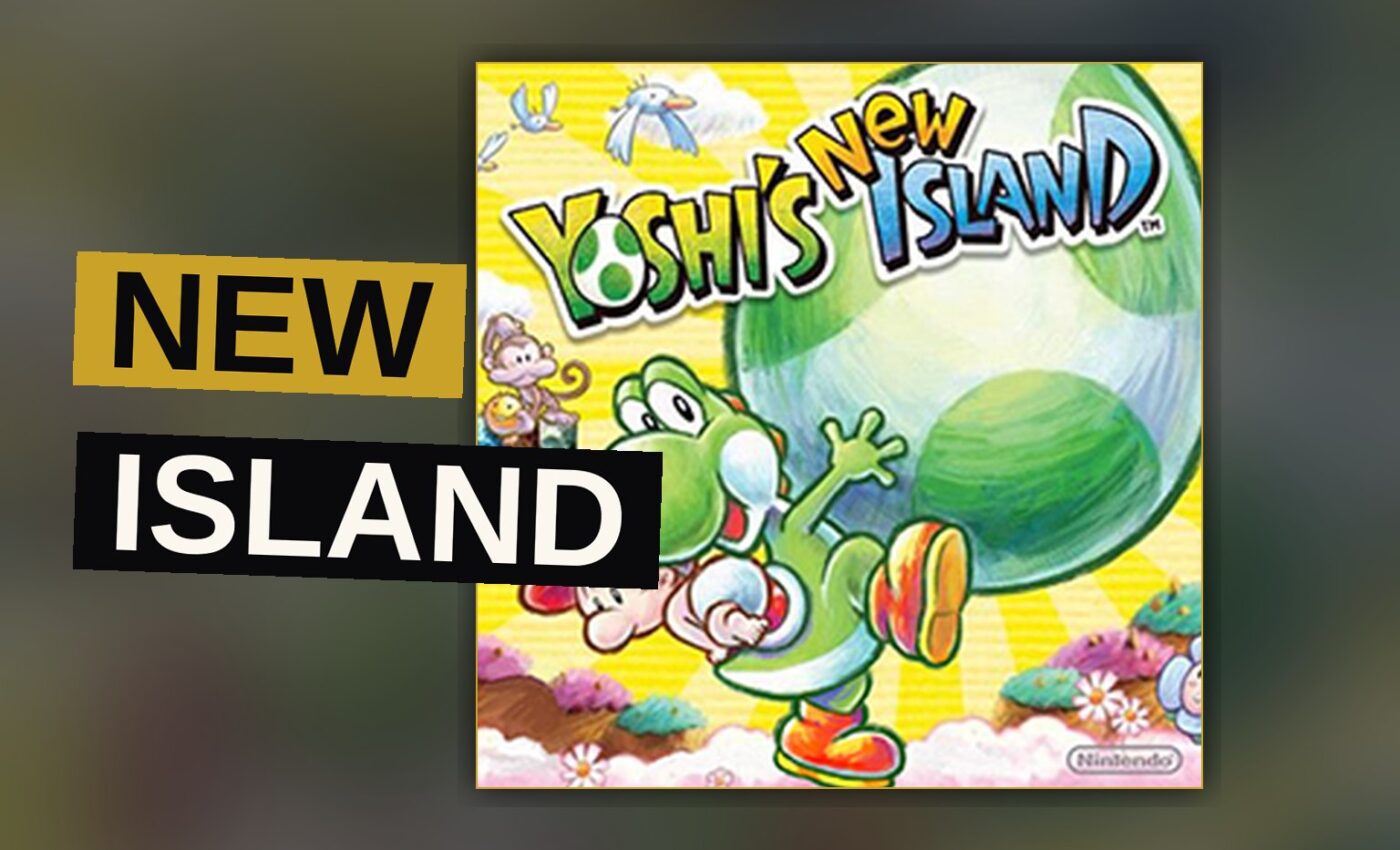
The art style is the game’s boldest decision and its most divisive one. Level designs and backgrounds are stylized as oil paintings, watercolors and crayon drawings. Parts of it are genuinely lovely. Parts of it are muddy, and the 3DS screen does the watercolor work no favors. The hand-drawn idea is right; the execution is uneven in a way that makes some stages hard to read at a glance, which is a real problem in a game that asks you to spot a falling Baby Mario bubble fast.
The soundtrack drew the sharpest criticism at release, and it holds up as the weakest element. The main theme repeats. And repeats. It is the kind of tune that burrows in and then refuses to leave, and not in a good way.
A Release Schedule That Split the World
| Region | Release window |
|---|---|
| Europe | March 2014 |
| North America | March 2014 |
| Australia | March 2014 |
| Japan | July 2014 |
That four-month gap between the Western launch and the last region to get the game is worth noting. The third Yoshi’s Island title reached its home market months after everyone else.
What Arzest Got Right, and What It Didn’t
Here is where the game lands, ranked by what actually matters:
- The core escort loop — carrying Baby Mario, recovering him from the bubble, reaching the goal — still works, and it is the reason to play.
- The Eggdozers and the transformations are the best new ideas, particularly the gyro-controlled jackhammer and submarine, which use the hardware for something other than a gimmick.
- The collectible structure — five flowers, twenty red coins, thirty stars per level — gives completionists a real reason to replay.
- The Flutter Wings and golden Flutter Wings are a decent mercy system, though handing out invincibility after enough deaths is a blunt way to solve difficulty.
- The art style is ambitious and inconsistent in equal measure.
- The soundtrack is the weakest part of the package.
The development team chose to make a sequel to Yoshi’s Island because of its simplicity in gameplay and construction. That reasoning explains a lot. Simplicity is not the problem. The problem is that Yoshi’s New Island reproduces the original’s structure without reproducing its invention.
The level design staff overlapped with Yoshi’s Woolly World, which was being built at Good-Feel at the same time — and Woolly World, when it arrived, had a visual idea it committed to fully. This game has a visual idea it commits to about two-thirds of the way.
Where the Sixty Levels Land
Yoshi’s New Island is a competent platformer with a genuine charm problem. It is not broken. The flutter jump feels right, the egg throwing feels right, and the Baby Mario bubble timer still produces the small panic the series is built on. Sixty levels is a generous amount of game. The Eggdozers are a real addition rather than a reskin.
But the game never surprises you after the first world. The castle-Kamek, boss-Kamek, three-hits-and-done rhythm becomes a metronome. The oil-painting and crayon backdrops, which should be the reason to look at this game, are the reason some levels are hard to parse. And the music is a genuine liability, not a nitpick — it is the thing you will remember about Yoshi’s New Island whether you want to or not.
The nostalgia is real, and it is doing a lot of work here. Strip it out and what remains is a sequel that understood the assignment and not the appeal. Yoshi’s Island was strange and specific. Yoshi’s New Island is smooth and general. That is the trade, and it is not a good one.
For a 3DS owner in 2014 with a platformer itch, this fills an afternoon and then some. It just does not fill it the way the game it is named after did, and the gap between those two things is the whole story.
6.3 of 10.
Get the Notebook.
The day's best stories and every fresh verdict, in plain English, in your inbox by seven. One email a day, no more.