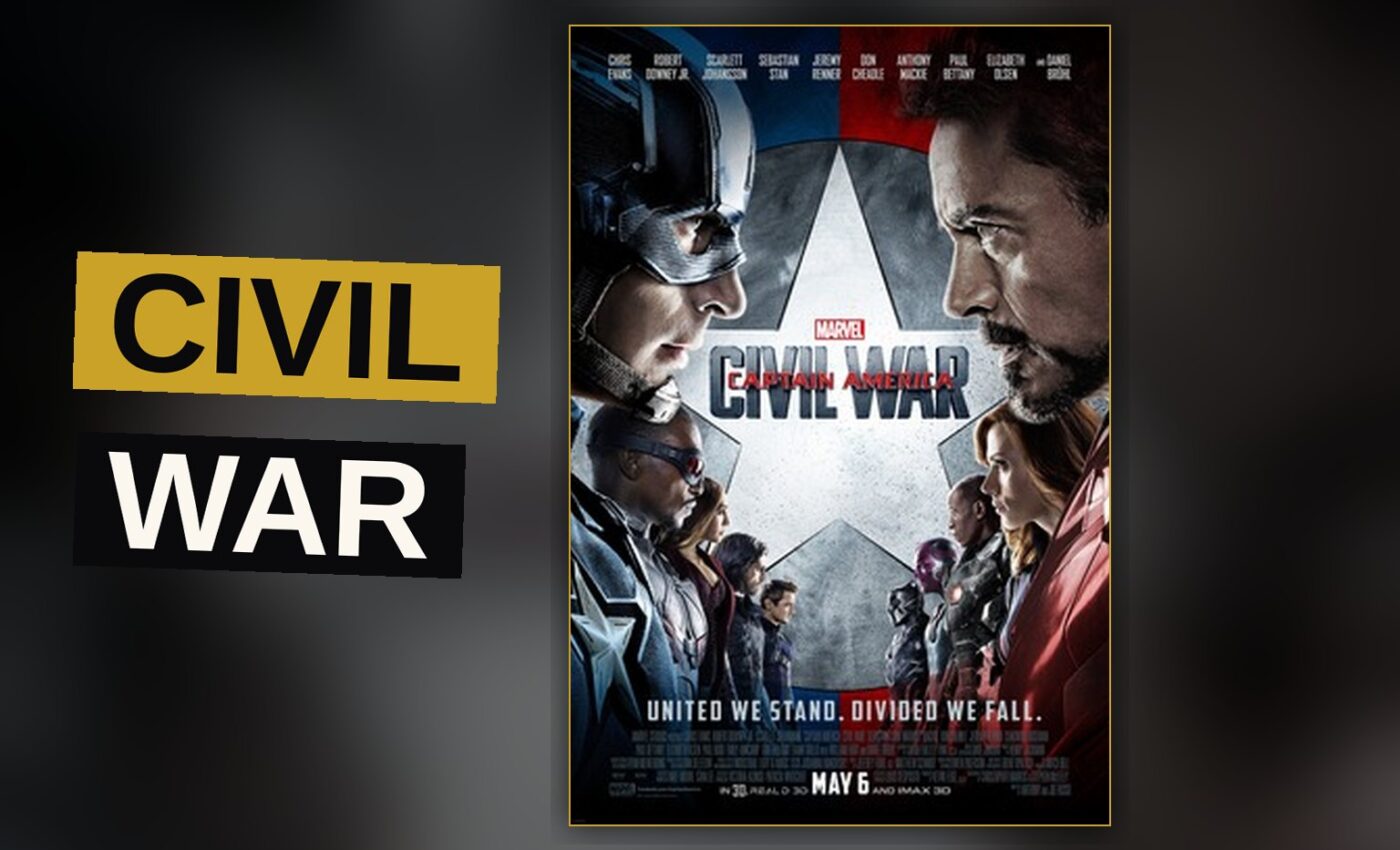
Captain America: Civil War is the moment the Marvel Cinematic Universe stopped pretending its heroes would always get along. The film, directed by the Russo brothers, takes the Avengers and splits them down the middle over a question of oversight. It is a superhero movie that runs on argument as much as action.
The story starts with a disaster in Lagos. Wanda Maximoff, also known as Scarlet Witch, tries to contain an explosion but fails, and civilians die. The world reacts. The United Nations drafts the Sokovia Accords, a set of rules that would put the Avengers under a governing panel. Tony Stark, still carrying guilt from creating Ultron, signs on. Steve Rogers refuses. He does not trust governments to decide when and where the team should act.
Trailer, via Marvel Entertainment.
Airport Fight and New Faces
The conflict comes to a head at Leipzig/Halle Airport. Rogers assembles a small team: Bucky Barnes, Sam Wilson, Wanda, Clint Barton, and Scott Lang. Stark brings his own: Natasha Romanoff, T’Challa, Vision, Rhodey, and Peter Parker. The scene is the film’s centerpiece, a twelve-person brawl that manages to give nearly everyone a moment. Lang turns into a giant. Parker cracks jokes while webbing legs. Vision accidentally shoots Rhodey out of the sky. The fight works because the movie has spent its first hour earning the split, so every punch lands with a little political weight behind it.
The new faces carry real energy. Tom Holland’s Spider-Man is a breath of fresh air, a kid who is thrilled to be there and has no idea what he has walked into. Chadwick Boseman’s Black Panther is the opposite: quiet, royal, and driven by a need for revenge after his father dies in a bombing. The film introduces both characters without slowing down.
Zemo and the Winter Soldier
The plot engine is Bucky Barnes, the Winter Soldier. A bombing kills T’Chaka, and the blame falls on Bucky. The man behind it is Helmut Zemo, a former Sokovian military officer. He murders the real psychiatrist assigned to Bucky and impersonates him to get close to his target. Rogers spends the movie trying to protect Bucky, who is both his oldest friend and a man brainwashed into committing atrocities. The film asks how much you forgive a person who was not in control of his own hands. It never gives a clean answer.
Zemo is a departure from the usual MCU threat. He has no superpowers. He does not want to rule the world. He wants to tear the Avengers apart from the inside, and he succeeds by playing on their distrust. Daniel Brühl plays him with a cold, tired patience. His plan is convoluted, but his motive is simple: his family died in Sokovia, and he blames the Avengers.
The film’s weakness is its middle stretch. The chase through Bucharest is sharp, but the time between the UN bombing and the airport fight drags. The movie keeps returning to the Berlin task force headquarters, where Tony and Steve repeat the same argument. The script, by Christopher Markus and Stephen McFeely, is smart about ideology but less good at giving the two leads new things to say.
“He’s my friend.” — “So was I.”
That exchange, spoken near the end, is the emotional core. The fight in the snow is brutal, two men who know each other’s moves beating each other to a standstill. Rogers finally wins by driving his shield into Stark’s arc reactor. He leaves the shield behind, a clear signal that he is done with the institution.
The Cost of Winning
The film ends with no real victory. Stark learns that Bucky, while brainwashed, killed his parents. Rogers knew and did not tell him. The team fractures. Rogers breaks his friends out of the Raft prison and goes underground. Stark is left alone with the Accords and a broken friendship. T’Challa, who had been hunting Bucky, realizes revenge has cost him more than it has given him. He lets it go.
Captain America: Civil War asks whether power should answer to anyone, and it refuses to say one side is right. The action is clear and inventive, the new characters are welcome, and the central conflict has real stakes. It is not a perfect film. The pacing sags, and the argument between the two leads repeats itself more than it deepens. But it commits to its ideas, and it pays them off in a finale that feels earned rather than cheap.
The score is 7.5 out of 10.