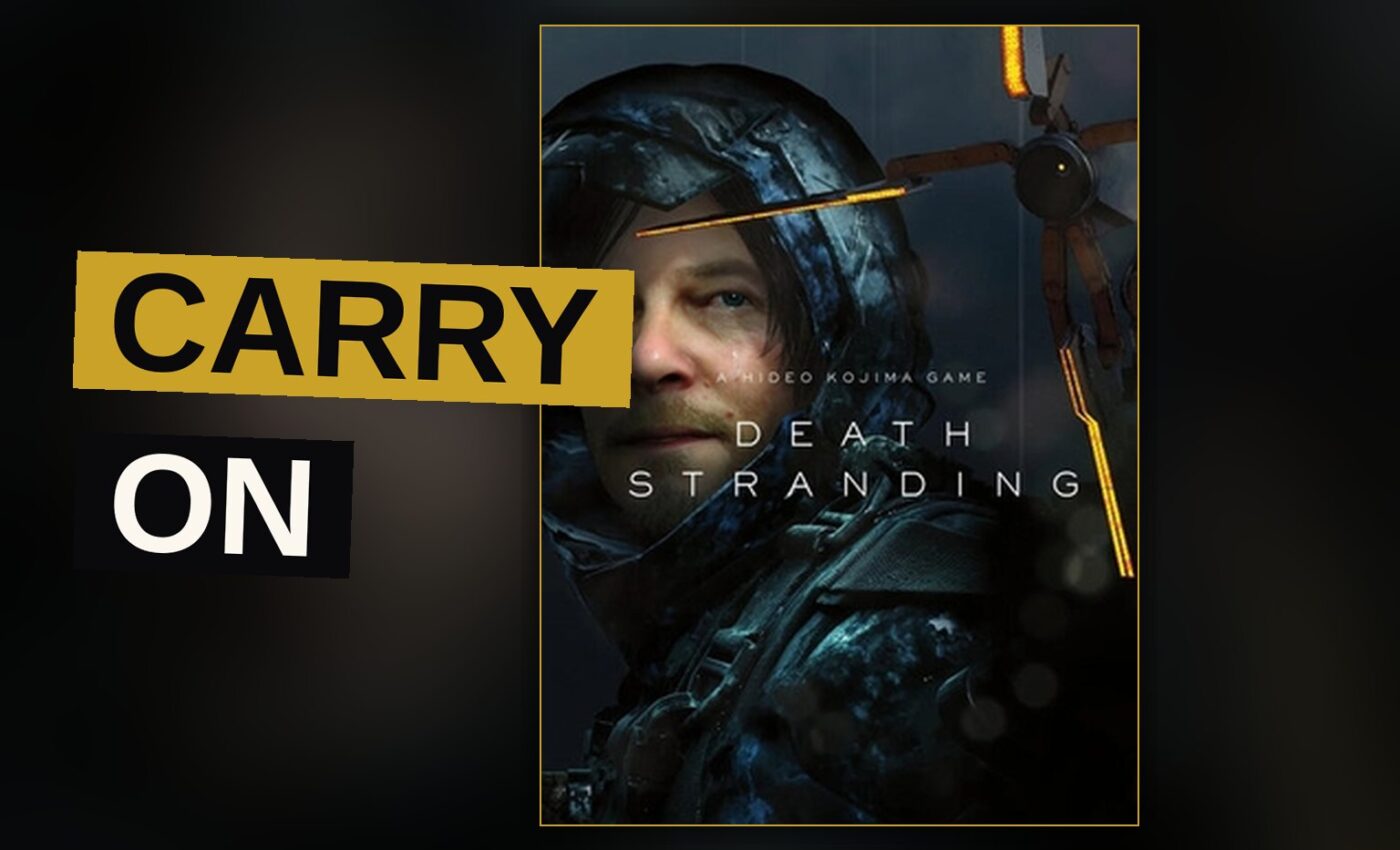
Death Stranding asks players to carry a message across a broken America. That message is not just information, it is a human connection, and the game spends hours building the weight of that idea. It is a strange, slow, often beautiful game about walking, talking, and the bonds that keep us moving.
Trailer, via PlayStation.
The World of Death Stranding
The game takes place after a pandemic has emptied cities and left the country divided. Bridges fall, roads crack, and the landscape fills with storms of energy called BTs. Players move as Sam Porter Smith, a deliveryman for Bridges of America, tasked with reconnecting the country’s isolated settlements.
Movement is the core mechanic. Players carry packages, climb ladders, and cross rivers while managing stamina, balance, and cargo weight. The controls are precise, and the physics system rewards patience. A heavy load moves slowly, but the game rarely punishes the player for being cautious.
BTs and the Storms They Bring
BTs are ghosts of dead people, and they are the game’s greatest hazard. They appear suddenly, causing storms of electricity that damage players and destroy equipment. Avoiding them requires constant scanning of the environment, and the tension builds over long stretches of road.
The game also features creatures called Fragments, small animals that can be captured and used as resources. These moments offer a break from the constant danger, letting players gather materials for crafting and repairs.
The Bridge of America System
Players build structures along their routes to create a network of bridges between settlements. This system lets other characters call for deliveries, and it creates a sense of shared purpose. The game tracks who has received packages, and completing deliveries opens new areas and reveals character stories.
The bridge-building is simple, but it gives the game a sense of progress that carries the player through its long stretches of walking. Each bridge placed feels like a small victory.
Sound Design and Music
The sound design is excellent. Footsteps on gravel, the hum of distant engines, and the crackle of BT storms create a constant sense of presence. The music, composed by Gustavo Santaolalla, shifts from ambient to tense during storms, and it never overstays its welcome.
The voice acting is strong, especially from Norman Reedus as Sam Porter Smith. Mads Mikkelsen plays the villain, and his performance anchors some of the game’s most memorable sequences.
Pace and Repetition
Death Stranding is not a fast game. Long stretches of travel can feel repetitive, and the pacing dips in the middle act. Some players will find the slow burn rewarding; others will lose patience.
The game’s story is dense with lore and dialogue, and it expects players to pay attention to every conversation. Missions often involve delivering packages to characters with lengthy backstories, and the game does not always make clear why these conversations matter.
Key Facts Box
- Platform: PS4, PC
- Developer: Kojima Productions
- Release: 2019
- Score: 8.4/10
- Genre: Action-adventure, survival
What Works and What Doesn’t
- The movement and physics systems are some of the best in the genre.
- The bridge-building creates a satisfying sense of progress.
- The sound design and music are consistently excellent.
- The story is ambitious but sometimes loses focus.
- The pace slows in the middle act, and some players will struggle to finish.
Death Stranding is a game about connection in a disconnected world. It asks players to think about what it means to carry a message, and it does so through a unique blend of stealth, exploration, and construction. The game’s flaws — the slow pacing and occasional confusion — are real, but they do not diminish the experience as a whole.
The final stretch delivers a payoff that justifies the journey. It is a game that rewards patience and curiosity, and it leaves players thinking about what they carried, and why.
Get the Notebook.
The day's best stories and every fresh verdict, in plain English, in your inbox by seven. One email a day, no more.