
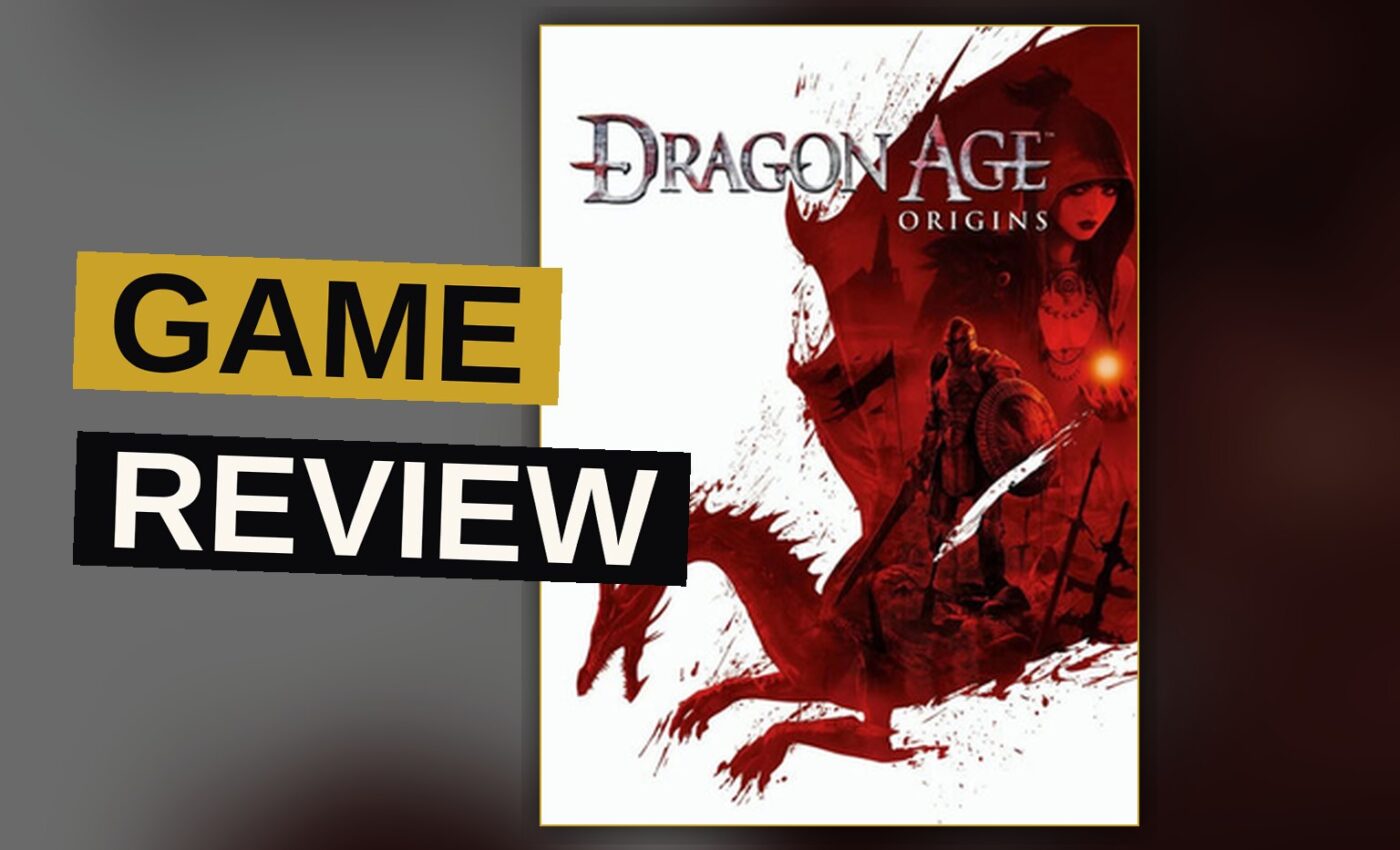
The first Dragon Age game opens with a choice that has nothing to do with combat. Before you fight a single Darkspawn, you pick a race and a class, and that pairing decides which of six origin stories you play through. A Dwarf Commoner walks into a world that hates him. A City Elf walks into a world that owns her. BioWare built Dragon Age: Origins around that idea, and the game it produced in 2009 remains the studio’s most complete piece of world-building.
Trailer, via IGDBcom.
Six Origin Stories in Ferelden
Dragon Age: Origins is a role-playing game developed by BioWare and published by Electronic Arts. It is the first game in the Dragon Age franchise. It came out for Microsoft Windows, Xbox 360 and PlayStation 3 in November 2009, with a Mac OS X version following in December.
The setup is a kingdom called Ferelden, one of several countries in the fictional world of Thedas, and it is tearing itself apart. Into that civil strife comes a Blight: every few hundred years, creatures called the Darkspawn swarm up from the Deep Roads, an underground highway system the dwarves built long ago, and the surface world has to survive them.
The order that stands against them is the Grey Wardens. You become one. Your job is to kill the Archdemon that commands the Darkspawn and end the invasion.
That is the spine. What makes it work is everything hanging off it.
Warriors, Rogues and Mages
You build your Grey Warden from three classes and three races. Warriors hit hard and protect the party. Rogues use stealth attacks and steal items from other characters. Mages cast spells, create combo spells and support allies. The races are human, elf and dwarf.
The class and race combination determines your origin story: Dalish Elf, Dwarf Commoner, City Elf, Mage, Human Noble or Dwarf Noble. This is not cosmetic. It changes how other characters treat you. A Dwarven Commoner catches hatred and discrimination from other dwarves. After the origin story wraps, every character follows the same plot.
Combat runs in real time, and you can pause at any moment to queue up actions. Companions are usually driven by AI, but the Tactics menu lets you give that AI detailed instructions for how to behave in every possible situation. You can also switch between characters and issue orders directly.
The enemy list is long: giant spiders, Darkspawn, ghosts, walking trees, dragons.
Thedas Runs on Caste and Fear
Thedas is a world where race and class decide your social standing. Elves are often treated as second-class citizens by humans. Human nobles get respect. Dwarves live in the Deep Roads, their kingdom a shadow of what it was before the first Blight, governed by tradition and a rigid caste system. Dalish Elves live nomadically, trying to preserve and reclaim an ancient Elven heritage that was mostly wiped out when the Elven empire collapsed.
Mages are the sharpest piece of the design. The Chantry cloisters them, because mages can reach the Fade, the unconscious realm where spirits live, and one lapse in vigilance could let a demon possess them. Apostate mages who live outside Chantry control are considered extremely dangerous. The Chantry keeps a military wing, the Templars, to hunt them down by any means necessary.
That is a lot of lore to hand a player in the first hour. Dragon Age: Origins does it anyway, and mostly earns it.
A Spiritual Successor That Actually Succeeds
BioWare described Dragon Age: Origins as a “dark heroic fantasy” set in a unique world, and as a spiritual successor to its earlier Baldur’s Gate and Neverwinter Nights franchises. The lineage shows in the isometric view and the tactical pause, but the game is not a retread.
Development started in 2002. More than 144 voice-actors were employed. Inon Zur composed the music. The console versions were outsourced to Edge of Reality. Dragons, oddly, came late: the team used a name generator to create the title, and the creatures followed the name rather than the other way around.
Two prequel novels released in 2009, Dragon Age: The Stolen Throne and its direct sequel Dragon Age: The Calling, fill in lore and the backstories of several characters.
What the Origins Buy You
Here is the thing the sequels never quite matched. The origin stories are not a difficulty setting or a flavor tag. They are the game’s argument about who gets to be a hero and what it costs.
- Dalish Elf — a nomad tied to a lost empire.
- Dwarf Commoner — caste-bound, despised by your own people.
- City Elf — second-class in a human city.
- Mage — watched, cloistered, one mistake from possession.
- Human Noble — status, and the obligations that come with it.
- Dwarf Noble — power inside a rigid hierarchy.
Six openings, and each one plants a specific grievance or loyalty that pays off later. The plot converges, but the person arriving at that plot does not.
Companions, Tactics and the Long Fight
The companions are the other load-bearing wall. They accompany you, fight beside you and play major roles in both plot and gameplay. Because the Tactics menu lets you script their behavior in detail, the party becomes a small machine you tune rather than a crowd you drag around.
That is where Dragon Age: Origins separates itself from its contemporaries. Real-time combat with a pause button is not new. A tactics editor that lets you write conditional instructions for every party member is closer to a programming toy, and it rewards the kind of player who wants to think about a fight before it starts.
The third-person camera that shifts to a top-down view serves the same instinct. You can play it as an action game or as a squad command exercise. The game does not force the choice.
Where the Cracks Show
Not everything holds. The Deep Roads section runs long, and the Fade sequences test patience in a way the rest of the game does not. The combat, for all its tactical depth, can turn into a slog when the encounter design leans on volume rather than ideas.
The visuals were serviceable in 2009 and have not aged into anything better. The origin stories are also uneven in length and urgency — some land like a punch, others like a prologue.
None of that sinks it. It just means the game’s best ideas are front-loaded and its weakest stretches are in the middle, which is a common shape for a role-playing game of this size.
The Verdict on Dragon Age: Origins
Dragon Age: Origins received critical acclaim upon release, with praise mostly directed at its story, setting, characters, music and combat system. That consensus holds up.
What matters most is the origin system. It is the rare design choice that does structural work: it gives six different players six different reasons to care about the same kingdom, and it makes the Grey Wardens feel like a fate rather than a job title. The tactics menu is the second pillar, and it is the piece most games since have failed to copy properly.
The lore is dense and the pacing sags in the middle, but the world of Thedas arrives fully formed here in a way few first entries manage. Ferelden feels like a place with a history rather than a map with a quest marker.
BioWare built a “dark heroic fantasy” and then had the discipline to let the darkness sit in the social order, not just the monster design. The Darkspawn are the threat. The caste system, the Chantry and the Templars are the reason the threat works.
This is the best game in the Dragon Age franchise, and it is not especially close.
Get the Notebook.
The day's best stories and every fresh verdict, in plain English, in your inbox by seven. One email a day, no more.


