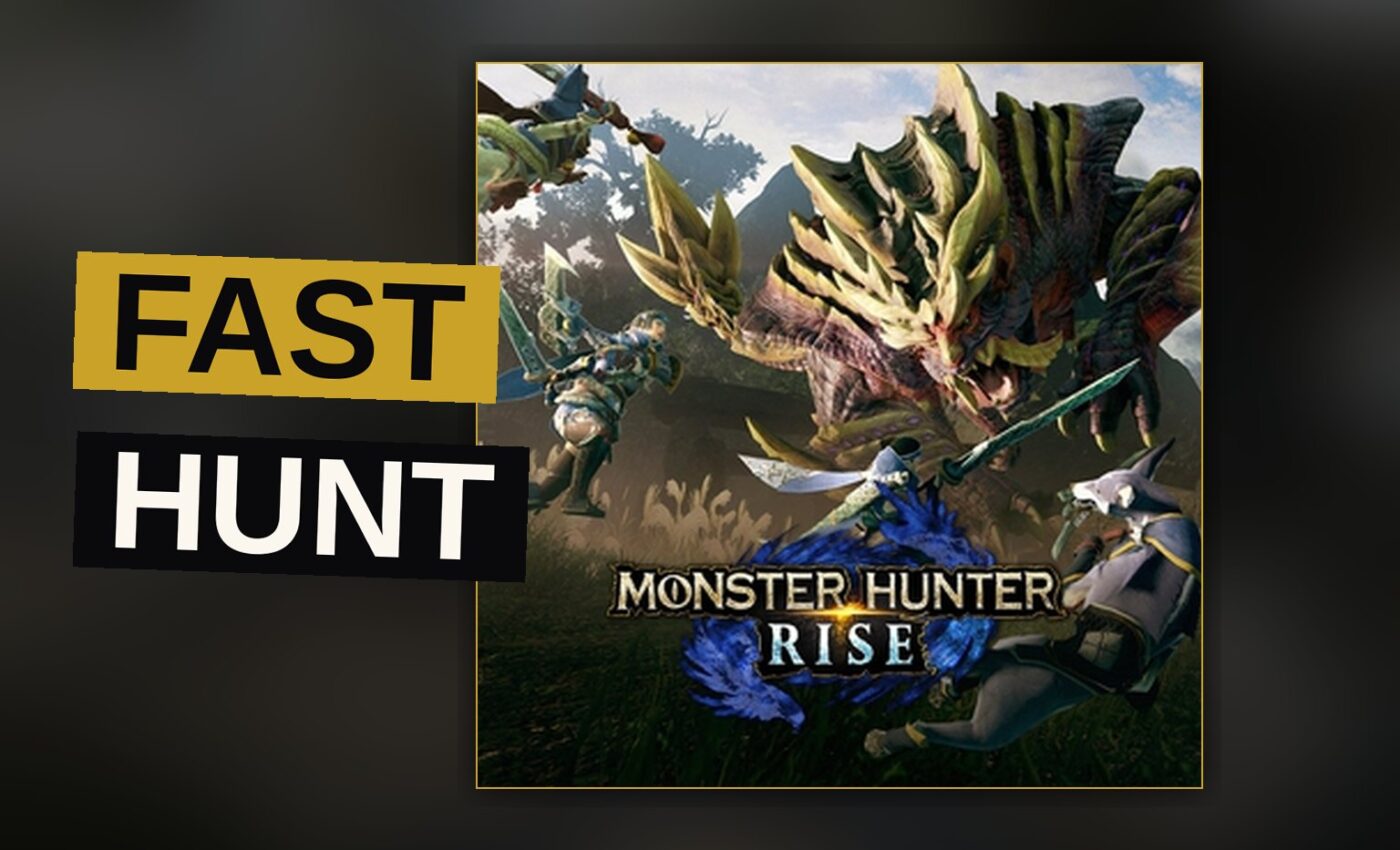
Monster Hunter Rise turns the series’ familiar hunt into something faster and stranger. Capcom built the 2021 action role-playing game around Kamura Village, a ninja-inspired settlement where hunters climb, swing and ride their way across maps built for vertical movement. The hook is not a new weapon or a bigger monster. It is movement, and it changes how every fight feels.
Kamura Village and the New Calamity
The story sets a simple clock. It has been half a century since the last calamity struck Kamura, and a terrifying new monster now threatens to plunge the land into chaos again. The player becomes a hunter, explores brand new maps and uses a variety of weapons to take down fearsome monsters as part of an all-new storyline.
That is thin framing, even by Monster Hunter standards, and Rise does not pretend otherwise. Kamura is a staging ground, not a drama. The village gives the hunts a home and a reason, then gets out of the way.
Wirebugs and Wyvern Riding
The Wirebug is the mechanic that matters. Like the Clutch Claw added in Monster Hunter World: Iceborne, it lets a player grapple and swing across gaps or up to higher locations. It also interacts differently with each weapon type, adding to that weapon’s set of moves and combos.
Then it goes further. The Wirebug lets a player engage certain monsters in Wyvern Riding, mounting and controlling the creature to a limited degree — either to lead it somewhere better for a fight or to send it against a different monster. Two monsters colliding is not a cutscene here. It is a tool.
Palamutes and the Seamless Map
Rise keeps the seamless map approach introduced in Monster Hunter: World rather than the zoned areas of earlier games. Its maps lean harder into vertical movement, which is what the title promises, and the new tools exist to serve that.
- The Palamute, a new dog-like companion, can be ridden across the map or into battle without draining stamina.
- The Wirebug handles grappling, swinging and weapon-specific moves.
- All fourteen weapon types from Monster Hunter Generations and World return, mixing swords, shields, staves, bows and guns.
- Several series monsters come back alongside a host of new ones built for Rise.
The core loop is untouched. Complete quests, take loot in the form of monster parts, forge new armor and weapons, then hunt something stronger. Rise widens the path to that loop without rewriting it.
Sunbreak and the Long Tail
An expansion pack, Sunbreak, arrived in June 2022 and has sold more than 8 million copies since launch. Rise itself has sold more than 15 million copies worldwide since launch, making it the second best-selling game in the series.
Those numbers are not a review, but they explain the ports. Rise launched worldwide in March 2021 for the Nintendo Switch. A Windows port followed in January 2022, and ports for PlayStation 4, PlayStation 5, Xbox One and Xbox Series X/S landed in January 2023.
Rise to the challenge and join the hunt!
What Rise Gets Right
The praise at release focused on the gameplay and its expansion of the mechanics introduced in World, and that holds up. Wirebugs give every weapon a second vocabulary. Wyvern Riding turns the map’s biggest threat into a temporary ally. Palamutes cut the dead time between fights, which was always the series’ quiet tax on new players.
The verticality is the real design decision. Older Monster Hunter games asked you to learn a monster’s tells. Rise asks you to learn the terrain too, because you can leave it in a hurry. That is a genuine shift, not a coat of paint.
Where It Stalls
Kamura never becomes a place you care about. The calamity premise is delivered and then abandoned, and the new monster is a threat in name more than in presence. Rise is a game about systems, and its story knows it.
The weapon roster is also inherited, not reinvented. Fourteen types return from Generations and World, and while the Wirebug gives each one new moves, the underlying archetypes are familiar. Veterans will recognize almost everything they pick up.
Sunbreak is the bigger question for anyone arriving now. It sold more than 8 million copies, and it is where the game’s later life actually happened. A buyer on Xbox Series X/S, PlayStation 4, PlayStation 5 or PC is not getting the 2021 release. They are getting the 2023 version of a game that kept growing.
The Verdict on Monster Hunter Rise
Rise is the most approachable Monster Hunter game Capcom has made, and it earns that without sanding off the series’ core. The hunt is still about reading a monster, surviving its attacks and turning its parts into better gear. Wirebugs and Palamutes just get you there faster.
The weakness is the frame around the fight. Kamura is thin, the calamity is thin, and the fourteen weapon types are a known quantity. What carries Rise is the movement, and movement is not a small thing in a game built on chasing monsters across vertical ground.
That is enough. Rise sits comfortably as the second best-selling entry in the series because it solved a problem the series had carried for years: the space between hunts. It made that space fun.
Get the Notebook.
The day's best stories and every fresh verdict, in plain English, in your inbox by seven. One email a day, no more.