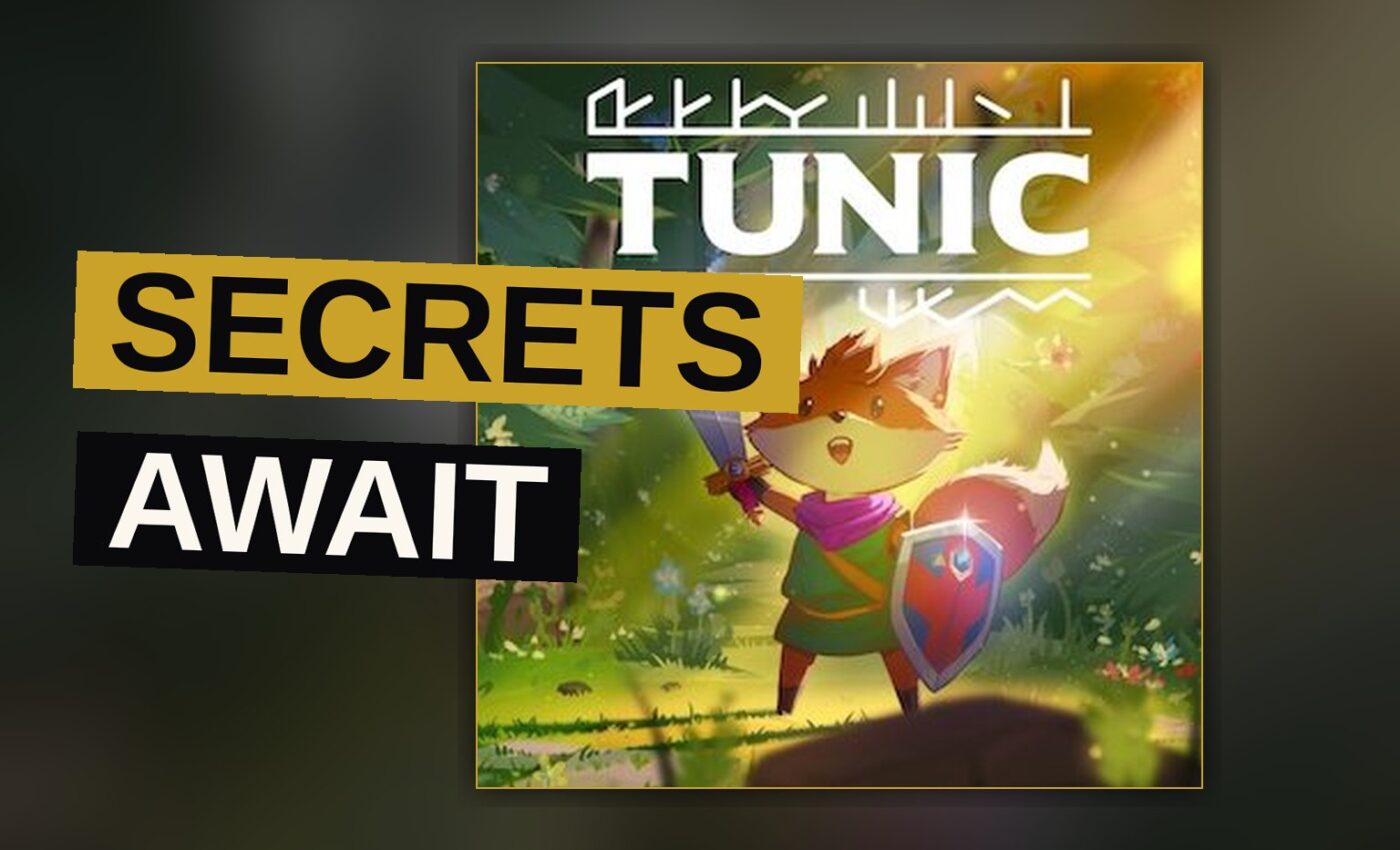
Tunic is a game that asks you to be patient, to pay attention, and to trust that its secrets are worth the effort. It is a Zelda-like adventure about a small fox exploring a ruined world, and it is also a puzzle box, a language lesson, and a love letter to the games that came before it. The result is one of the most rewarding experiences of the generation, and it earns every bit of its 8.9/10 critical score.
Trailer, via GameSpot Trailers.
The Manual as a Map
The core idea of Tunic is its instruction manual. You find pages of it scattered across the world, and each page is a real, rendered object you can flip through. These pages teach you the controls, show you the map, and hint at the game’s deeper mysteries.
What starts as a simple tutorial becomes the central puzzle. The manual is written in a fictional language, so you learn by matching pictures to actions. Later pages reveal combat techniques, hidden paths, and the game’s true ending. It is a clever device that turns documentation into discovery.
The manual also drives the game’s structure. You are never told where to go. You are shown a picture of a door, and you must find that door in the world. This can be frustrating at first, but the game rewards your attention. Every page you find opens up new possibilities, and the moment a location clicks into place is pure joy.
Combat and Exploration
The combat is straightforward on its surface. You have a sword, a shield, and a dodge roll. You fight a bestiary of robots, slimes, and skeletal knights. The controls are tight, and the difficulty is fair, though the game does not hold your hand.
The real depth comes from the items you collect. Magic wands, bombs, and a grappling hook all change how you approach fights. The game also has a stamina system, so you cannot just spam attacks. You must learn enemy patterns and time your dodges. It is a classic action-adventure loop, executed with precision.
Exploration is where Tunic shines. The world is dense and interconnected, full of shortcuts and hidden rooms. The isometric camera gives you a clear view, but it also hides things in plain sight. A suspicious patch of grass, a slightly different wall texture, or a shadow that does not quite fit — these are the breadcrumbs the game leaves for you.
The Golden Path
Tunic has two endings. The first is a standard boss rush, and it is satisfying on its own. The second is where the game becomes something else entirely. To find it, you must solve a series of puzzles that span the entire world.
These puzzles involve the manual, the environment, and even the game’s audio. They are challenging, but they are also fair. Every solution is telegraphed somewhere, and the game gives you all the tools you need. The feeling of cracking a puzzle after hours of thought is unmatched.
“The manual is the game, and the game is the manual.”
This is not a game you can rush. It demands your full attention, and it rewards you for it. The true ending is a masterpiece of game design, a sequence that recontextualizes everything you have done.
A World Worth Saving
The story of Tunic is told through visuals and the manual. There is a fox, a ruined kingdom, and a dark force that must be stopped. The plot is simple, but the presentation is stunning. The art style is clean and colorful, with a soft glow that makes the world feel magical.
The music is equally strong. It swells during boss fights and fades into quiet ambience during exploration. The sound design is crisp, and every hit, roll, and pickup feels weighty. The game runs smoothly on PC and PS4, and the Switch 2 version holds up well, with only minor frame drops in busy areas.
Tunic is not for everyone. Its difficulty and opacity will turn some players away. But for those who stick with it, it is a masterclass in game design. It respects your intelligence and trusts you to figure things out. That trust is rare, and it is precious.
If you are looking for a game that will stay with you long after the credits roll, Tunic is it. It is a puzzle, a journey, and a tribute to the medium. It is essential.
| Platform | Performance |
|---|---|
| PC | 60 FPS, flawless |
| PS4 | 60 FPS, flawless |
| Series X/S | 60 FPS, minor hitches |
| Switch 2 | 30 FPS, minor drops |