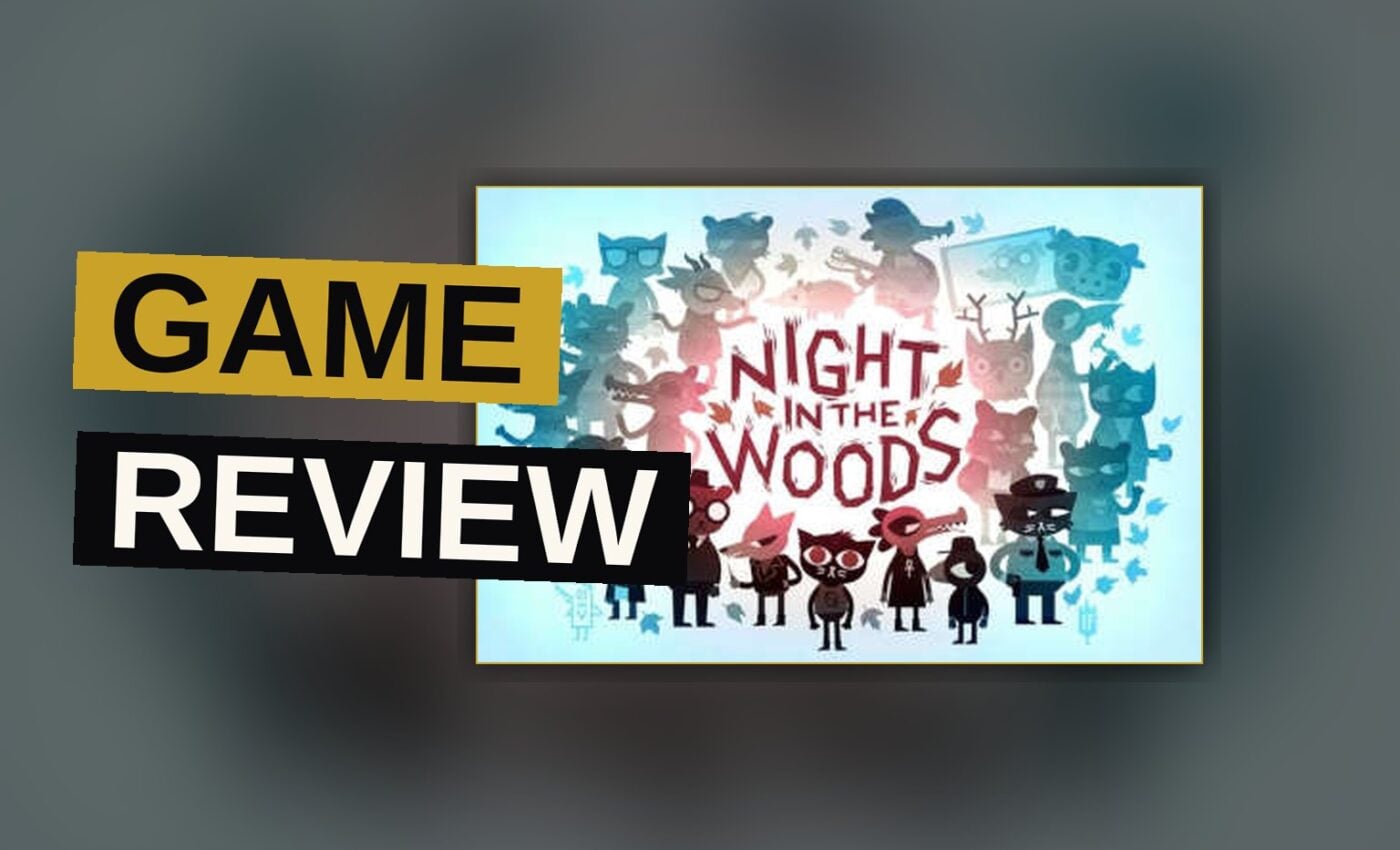
Night in the Woods is a game about coming home to a place that no longer feels like home. It is also a game about a talking cat named Mae, a decaying mining town, and the strange things that happen when the economy collapses and something older starts moving beneath the streets.
The game was released in 2017 for PS4, Linux, PC, and iOS. It follows Margaret “Mae” Borowski, a 20-year-old college dropout who returns to her hometown of Possum Springs after an unexplained break from school. What follows is a week of reconnecting with old friends, avoiding her parents’ questions, and slowly uncovering a mystery that the town would rather keep buried.
Trailer, via Night In The Woods.
Mae’s First Morning Back
The game opens with Mae waking up in her childhood bedroom. Her mother brings her breakfast. Her father makes awkward jokes. The room is still full of her old posters and her old books, but she does not belong here anymore, and she knows it. This first morning sets the tone for everything that follows.
Mae is the kind of protagonist who feels immediately real. She is restless, sarcastic, and deeply anxious, but she is also warm and curious. The game puts you in her paws for a full week, and every day is structured around small routines: waking up, talking to your mother, going out to see friends, and wandering the town.
The writing is sharp and lived-in. Dialogue between Mae and her friends feels like actual conversation, full of interruptions, inside jokes, and the kind of awkward silences that come with old friendships strained by time. Mae’s best friend, Gregg, is a hyperactive fox with a love for crime and his boyfriend Angus, a quiet bear who carries the weight of his own family history. The three of them, along with Bea, a crocodile who stayed in Possum Springs while everyone else left, form the emotional core of the game.
Possum Springs and Its Empty Streets
Possum Springs is a character in its own right. It is a former coal mining town that has seen better decades. The shops are closing, the young people are leaving, and the ones who stay are scraping by on part-time work and fading memories. The game does not romanticize this. It shows the boarded-up windows, the empty streets, and the quiet desperation of people who have nowhere else to go.
You meet a range of townsfolk over the week. There is the crusty old guy who runs the diner, the teenage goth who works at the convenience store, and the mysterious cultist who seems to know more than he lets on. Each character is drawn with care, and their conversations reveal the texture of a community that is holding on by its fingernails.
The game also makes room for quiet moments of reflection. Mae can sit on a bench and watch the leaves fall. She can play her bass guitar in the attic. She can call her friends at night and just talk. These moments are not filler. They are the point. Night in the Woods is a game about paying attention to the small things, because the small things are what make a life.
Gregg, Angus, and the Case of the Missing Person
Not all of the week is quiet. There is a mystery running through the story, and it starts with strange occurrences around town. Mae keeps having dreams about something in the woods. There are rumors of a missing person. And then there is the strange figure in a hood that Mae keeps seeing out of the corner of her eye.
Gregg is the one who drags Mae into the thick of it. He is always looking for excitement, and he sees the mystery as a chance to do something meaningful. Angus is more cautious. He worries about Gregg, and he worries about what might happen if they poke too hard at the town’s secrets. Their dynamic gives the investigation a human weight.
The mystery builds slowly, and the game does not rush it. You spend most of your time on the everyday stuff, and only gradually does the supernatural creep in. This pacing works in the game’s favor. By the time the strange events start to dominate, you are invested enough in the characters to care about what happens to them.
Bea’s Night at the Party
One of the best sequences in the game involves Bea. If you choose to spend time with her, you end up at a party in a warehouse on the edge of town. Bea is not having a good time. She is working a dead-end job, her father is sick, and she never got the chance to leave Possum Springs the way Mae did. The night is a slow, painful conversation about regret and resentment.
It is a masterclass in character writing. Bea is not a villain and not a victim. She is just a person who made different choices than Mae, and she is living with the consequences. The scene does not resolve anything. It just lets two old friends sit with their differences.
This is the kind of moment that makes Night in the Woods special. It is not about plot twists or big reveals. It is about two people trying to understand each other, and failing, and trying again. The game trusts you to find the meaning in that.
The Music and the Look
The art style in Night in the Woods is striking. It uses bold, flat colors and simple shapes, but the characters are expressive and the world feels full of personality. Mae’s animations are especially good. She walks with a slouch, kicks at the ground, and has a way of moving that makes her feel like a real person stuck in a cartoon body.
The music, composed by Alec Holowka, is a highlight. It ranges from gentle acoustic guitar to lo-fi electronic beats, and it always fits the mood of the scene. There are also several playable sequences where Mae plays her bass, and these are tied to a rhythm minigame that is simple but satisfying.
The sound design deserves a mention too. The town has its own ambient noise: distant trains, wind through the trees, the hum of a refrigerator in the kitchen. These details make Possum Springs feel lived-in.
Choices in the Week
Night in the Woods offers a branching structure, but it is not a game about big choices. You decide who to spend time with each day, and those choices affect which storylines you see. For example, you can choose to hang out with Bea or Gregg on certain days, and each path reveals different parts of their lives and different perspectives on the town.
The game does not punish you for missing things. It is designed to be played at your own pace, and the story holds together no matter what you do. That said, the choices you make do shape the texture of the experience. You might learn more about Bea’s grief or Gregg’s insecurities, and those details color the final act.
There is also a set of optional side activities. You can play a retro-style dungeon crawler on Mae’s computer, or take part in a band practice minigame, or just wander around and talk to people. None of these are required, but they add to the sense of a world that exists beyond the main plot.
The Last Day in Possum Springs
The final day of the week is where the game brings everything together. The strange events come to a head, and Mae has to decide what she believes and what she is willing to do. It is a tense sequence, and it does not flinch from the consequences of the town’s history.
Without spoiling the details, the ending is about acceptance. Mae cannot fix Possum Springs, and she cannot undo what has happened. But she can choose to stay, to be present, and to face the future with the people who care about her. It is a quiet conclusion, and it fits the game perfectly.
The credits roll over a song, and the game leaves you with a feeling that is hard to name. It is not triumph. It is not sadness. It is something closer to recognition. You have spent a week in a small town with a talking cat, and you have come to care about her and her friends. That is the game’s real achievement.
- The writing is consistently excellent, with dialogue that feels natural and lived-in.
- The art style is distinctive and expressive, giving the town and its people a strong identity.
- The music and sound design create a rich atmosphere that supports the story.
- The pacing is slow but deliberate, and it serves the character work well.
- The mystery is compelling, though it may not satisfy players looking for a conventional payoff.
Night in the Woods is a game about the spaces between big events. It is about the conversations you have on a park bench, the walks you take through an empty downtown, and the small kindnesses that hold a community together. It is a game that understands that the end of the world is often just a series of quiet endings, and that the best response to those endings is to hold on to the people beside you.
The game is a reminder that stories do not need to be loud to matter. It is a thoughtful, compassionate, and often funny piece of work, and it deserves its place among the best games of its generation.
Get the Notebook.
The day's best stories and every fresh verdict, in plain English, in your inbox by seven. One email a day, no more.