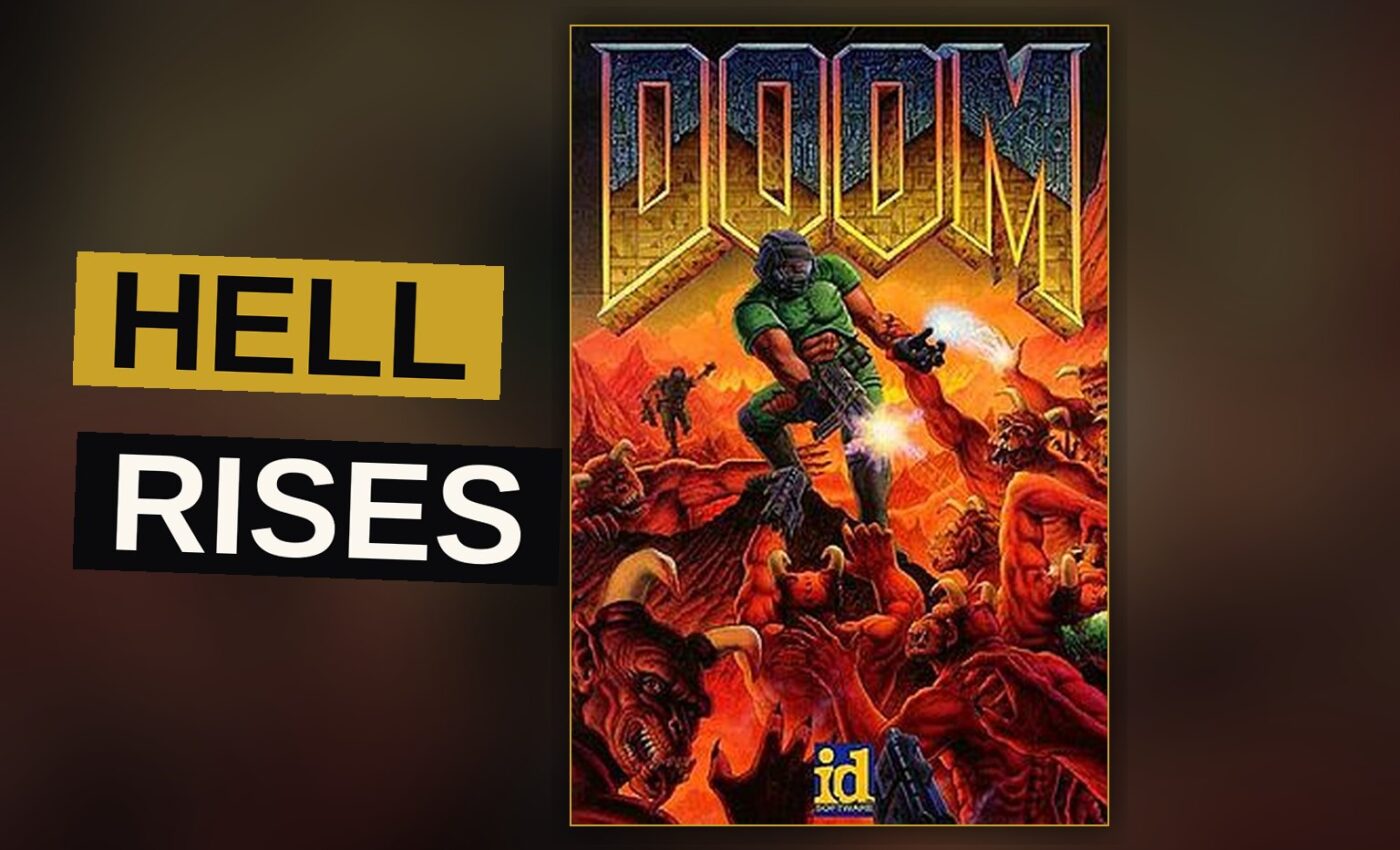
DOOM moves fast and never stops to explain itself. That is the point. This 2016 shooter for PC, PS4 and Xbox One drops players on Mars, into a fight against hell’s forces, and hands them a weapon collection that rewards moving forward over holding back.
Trailer, via Bethesda Softworks.
The Doom Guy Returns
The story is thin by design. In the opening scene, the nameless hero breaks free from restraints on a table and starts fighting. There is a research facility, a hell dimension, and a man running the operation who talks a lot while the hero says nothing. None of it matters much. What matters is the next room and the next fight.
Combat is where this game earns its keep. Enemies swarm in open arenas built for movement, not cover. Standing still gets a player killed. The health system pushes this further: health comes from Glory Kills, brutal close-combat finishers performed on stunned enemies. Running toward danger becomes the safest choice, which turns typical shooter logic upside down.
The Saw and Close Combat
The saw weapon works differently from most tools in the game. Fuel is limited, so cutting an enemy in half is a choice, not a default. It fills the player’s shot supply back up right away, which turns a panic button into something a player must plan around.
Weapon variety keeps the arenas from feeling the same again and again. The Super Shotgun remains a favorite for close range. A heavy cannon and rocket launcher handle bigger threats. Each weapon has two upgrade choices, opened up through hidden trials hidden into the campaign’s levels.
Below is a quick comparison of the main movement and combat tools players can open up:
| Tool | Purpose | Cost |
|---|---|---|
| Glory Kill | Close-range finisher, restores health | None, requires a stunned enemy |
| The Saw | Instant kill, fills shot supply | Limited fuel |
| Double Jump | Vertical movement | None |
| Hidden Trials | Opens up weapon upgrades | Time-limited challenge |
The Map Tool and Online Play
Outside the campaign, a built-in map tool lets players build their own levels without any coding knowledge. It is easy to use, but the results vary wildly in quality, and the tool feels better suited to casual tinkering than serious level design.
Online play is the weakest link.
It borrows familiar modes from other shooters without adding much of its own. A power-up that turns a player into a demon for a short time is a fun idea, but it does not carry the mode the way the campaign carries the rest of the package. Most players will likely spend their time in the single-player campaign and forget online play exists within a few weeks.
Level Design and Pacing
Levels open up as players progress, rewarding exploration with hidden areas, collectible figures, and secret upgrades. The pacing rarely lets up. Just when a section threatens to feel the same again and again, a new enemy type or weapon shakes things up.
The soundtrack, written by the game’s composer, earns real praise on its own. Heavy, distorted, and perfectly timed to combat peaks, it becomes part of the moment-to-moment feedback loop rather than background noise.
The look of the game leans into metal-built hellish landscapes and Mars-based facilities with a consistent, confident art direction. It is not the most advanced game of its time in raw looks, but it knows exactly what it wants to look like.
Switch owners eventually got their own version, though this review covers the original 2016 release across PC, PS4 and Xbox One.
DOOM succeeds by stripping the shooter genre down to movement, forward pressure, and weapon feedback, then carrying out all three with care. The campaign is the best part of the package. Online play and the map tool feel like side dishes next to a main course that does not need them.
This is a shooter that trusts its core loop completely, and that trust is earned.