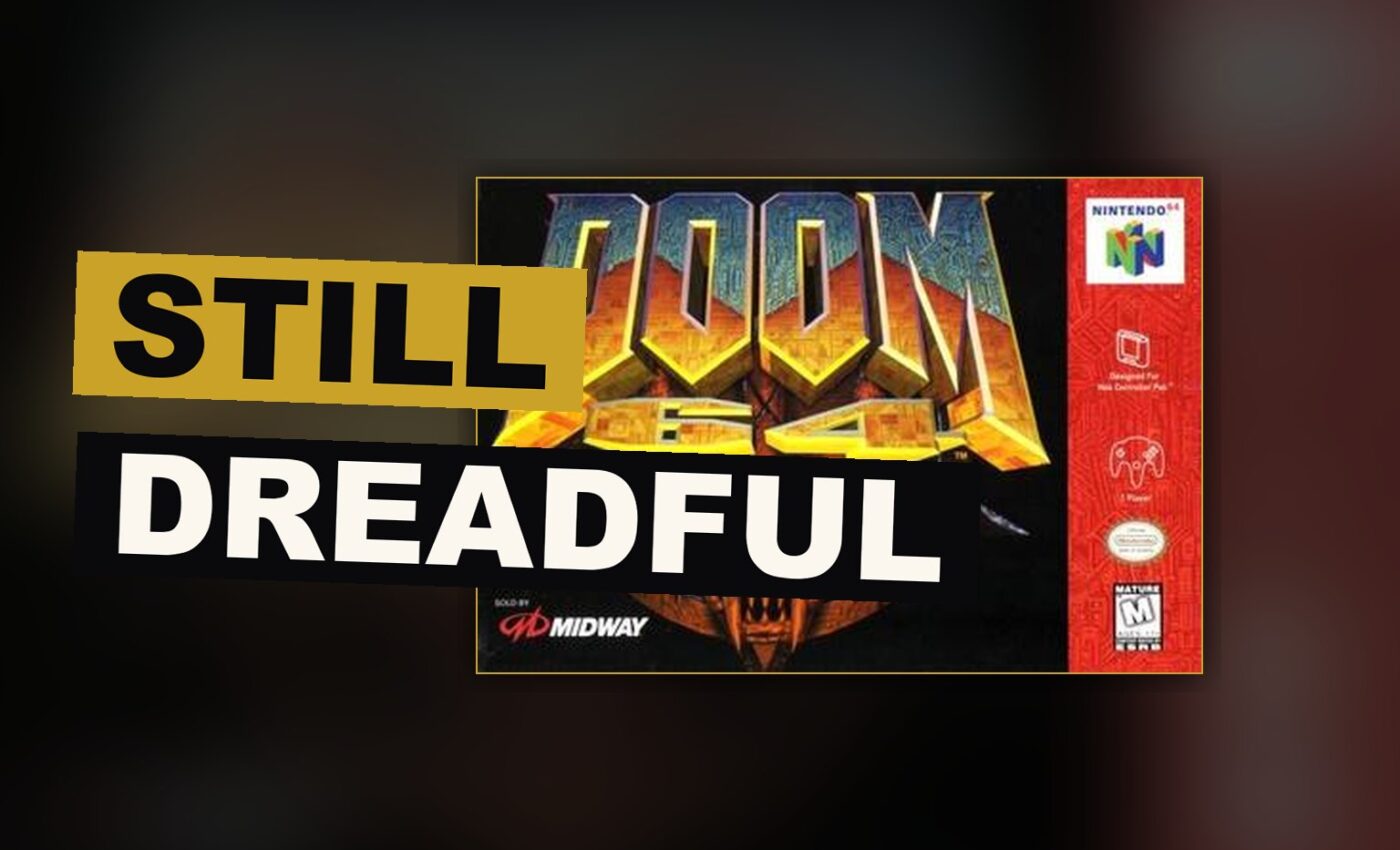
Doom 64 arrived in 1997 on the Nintendo 64, built by Midway Studios San Diego and published by Midway Games. It is the second spin-off in id Software’s Doom series after Final Doom, and the fourth Doom game overall. It is also the one that refused to move the furniture around.
The premise is a quarantine. After the Doom Marine thwarts Hell in Doom, Doom II: Hell on Earth and the Final Doom storyline, the Union Aerospace Corporation’s ravaged research installations are sealed off and left to fester beneath apocalyptic levels of radiation. For years the facilities stand abandoned. Then a barely functioning monitoring satellite sends a message back to Earth.
A Single Entity With Vast Rejuvenation Powers
That message describes a hidden horror. A single mysterious entity, its presence long masked by the deadly radiation, wields vast powers of rejuvenation. It has been steadily resurrecting the fallen demons, altering decaying dead carnage back into corrupted living tissue, rebuilding an infernal army. The Marine, the only experienced survivor of the earlier campaigns against Hell, is sent in alone.
It is a clean setup, and Doom 64 does not waste it. The game knows exactly what it is: a Doom game. The player advances through 28 story levels and 4 secret levels, battling demons, collecting weapons and keys, and activating switches to reach each level’s exit while surviving ambushes and traps.
28 Story Levels and 4 Secret Levels
That structure is the whole game, and it is not a criticism to say so. The Doom engine and its gameplay elements were customized for this release, and every visual asset — weapon and monster graphics alike — is unique to Doom 64. The customized engine enables new kinds of level geometry and dynamic colored lighting.
The lighting is the thing you notice first. Doom 64 is a dark game, and not in the thematic sense alone. Colored light pools in corners and bleeds down corridors, and the level geometry bends in ways the original engine could not manage. It is the most atmospheric Doom of its era, and it earns that reputation on technology rather than on new ideas.
The Marine Realizes the Demons Have Planned a Lure
The plot turns late. The Marine realizes the demons have planned to lure him back into Hell. They are nonetheless unable to defeat him, and with the Unmaker he eventually battles and kills the Mother Demon.
The ending is the part people remember. The Marine, no longer capable of having a normal life following his encounters with Hell’s forces, decides to remain in Hell forever to ensure no demon ever rises again. That is a real ending, not a victory screen. It gives the campaign a weight the earlier games never bothered with, and it costs nothing in mechanics to achieve.
The Lost Levels in the 2020 remaster continue the story. The Mother Demon was revealed to have a sister called the Resurrector, who banishes the Marine back to a UAC base and forces him to fight his way back to Hell. That branch connects the original games to the 2016 reboot of Doom and Doom Eternal.
What the Game Does Not Do
Here is the caveat, and it is the one that keeps Doom 64 from the top tier. The game adds no new gameplay elements compared to the previous games of the series. The customization is engine-level and asset-level. The verbs are the same verbs.
Some reviewers at the time criticized exactly that, and they were right to. Doom 64 does not introduce a new weapon class, a new mode, or a new way to move through a room. It is Doom with better light and worse visibility, and whether that reads as refinement or stagnation depends on what you wanted from a 1997 Nintendo 64 shooter.
What it does have is a soundtrack and atmosphere that hold up. The sound design and the colored lighting do work that the level design alone would not, and the new sprite graphics for weapons and monsters give the game a look distinct from its predecessors. It is a mood piece built on top of a familiar chassis.
The 2020 Remaster and the Cult Following
Doom 64 gained a cult following, with several fan-made PC source ports and mods keeping it alive long after the Nintendo 64 was gone. That following is not nostalgia for a hit. It is affection for a game that a lot of people missed the first time.
Nightdive Studios developed a remaster, published by Bethesda Softworks for Nintendo Switch, PlayStation 4, Windows and Xbox One in March 2020, and for Stadia in May 2020. The remaster is how most people encounter Doom 64 now, and it is the right way to encounter it. The Lost Levels alone justify the reissue.
Where Doom 64 Sits in the Series
The order matters. Doom 64 is the second spin-off after Final Doom and the fourth game overall. It was developed from 1994 under supervision of id Software, the main developer of the franchise, and was tentatively titled Doom: The Absolution. That title tells you what Midway thought it was making.
It is not an absolution. It is a side quest with exceptional production values and one genuinely great ending. The Marine’s decision to stay in Hell is the most interesting thing any Doom game of that era did with its protagonist, and it happens in a game most players skipped.
The graphics, level design, soundtrack and atmosphere drew praise, and that praise holds up. The complaint about the lack of new gameplay elements also holds up. Both things are true at once, and the score should reflect both.
The Verdict on Doom 64
Doom 64 is a good game that could have been a great one with one new idea. The engine work is real, the lighting is genuinely ahead of its time, and the campaign’s closing decision gives the whole thing a gravity the series had not earned before. The 28 levels and 4 secrets are well built and consistently moody.
But it is a refinement, not an advance. If you have played Doom and Doom II, you have played this game’s skeleton. What you have not played is this game’s skin, and the skin is worth the trip. The 2020 remaster makes that trip easy, and the Lost Levels extend it in a direction that ties the old games to the new ones.
This is the part worth watching: Doom 64’s reputation has grown because the things it does well — atmosphere, lighting, a bleak ending — are the things later shooters chased. It got there first, on a Nintendo 64, with a customized engine and no new mechanics to speak of. That is a strange legacy, and a deserved one.
Key facts
- Release year: 1997
- Developer: Midway Studios San Diego
- Publisher: Midway Games
- Platform: Nintendo 64
- Levels: 28 story, 4 secret
- Remaster: Nightdive Studios, published by Bethesda Softworks, March 2020 (Nintendo Switch, PlayStation 4, Windows, Xbox One); May 2020 (Stadia)
- Metacritic: 7.6/10
Get the Notebook.
The day's best stories and every fresh verdict, in plain English, in your inbox by seven. One email a day, no more.