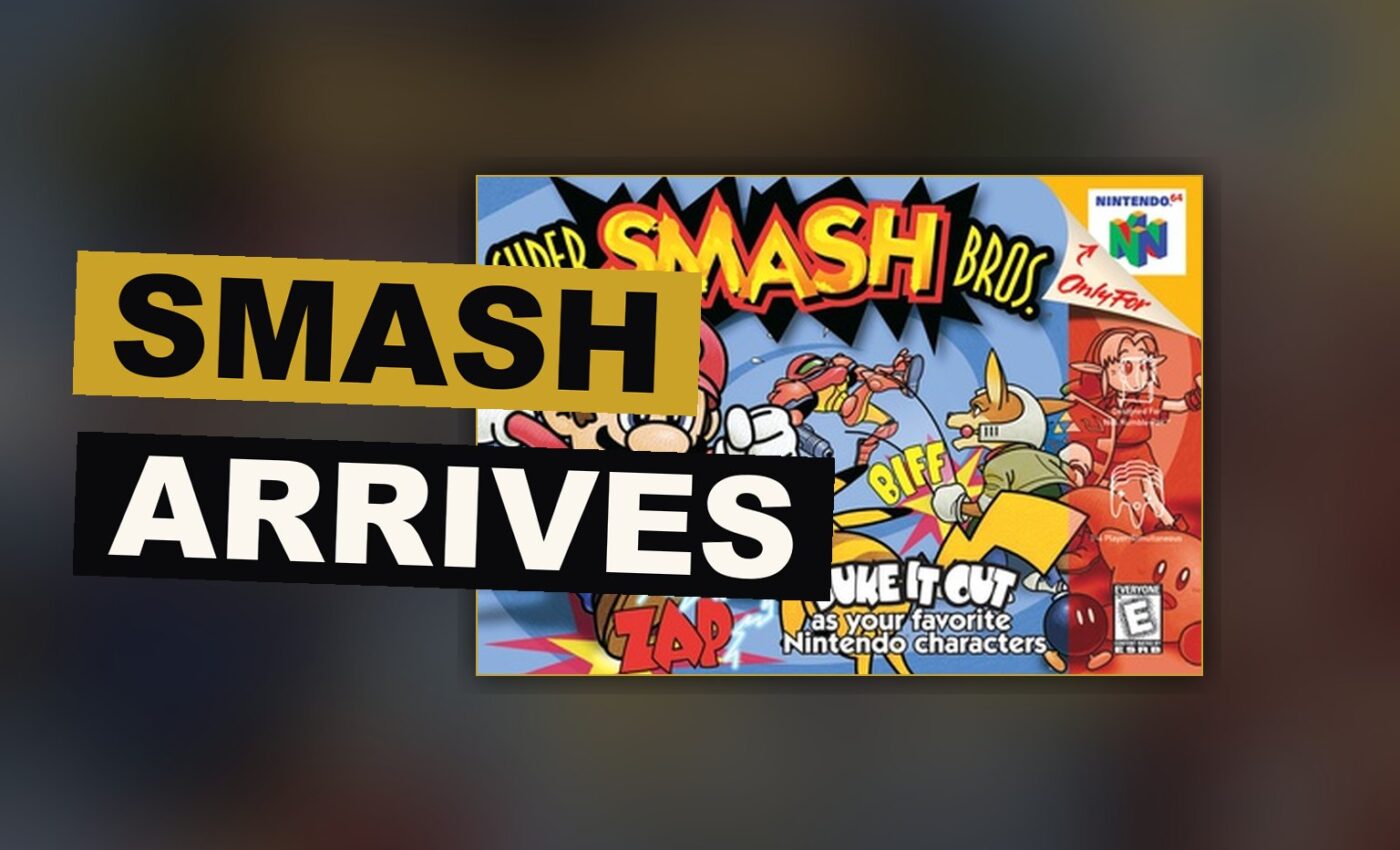
Nintendo’s crossover fighter arrived on the Nintendo 64 in 1999, and it broke the rules of its own genre on purpose. Super Smash Bros. takes Mario, Link, Pikachu and nine other Nintendo characters and drops the life bar. Instead of draining a health meter, players knock each other off an open stage. It should not work. It does.
Twelve Fighters, Eight Unlocked From the Start
Super Smash Bros. is the first game in the series, developed by HAL Laboratory and published by Nintendo. It gathers characters and locations from Mario, The Legend of Zelda, Star Fox, Yoshi, Donkey Kong, Metroid, F-Zero, Mother, Kirby and Pokémon. Twelve characters are playable. Eight are available immediately, and four more unlock by meeting specific criteria.
Each fighter keeps the moves from their own series. Samus brings her charged blasters. Link carries his arsenal of dungeon items. A symbol sits behind each damage meter, matching the franchise: a Triforce behind Link, a Poké Ball behind Pikachu.
A Percentage Instead of a Health Bar
The damage total is a percentage, and it rises as the character takes hits. The higher it climbs, the further attacks send the character flying. To score a knockout, a player must send an opponent off the edge of the stage — the arena has open boundaries, not walls.
Recovery matters as much as offense. A character knocked off the stage can jump back, and some jumps reach further than others. Street Fighter and Tekken ask players to memorize complicated button combinations. Super Smash Bros. uses the same control combinations for every character’s moves. Characters move freely instead of locking faces with an opponent.
Instead of depleting an opponent’s life bar, Smash Bros. players seek to knock opposing characters off the stage.
Koopa Shells and Poké Balls
Items fall randomly onto the stage during battle. They come from Nintendo franchises: Koopa shells, hammers, Poké Balls. They deal damage, restore health, or drop more items. Nine multiplayer stages pull from the same catalog, including Planet Zebes from Metroid and Sector Z from Star Fox. The Nintendo 64 Rumble Pak is supported.
Release Dates and Sales
| Region | Release date |
|---|---|
| Japan | January 21, 1999 |
| North America | April 26, 1999 |
| Europe | November 19, 1999 |
| China (iQue Player) | November 15, 2005 |
Super Smash Bros. sold more than five million copies worldwide by 2001, with 2.93 million in the United States and 1.97 million in Japan. IGN gave it an Editors’ Choice award for Best Fighting Game, and it became a Nintendo 64 Player’s Choice title. Super Smash Bros. Melee followed on the GameCube in 2001.
The comic-book art on the box and in the manual shows the cast as toy dolls that come to life. Later games dropped the dolls for trophies and in-game models. That change cost the series some of its charm.
What holds up is the design. Percentage damage turns every hit into a countdown toward disaster, and the open stage turns recovery into a skill worth learning. The twelve-character roster already shows the range the sequels would build on. The single-player offerings are thin, and the item drops can decide a match that skill should have settled.
Super Smash Bros. is not the deepest fighting game on the Nintendo 64. It is the one that understood what a fighting game could be.
Get the Notebook.
The day's best stories and every fresh verdict, in plain English, in your inbox by seven. One email a day, no more.