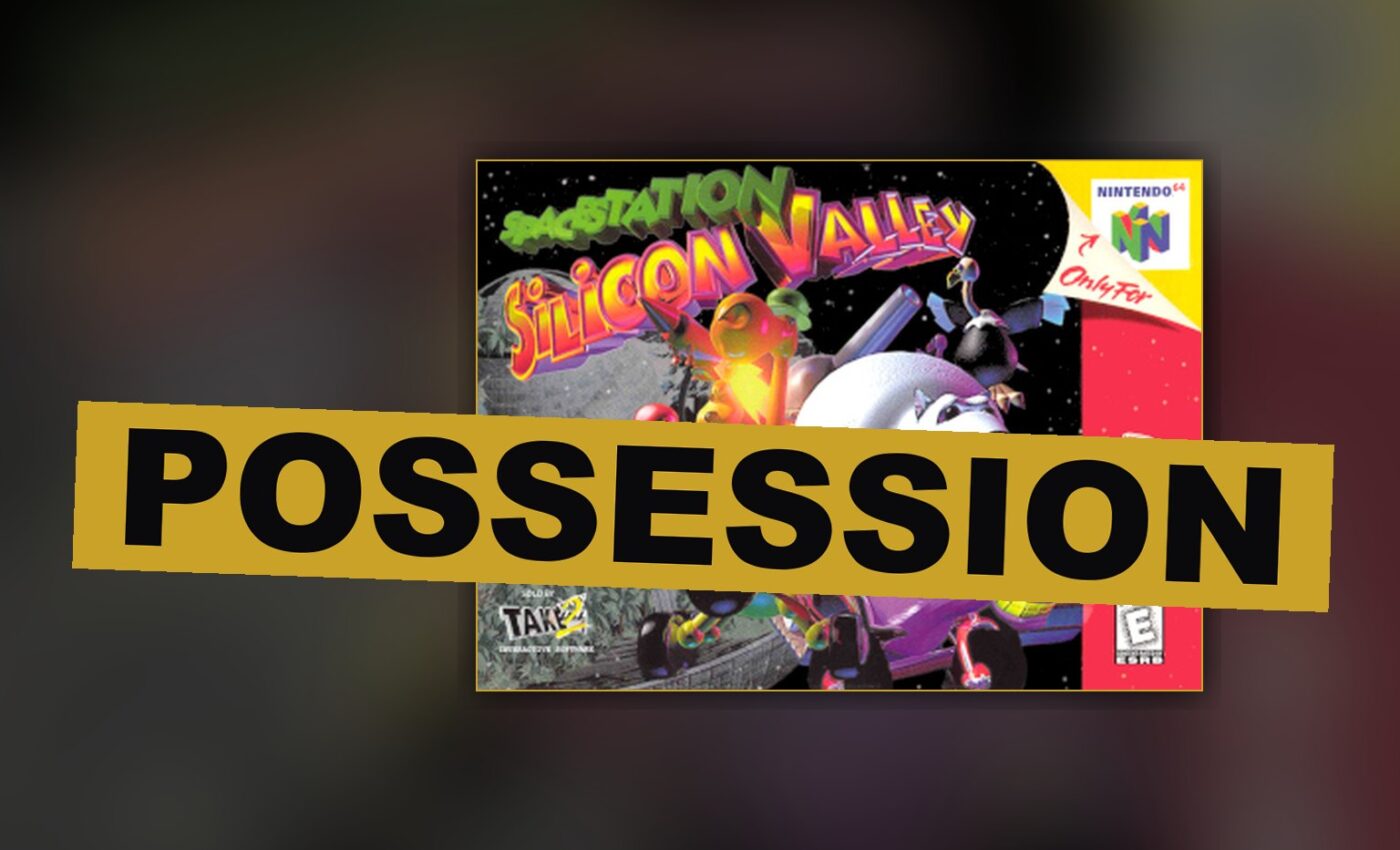
Space Station Silicon Valley is a platform game about a robot who loses his body and spends the rest of the game borrowing other ones. DMA Design developed it, Take-Two Interactive published it, and it arrived on the Nintendo 64 in October 1998. The premise is simple and strange in equal measure: Evo, reduced to a crawling microchip after a ship crash, takes control of robotic animals to solve puzzles and fight his way across a space station on a collision course with Earth.
Dan Danger and the Crash Landing
The setup holds up. In 2001, the station Silicon Valley launches carrying robotic animals. Seven minutes later it vanishes. It reappears a thousand years on, and every expedition sent to retrieve it disappears without explanation. Dan Danger and Evo are the next team in. They crash land, Evo’s body is destroyed, and Dan stays trapped in the wreckage assigning missions while Evo goes out to find his missing parts and fix the control station.
That split is the game’s smartest structural choice. Dan is a voice in your ear, not a second playable character, and he comments on your performance as you go. It keeps the fiction moving without slowing the levels down.
The station’s four environments break down like this:
| Environment | Sub-levels | Objective types |
|---|---|---|
| Euro Eden | 6–10 | Switches, fences, collection |
| Arctic Kingdom | 6–10 | Switches, fences, collection |
| Jungle Safari | 6–10 | Switches, fences, collection |
| Desert Adventure | 6–10 | Switches, fences, collection |
Bears, Ice Blocks and the Power Cells
The animal possession is where Space Station Silicon Valley earns its reputation. Each animal has different characteristics, including survival rate and special attacks, and each uses different abilities. Large animals such as bears can destroy ice blocks that other animals cannot. Some animals cannot survive in unfamiliar environments at all, which forces you into another body whether you want one or not.
You collect Evo’s power cells to maintain energy, and you solve puzzles and defeat enemies with whatever body you are wearing at the time. Each sub-level sets its own objectives — activating switches, disabling electric fences, gathering a set number of objects — and hidden objectives run alongside them:
- Collect a souvenir
- Make an animal perform a certain act
Finish a hidden objective and you earn a gold trophy. Collect all the trophies and a bonus level opens up.
A Glitch on Fat Bear Mount
One caveat belongs in any honest account of the Nintendo 64 version. A glitch prevents the player from collecting the souvenir on the level Fat Bear Mount. That single item sits between a completionist and the bonus level, and it was never the player’s fault.
The rest of the design is remarkably clean. The soft focus look, shaped by the hardware, gives the station a style akin to Plasticine models. The British humour distinguishes the game from its contemporaries, and the music was built to resemble B movies. None of that is decoration. It is the reason the game still has a face.
The Evil Brain and New York Harbor
The plot runs to a real conclusion rather than a shrug. Evo repairs his body, reaches the control room, and confronts the Evil Brain running the station, which is fascinated by Evo’s abilities and wants to keep him to complete its collection of robotic animals. The Evil Brain threatens to destroy Earth with a shrink ray and is quickly defeated. Evo still cannot stop the station spinning out of control. It hits Earth and lands in New York Harbor, the robotic animals escape into New York City, and Evo terminates them before they can terrorise the planet.
That ending is a joke told with a straight face, and it is the correct ending for this game.
What the Sales Figures Cannot Undo
Space Station Silicon Valley was acclaimed on release, with praise directed at the intuitive mechanics, innovative level design and comical concepts. It won Game of the Month and Most Innovative Game from IGN, among other awards. It also sold poorly, and not well enough to justify a sequel. That gap is the story of the game: a studio at the top of its form making something nobody had asked for, and a market that did not show up.
The animal-possession mechanic is not a gimmick here. It is the whole architecture. Every level is a question about which body fits the job, and the answer changes as the environment turns hostile. Few platform games of the era asked players to think that way, and fewer still made the thinking funny.
The Fat Bear Mount glitch is a genuine flaw and a small one. The commercial failure is the larger loss, because the sequel this game sets up would have been worth having. What remains is a 1998 Nintendo 64 platformer with a Plasticine space station, a robot with no body of his own, and a final act that ends in New York Harbor.
Get the Notebook.
The day's best stories and every fresh verdict, in plain English, in your inbox by seven. One email a day, no more.