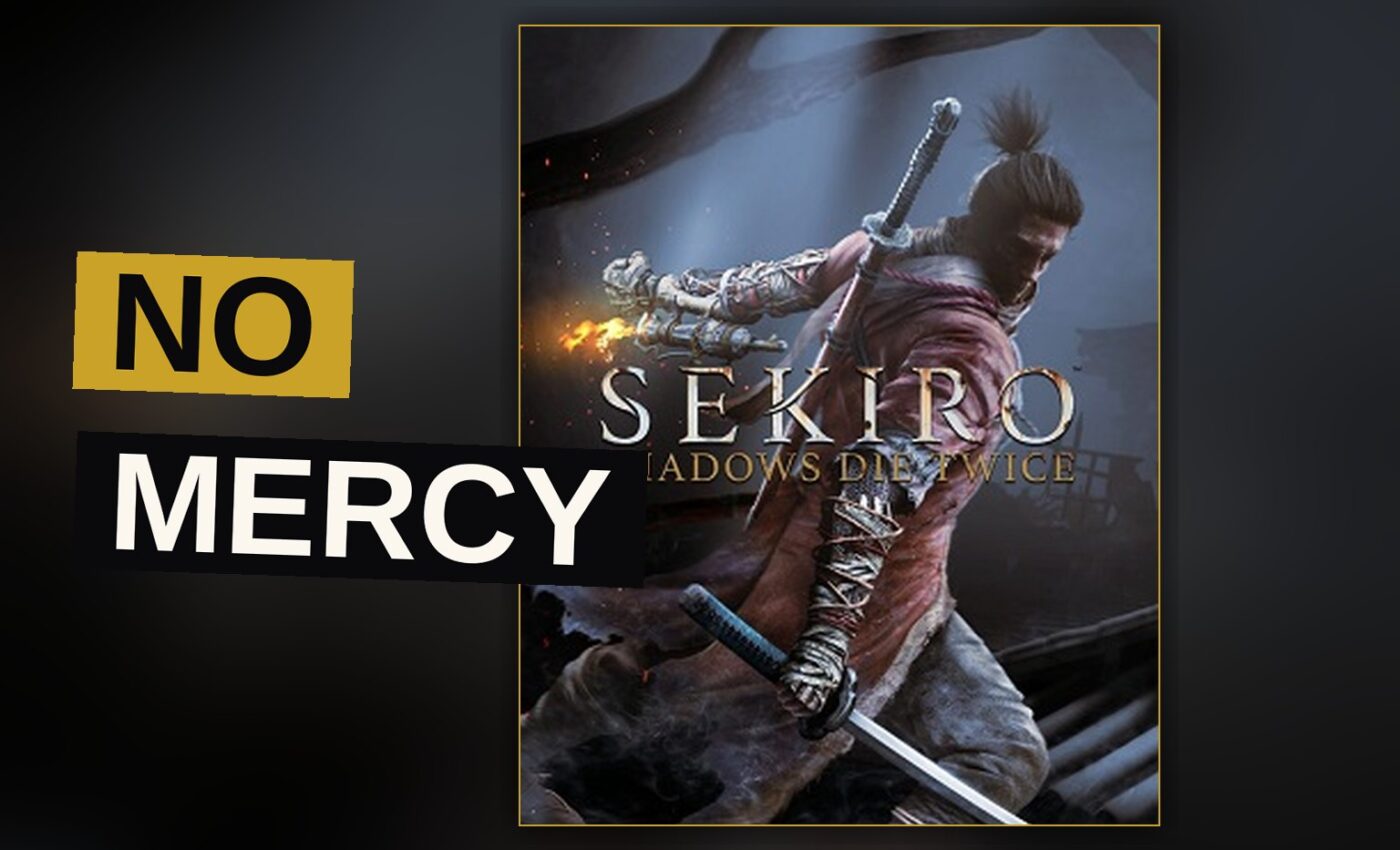
Sekiro: Shadows Die Twice opens with a shinobi face-down in a field, sword still in hand, and spends the next thirty hours making sure you feel that position. FromSoftware’s 2019 action-adventure, published internationally by Activision and released in March 2019 for PlayStation 4, Windows and Xbox One, trades the studio’s familiar RPG scaffolding for something leaner and meaner. It is a game about posture, timing, and the refusal to let you grind your way out of a problem.
Trailer, via sekirothegame.
Wolf Loses an Arm in the First Hour
The story wastes no time. Wolf, an orphan raised by the wandering shinobi Owl, guards the young lord Kuro. Genichiro Ashina wants Kuro’s “Dragon’s Heritage” to build an immortal army and save his collapsing clan. Genichiro wins the first duel, severs Wolf’s left arm, and takes the boy. The Sculptor fits Wolf with a prosthetic, and the rescue mission begins.
That setup matters because Sekiro keeps its stakes personal. There is no character creation here, no stat spread to optimize, no real-time multiplayer. You are Wolf. You will play Wolf’s story or you will not play at all.
Posture Replaces the Health Bar
Combat in Sekiro revolves around a katana, not a spreadsheet. Rather than whittling down health points, you attack an enemy’s posture and balance, deflecting incoming strikes until an opening appears for a single killing blow. It is a dueling system, and it demands that you learn each opponent rather than out-level them.
What survives from the older games is customization at the edges. Gear upgrading, a skill tree, special abilities tied to the prosthetic arm, and limited ability tweaks all remain. Resurrection is the real departure: die and you can revive on the spot if you have the power, which you refill by defeating enemies, instead of respawning at an earlier checkpoint.
Stealth and a Grappling Hook
Sekiro is not only a boss rush. Stealth lets players instantly eliminate or severely damage most enemies if they close the distance undetected. A grappling hook opens vertical routes for both combat and exploration. The game takes place in a fictionalized Sengoku-period Japan and leans hard on Buddhist mythology and philosophy.
The boss battles carry the emphasis. Lead director Hidetaka Miyazaki wanted a new intellectual property, a break from Dark Souls, built around shinobi and ninja. The Tenchu series, already tied to FromSoftware and to that historical theme, became the impetus for the project.
What Sekiro Keeps and What It Drops
Compared with Dark Souls, the trade is stark:
| Element | Dark Souls series | Sekiro: Shadows Die Twice |
|---|---|---|
| Character creation | Yes | No |
| Stat leveling | Broad | Removed |
| Real-time multiplayer | Yes | None |
| Core combat goal | Reduce health | Break posture |
| Death penalty | Respawn at checkpoint | Revive on the spot |
The list of what remains is short and deliberate:
- Gear upgrading
- Prosthetic arm abilities
- A skill tree
- Limited ability customization
That is the whole kit. Sekiro strips the genre down and bets everything on the sword.
Isshin, Emma, and a Clan Running Out of Time
Two decades after the coup that won Ashina its land, the clan is failing. Isshin is elderly and ill. The Interior Ministry presses in to finish the unification of Japan. Genichiro’s answer is Kuro’s blood; Isshin’s answer is to have his physician, Emma, warn Wolf so the two can flee.
Wolf assaults Ashina Castle, meets Isshin, and receives a new name: Sekiro. Optional meditation sequences send him back three years, to the night bandits led by the shinobi Lady Butterfly raided Kuro’s home. Owl apparently died that night. Sekiro killed Butterfly, was stabbed by an unknown assailant, and lived only because Kuro shared his blood with him.
The Difficulty Argument Misses the Point
Opinions on Sekiro’s difficulty were mixed, and that split has always been the least interesting thing about it. The game is hard because its posture system is honest. Every death traces back to a read you missed or a deflect you rushed. Blaming the difficulty is like blaming a ruler for measuring short.
The setting does more work than it gets credit for. A fictionalized Sengoku Japan filtered through Buddhist imagery gives FromSoftware a palette it had never used, and the result is the studio’s most coherent world. Tenchu’s ghost is in the grappling hook and the rooftops, and it fits.
Ten Million Units and a Game of the Year
Sekiro won several year-end awards, including the Game Award for Game of the Year. It has sold over ten million units as of September 2023. Those numbers say something simple: a game with no multiplayer, no character creator, and no difficulty slider found a mass audience anyway.
The verdict is not complicated. Sekiro: Shadows Die Twice is the cleanest argument FromSoftware has ever made that constraint breeds craft. It is not the studio’s biggest game. It may be its sharpest. The prosthetic arm, the posture meter, and the single killing blow form a loop tight enough to carry the whole thing.
Get the Notebook.
The day's best stories and every fresh verdict, in plain English, in your inbox by seven. One email a day, no more.