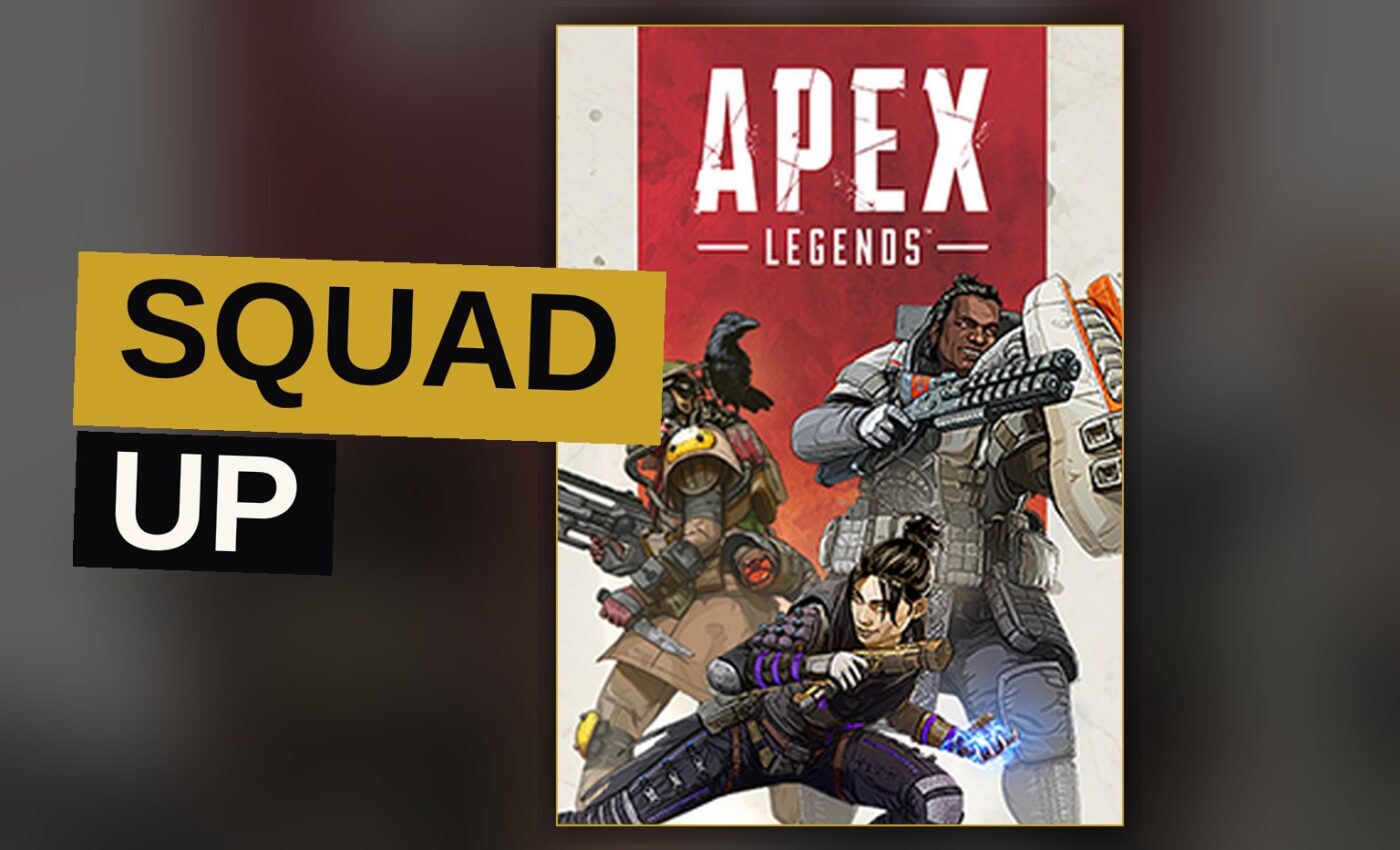
Apex Legends arrived in February 2019 with no warning. Respawn Entertainment and Electronic Arts shipped the game for PlayStation 4, Windows and Xbox One without prior marketing or an official announcement, and the surprise was the point. Work had begun around late 2016, and the project stayed secret right up to launch. What players downloaded that week was a free-to-play battle royale built on squads of three, set in the same science fiction universe as Respawn’s Titanfall series.
Trailer, via Apex Legends.
Three-Player Squads and the Legends Who Fill Them
The core of Apex Legends is the squad. Players form into teams of three and pick from pre-designed characters with distinct abilities, called Legends. Each one has a unique design, personality and set of abilities that pushes the team toward a different way of playing. That structure is closer to a hero shooter than to the battle royale games that came before it, and it is the reason the game holds up.
The battle royale mode hosts up to 20 three-person squads, or 15 two-person duos. Alternate modes have been added since launch, including support for squads of up to four players. The roster keeps growing, and starting with Season 16 every Legend is sorted into one of five class styles: Assault, Skirmisher, Recon, Controller and Support. That sorting matters more than it sounds. It tells a new player what a character is for before they have learned the abilities by heart.
Arenas came later. In that mode, two three-player squads fight a 3v3 team deathmatch over a series of rounds. A team wins by reaching at least 3 points while sitting 2 points ahead of the other squad. It is a smaller, tighter version of the same combat, and it gives players a reason to stay when the battle royale loop wears thin.
The Frontier War Is Over, and the Outlands Are Not
The setting is doing real work here. The Frontier War between the Interstellar Manufacturing Corporation and the Militia has ended after hundreds of years. Peace arrived, but so did a cost: when the IMC and the Militia left, they took everything of value and left the Frontier worlds in disarray. With no way to support themselves, people left their homes. The brave relocated to the Outlands.
The Outlands are a remote cluster of planets on the fringes of the Frontier, untouched by war and full of resources and opportunity. Life is cheap there. Danger waits around every corner. Its pioneers, explorers and outlaws once spent their lives locked in an endless power struggle. Now they settle their differences in the Apex Games, a bloodsport where Legends from all corners of the Frontier compete for money, fame and glory.
That is a clean piece of world-building, and it explains the game’s tone without a cutscene. The Frontier is not a battlefield anymore. It is a place where people fight for a purse because there is nothing else left to fight for. Respawn’s own summary puts it plainly: conquer with character, on the fringes of the Frontier, in a rugged world where anything goes.
Master an ever-growing roster of diverse Legends, deep tactical squad play and bold new innovations that go beyond the Battle Royale experience—all within a rugged world where anything goes.
Free to Play, and Priced Accordingly
Apex Legends is free-to-play and monetized through microtransactions and loot boxes. Players spend real money and in-game currency on cosmetic items, including outfits for the Legends and new colors for weapons. Nothing in that list changes how a match plays out. That is the right call, and it is worth saying clearly: the things you can buy are the things you can see, not the things that decide a fight.
The game is continuously updated under the games as a service model. That model is a promise as much as a business plan, and Respawn has kept it. Cross-platform multiplayer is supported across all versions, which matters for a game whose entire appeal is filling a squad quickly.
Every Platform Apex Legends Landed On
The version history is worth laying out, because the game did not arrive everywhere at once.
| Version | Release |
|---|---|
| PlayStation 4, Windows, Xbox One | February 2019 |
| Nintendo Switch | 2021 |
| PlayStation 5, Xbox Series X/S | 2022 |
| Nintendo Switch 2 | 2025 |
A mobile version designed for touchscreens was briefly available and was discontinued in 2023. That is the one branch of the project that did not last, and it is a reminder that not every platform bet pays off.
Where the Shooting Actually Lives
The perspective is first person, and the genres are shooter and tactical. Both words are load-bearing. The shooting is fast and readable, but the tactical layer is what separates Apex Legends from a crowded field. Squad composition, class roles and ability timing all feed into a match before a single shot lands.
Themes run to action and science fiction, and the modes cover multiplayer, co-operative play and battle royale. Co-operative is the honest word for it. You cannot carry a squad of three by yourself against 19 others, and the game knows it. Three-player squads are not decoration; they are the reason a match with strangers can still turn into a team effort.
The roster is the game’s best argument and its biggest ongoing task. Every new Legend has to fit into five class styles without making the others pointless, and the game has to keep doing that for years. So far it has. The classes added in Season 16 gave the roster a shape it had been missing, and the four-player squads gave players a way to bring a bigger group without splitting up.
What 8.8 Out of 10 Means Here
Apex Legends earns an 8.8 out of 10. The score matches the published critical figure, and it is the right number for what this game is.
The surprise launch was a stunt, but the game underneath it was not. Respawn shipped something with a clear identity: three-player squads, distinct Legends, a first-person tactical shooter wrapped around a battle royale. The free-to-play model is fair, the cosmetic-only monetization keeps the playing field level, and cross-platform multiplayer keeps the squads full.
The weak points are structural rather than fatal. A live-service game is only as good as its next update, and Apex Legends has to keep adding Legends that matter without breaking the ones already there. The discontinued mobile version shows that not every expansion of the idea works. Arenas is a good mode, but it lives in the shadow of the battle royale that made the game’s name, and the 3v3 round structure asks players to care about a scoreline when the main mode asks them to care about survival.
None of that changes the verdict. Apex Legends got where it is by picking a squad size and building everything around it. The Frontier War is over. The Apex Games are not, and that is the part worth watching.
Get the Notebook.
The day's best stories and every fresh verdict, in plain English, in your inbox by seven. One email a day, no more.