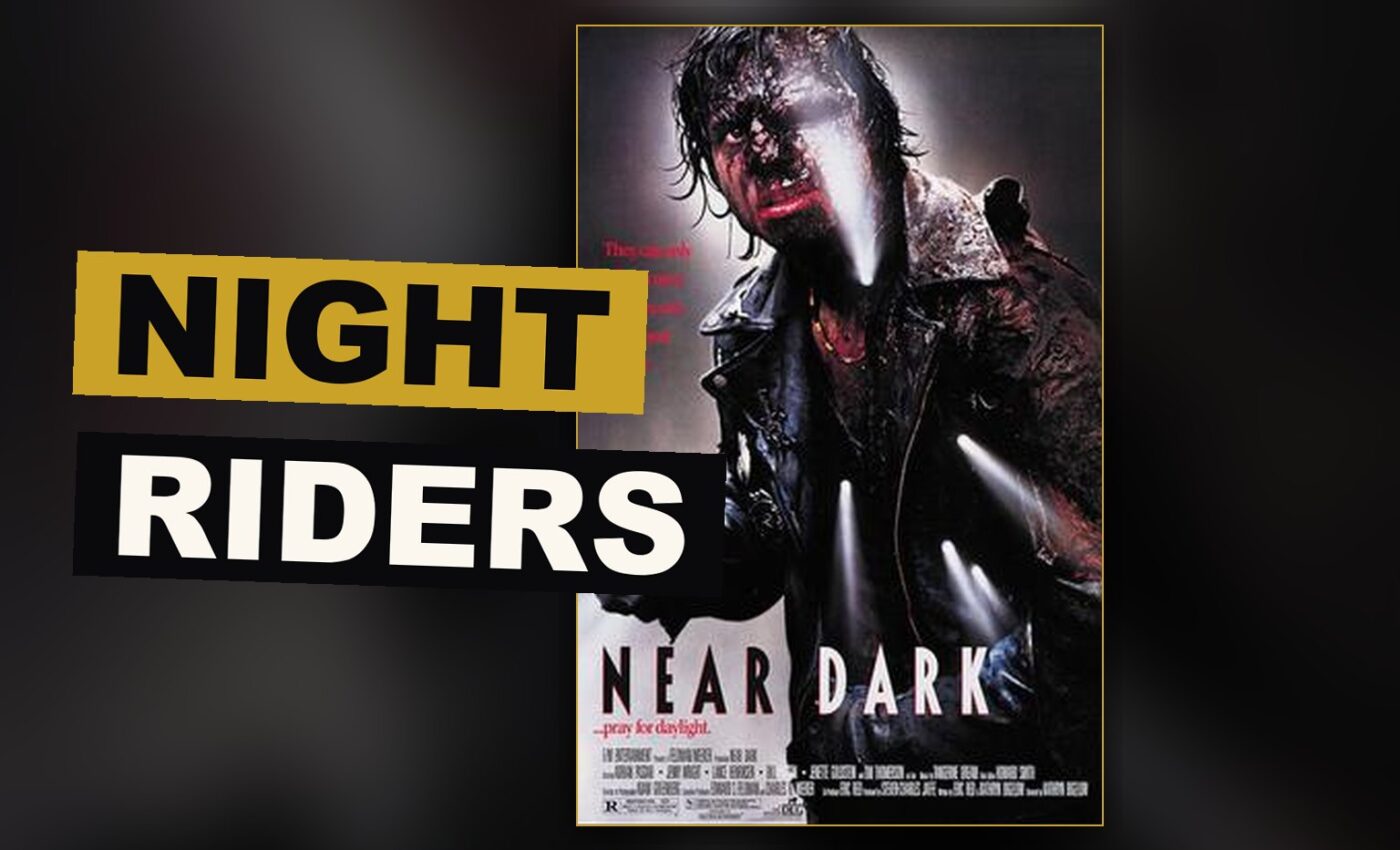
Near Dark opens with an attack and never really stops moving. Kathryn Bigelow’s 1987 vampire film trades castles and capes for trucks and bars along the road, and the exchange works.
The Setup
A young man meets a stranger, is marked by her, and ends up riding with a family of drifters who feed after dark. That’s the whole story, told plainly and fast. Bigelow keeps the camera close to the road and the diners and the empty gas stations, and the horror comes from how ordinary the country looks around it.
The Cast
The family of drifters carries the film. Their presence feels real, not staged. Each member gets a moment to show cruelty or tenderness, sometimes both in the same scene, and the young couple at the center of the story hold the quieter, sadder half of the film together.
Style Over Fright
Bigelow is not chasing sudden frights here. The film depends on mood, on long parts of the highway at night, on fire and light from passing cars doing the work that gore might do elsewhere. It’s a horror film that trusts silence and space, which will not please every viewer looking for a body count.
What Works, What Does Not
The pacing loses energy in the middle portion, where the family’s wandering starts to feel like a repetition rather than a source of dread. But the ending brings the threads back together with real force.
| Element | Strength |
|---|---|
| Mood | High — the neon and darkness stick with you |
| Story flow | Irregular — loses energy in the middle portion |
| Cast bond | Strong — the family feels truly connected |
| Fright level | Low — this is mood horror, not sudden horror |
Near Dark Against Its Genre Peers
| Film | Approach | Setting |
|---|---|---|
| Near Dark | Quiet dread, journey across open country | American country, present day |
| Older vampire films | Formal, set within walls, confined to old halls | Old World, period setting |
A Closer Look at the Pacing
| Part | Feel | Level of dread |
|---|---|---|
| Opening | Fast | High |
| Middle | Not as fast | Moderate |
| Ending | Fast | High |
Near Dark does not remake the vampire film so much as move it to new ground, and that change is what makes it worth remembering. It is rough in spots, thin in others, but it commits fully to its own strange version of the genre, covered with dust and open road.