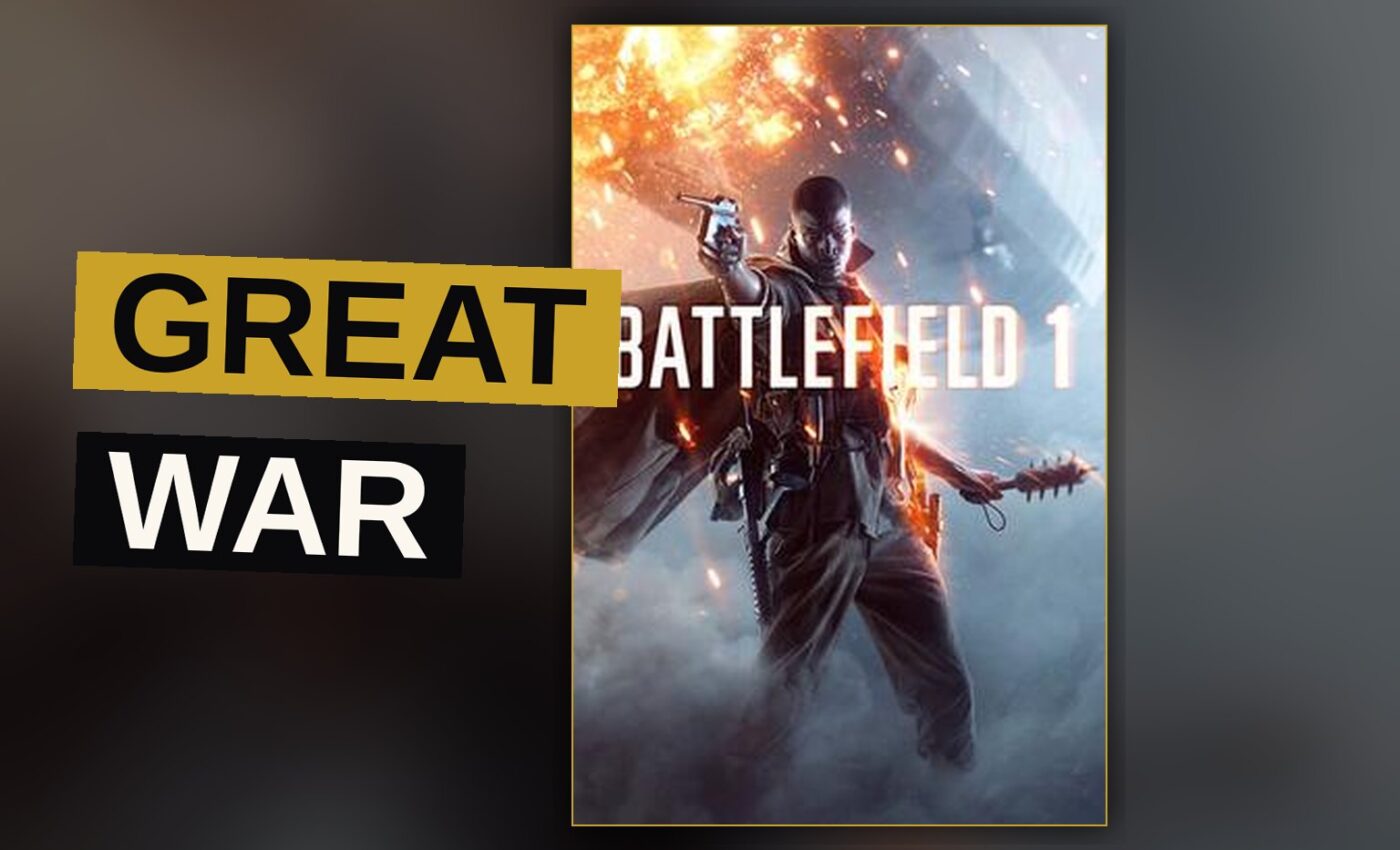
Battlefield 1 takes the series back to the First World War, and the change does wonders. The game drops the near-future gadgets of recent entries for bolt-action rifles, horses, and biplanes. It feels slower, heavier, and more desperate than any Battlefield before it. That shift in tone is the game’s biggest win, and it carries the whole experience.
Trailer, via Battlefield.
The Great War’s New Sandbox
The single-player campaign, called War Stories, trades one long hero’s journey for five short vignettes plus a prologue. Each follows a different soldier across a different front. You get a tank driver in the desert, an Italian mountain fighter, an Australian runner in Gallipoli. The stories are brief and sometimes thin, but they give the war a human scale that the multiplayer never could. The game does not pretend the war was glorious. It shows mud, gas, and the constant grind of men against machines.
The best of these missions is “The Runner,” set on the beaches and trenches of Gallipoli. It puts you in the boots of a messenger scrambling between positions while shells land all around. The level design forces you to move, to duck, to improvise. It is a tight, tense slice of what makes Battlefield 1 special. The other stories are less memorable, but none of them overstay their welcome.
Multiplayer That Rewrites the Rules
The core of Battlefield 1 is its multiplayer, and that is where the game truly shines. The class system has been rebuilt around the weapons of the era. The Scout carries a bolt-action rifle that rewards patience. The Medic gets a self-loading rifle and a syringe to revive teammates. The Support has a light machine gun and ammo crates. The Assault is the front-line fighter, armed with a submachine gun and anti-tank grenades.
The design backs up the game’s grim tone. Tanks are rare and powerful, but they break down and need repairs. Planes are fragile and slow to turn. Horses let you charge across open ground, but a single shot can knock you off. Every tool has a cost.
“The game does not pretend the war was glorious.”
The result is a multiplayer loop that feels less like a shooting gallery and more like a coordinated push. Squad play matters more than individual aim. The maps support that push.
Each one is built around a handful of flags, and the terrain forces you to think about cover. The French town of Amiens is a maze of narrow streets and destroyed buildings. The Sinai desert is a wide, open stretch where snipers rule. The Italian Alps map, Monte Grappa, is a vertical climb with tunnels and bunkers. Every map offers a different rhythm, and the game’s Operations mode strings several together into a single, grand battle that can last an hour.
Sound and Fury
The presentation is top-tier. The sound design is the best in the series. Bullets crack overhead, artillery rumbles in the distance, and the screams of charging soldiers fill the air. The score mixes orchestral pieces with period-accurate songs, and it lands hard. The graphics are sharp, with weather effects that can turn a sunny field into a choking fog. The game runs at a steady pace on PS4 and PC, though the Xbox One version has a few frame drops in the busiest moments.
There are flaws. The campaign is short, and its characters rarely get the time to develop. The multiplayer’s progression system is simple, offering weapon unlocks but little else. Some of the new vehicles, like the armored train, feel overpowered on certain maps. And the game’s focus on authenticity means some weapons are frustratingly inaccurate at range. But these are small complaints against a package that feels fresh and confident.
It earns its place among the best of the year.
Get the Notebook.
The day's best stories and every fresh verdict, in plain English, in your inbox by seven. One email a day, no more.