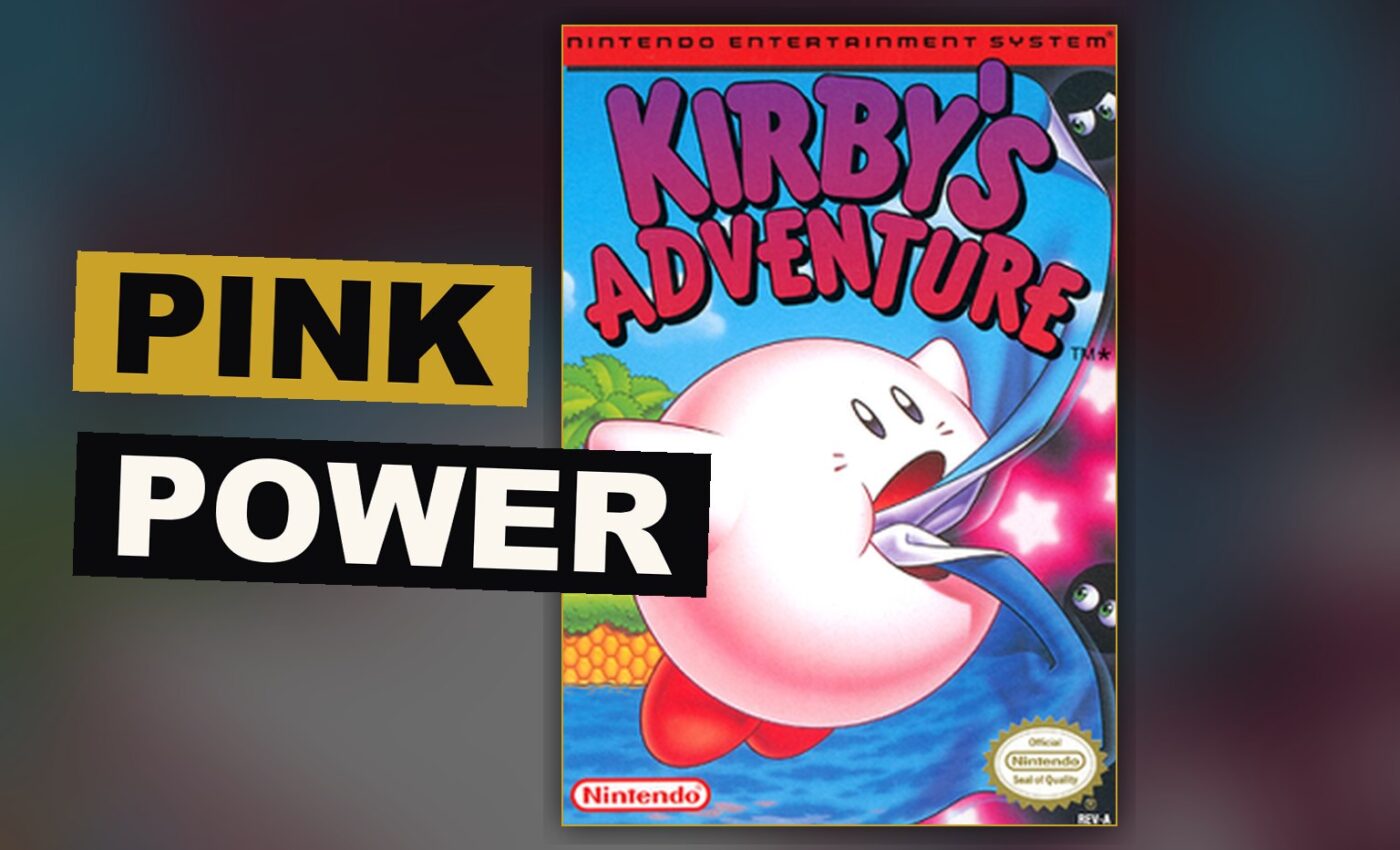
Kirby’s Adventure arrived on the NES in 1993 with a problem to solve. Its predecessor, Kirby’s Dream Land, had been criticized for its simplicity. Director Masahiro Sakurai returned to build something bigger, and the fix he landed on changed the series for good.
The Copy Ability
Kirby’s Adventure is the first game to give Kirby the Copy Ability. Swallow certain enemies and Kirby takes their power, gaining new ways to move through Dream Land and new ways to fight. The mechanic does real work here. Abilities open routes that Kirby cannot reach otherwise, so levels play differently depending on what he is holding.
There is a cost. Some copy abilities only work a limited number of times. Kirby can drop his ability whenever he wants, but a single hit from an enemy strips it away, and he has to grab it back fast or lose it for good. That tension is the smartest thing in the game. It makes every enemy a small decision.
Kirby also runs at a fast pace now, and he has a sliding kick. He still flies by inflating himself, though he cannot attack while airborne. He can exhale at any time, which cancels the flight and can damage enemies or break blocks. The controls are tight, and the game needs them to be.
Forty-One Levels Across Seven Worlds
Kirby’s Adventure spreads forty-one levels over seven worlds. Each world opens in a lobby with doors leading to four to six regular levels. The structure keeps the pace moving and lets the level variety carry the game rather than any single idea stretched thin.
The premise holds up too. King Dedede breaks the Star Rod and hands the pieces to his friends, and Kirby sets out to put it back together. The Dream Spring has stopped working. Nobody in Dream Land can sleep without nightmares. It is a simple setup, and it does not need to be more than that.
The First Pink Kirby
This is also the first game to show Kirby in color. Sakurai had always planned him to be pink, which surprised other staff at HAL Laboratory. The NES had more graphical power than the Game Boy, and HAL’s programmers knew the hardware well enough to use it. The result looks better than most late-era NES games have any right to.
Here is how the pieces of this game rank against each other:
- The Copy Ability, which gives the whole series its spine.
- The seven-world structure and its level variety.
- The flight and exhale moves, which are useful but secondary.
- The forty-one levels themselves, which vary more than they surprise.
What Holds It Back
The copy ability is the reason to play Kirby’s Adventure, and it is also the reason the rest of the game feels thin by comparison. Losing an ability on a single hit is a real punishment, but it can turn a clever run into a scramble. The game is at its best when it lets Kirby experiment and at its worst when it takes the toy away.
Kirby’s Adventure was well received on release, commended for its controls, its level variety, and the copy ability. In retrospect, journalists have ranked it among the best NES games. That reputation is earned, but it rests on one idea executed well, not on a game that fires on every cylinder.
Get the Notebook.
The day's best stories and every fresh verdict, in plain English, in your inbox by seven. One email a day, no more.