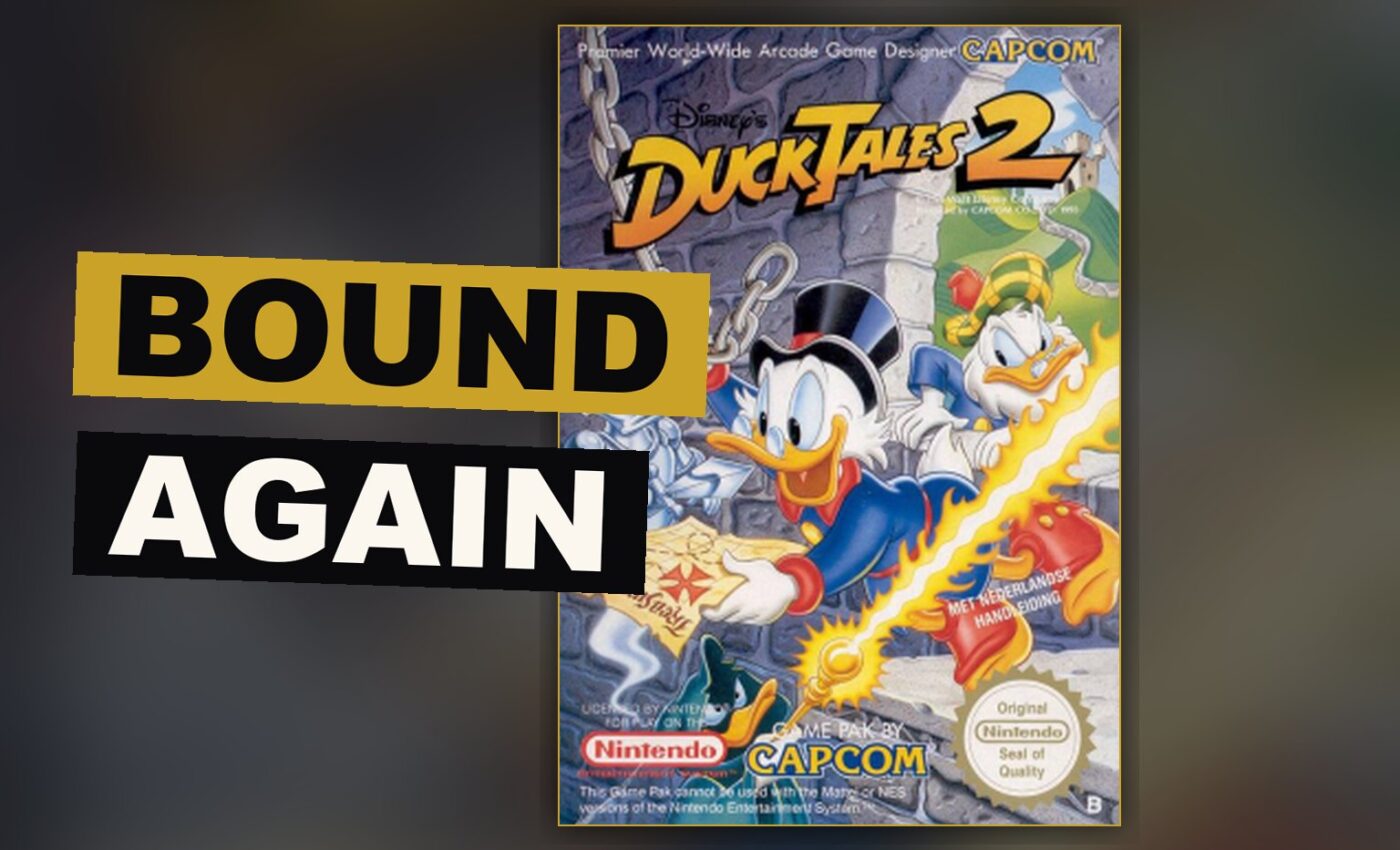
DuckTales 2 arrived on the Nintendo Entertainment System in early 1993, four years after the first game set the standard for what a licensed platformer could be. Make Software developed it. Capcom published it. A Game Boy port followed in Japan and North America at the end of the year. It is a good game that never quite escapes the shadow of the one before it.
Scrooge McDuck and the Torn Map
The story opens with Huey running to his uncle Scrooge with a torn piece of paper. It is a fragment of a treasure map drawn by Scrooge’s father, Fergus McDuck. Scrooge sets out to find the missing pieces, unaware that Flintheart Glomgold is chasing the same prize. That setup is thin, but it does the job a platformer needs: it gives Scrooge five places to go and a reason to go there.
Niagara Falls, Bermuda Triangle, Mu, Egypt, Scotland
The level selection is the game’s best idea. Like the Mega Man series, DuckTales 2 is non-linear. The player picks the order. Each stage hides a unique treasure behind a boss, and each also holds one piece of the map in a treasure chest. Finding every piece is not required to finish. It opens an optional sixth stage where the lost treasure of McDuck waits. That is a clean reward for players who explore.
The Cane Jump and the Hooks
The controls carry over from the 1989 predecessor, with the cane jump made easier to pull off. Scrooge can use his cane on objects: pulling levers, firing cannons, using springy flowers to cross gaps. New mechanics include hooks to hang from and rafts to cross water. Cane upgrades can be obtained from Gyro Gearloose to unlock hidden areas. A store between levels lets players spend collected money on recovery items and extra lives. The ability to revisit a completed level for more money is a small change that matters more than it sounds.
The D-1000 and the Sinking Ship
After the five main stages, Glomgold kidnaps Webby and holds her for ransom on the pirate ship in the Bermuda Triangle. Scrooge hands over the treasures. The Glomgold he faces turns out to be a shapeshifting robot called the D-1000, programmed to destroy him. Scrooge beats it. Glomgold sinks the ship and tries to drag Scrooge and the treasure down with it. Scrooge and Webby escape. The treasures do not. Scrooge says his family’s safety and their friendship are what truly matter. Launchpad recovers the treasure anyway.
A Bad Ending Worth Finding
The endings branch. Find the lost treasure and Scrooge reveals he hid it from Glomgold by putting it under his hat. Finish the game with no money at all and Glomgold finds the lost treasure and is named the greatest adventurer in the world. That second ending is the sharpest thing in DuckTales 2. It punishes failure with a joke instead of a game-over screen.
The Disney Afternoon Collection
DuckTales 2 was included in The Disney Afternoon Collection, a compilation for PC, PlayStation 4 and Xbox One released in April 2017. That release is a common way to play it now. The Game Boy port exists too, but the version released in early 1993 is the one to play.
What DuckTales 2 Gets Right
The level order freedom, the map pieces, the cane upgrades and the branching endings give DuckTales 2 a lot of structure. The game is not the classic its predecessor is. The D-1000 is a fine gag. It is not a fine climax.
KEY FACTS BOX
- Release: early 1993; Game Boy port, late 1993
- Developer: Make Software
- Publisher: Capcom
- Re-release: The Disney Afternoon Collection, April 2017, PC, PlayStation 4, Xbox One
- Modes: Single player
- Published score: 7.5/10
Why the Bad Ending Matters
DuckTales 2 is a competent, inventive sequel that improves the systems and loses some of the magic. The optional sixth stage and the bad ending show a team thinking about what players do when they fail, not just when they win. That is worth more than the game usually gets credit for. It is a solid follow-up that rewards the curious.
Get the Notebook.
The day's best stories and every fresh verdict, in plain English, in your inbox by seven. One email a day, no more.