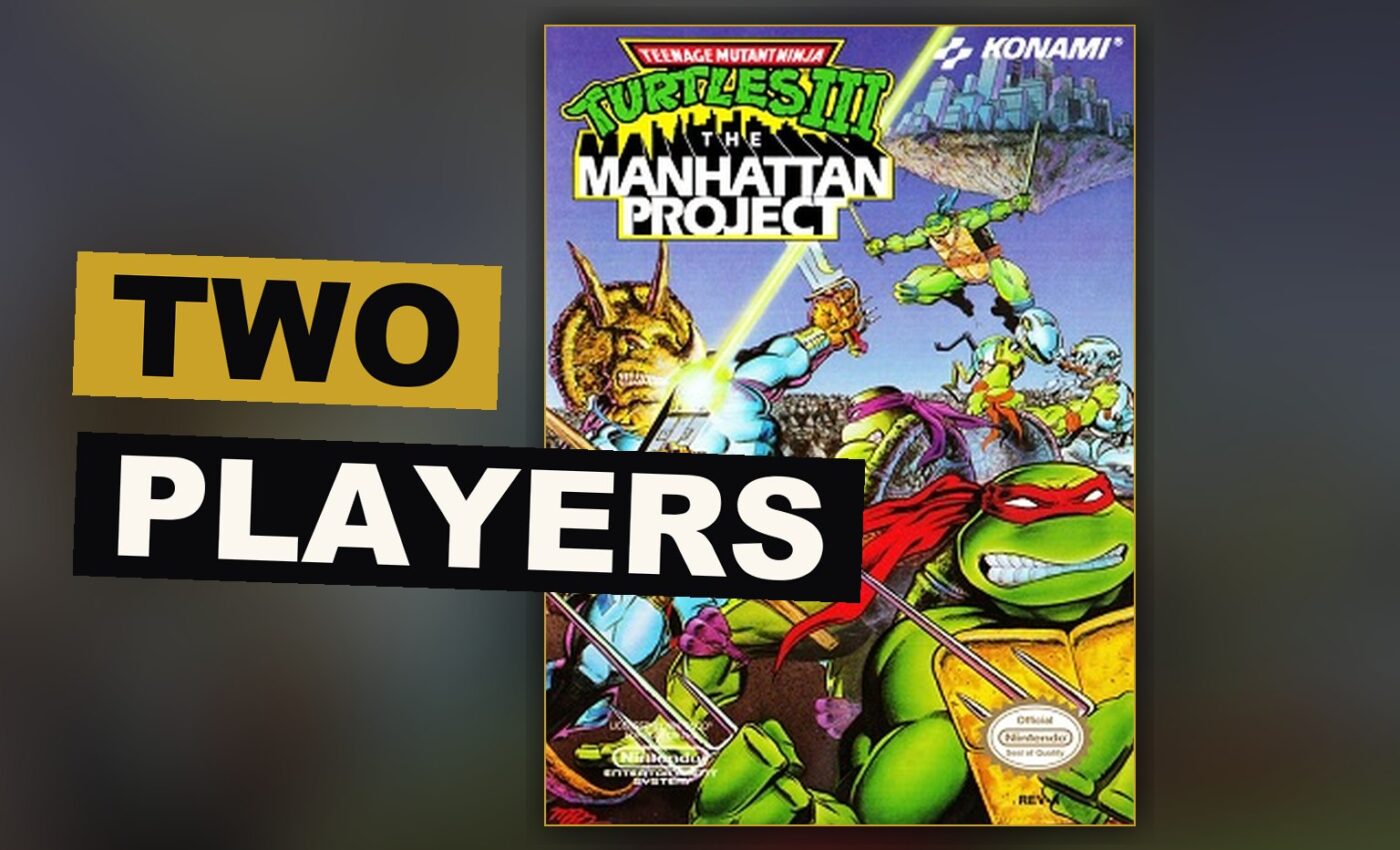
Teenage Mutant Ninja Turtles III: The Manhattan Project fixes what players hated most about the first Turtles game on NES. This is a game about four turtles taking turns to fight through the Foot Soldiers on the way to the final battle. Players no longer face instant death from hazards that troubled the earlier title, and that change alone makes this the game most people recommend.
What Works
The fighting holds up. Each turtle carries a signature item and a couple of unique moves, so no two feel quite the same, even if the difference shows more in looks than in effect. Enemies come in groups, familiar foot fighters and mousers, and a cast of characters taken from the cartoon. The controls work well, the hits land fairly, and players can tell within a level whether a strike landed.
Two players can move through the game together.
That shared mode is the heart of the game, and it holds up better than most other NES titles of its time. Passing the controller back and forth, or better, playing side by side, is where the game earns its reputation.
Where It Falls Short
The level design grows thin. Stages start to feel alike after the first few, long passages of enemies broken up now and then by a vehicle part or a change that adds little beyond a new look. The game does not ask much of players; hitting the attack button gets most people through most fights. Difficulty rises late, mostly in fights against named foes, but it comes from enemy health totals more than clever design.
The sound does its job without standing out.
The look of the game is neat, and the turtles are easy to tell apart on screen, which matters more than it sounds in a game built around four nearly matching heroes.
| Turtle | Item Carried | Trait |
|---|---|---|
| One turtle | Twin swords | Balanced reach |
| Another turtle | Linked chain | Fast strikes at short distance |
| A third turtle | A long wooden length | Longest reach |
| The fourth turtle | Short blades | Quick recovery |
| Part of the Game | Focus |
|---|---|
| Early Levels | Waves of Foot Soldiers, simple enemy habits |
| Mid-Game | Vehicle stages and stages with a change of setting |
| Late Game | Fights against named foes, higher enemy health |
| Final Levels | The last battle |
The plan above is plain, and that is either a comfort or a limit depending on what a player wants from this kind of game. Those wanting the depth of the arcade Turtles games will not find it here.
Who Should Play This
Teenage Mutant Ninja Turtles III: The Manhattan Project works best with two people rather than one. Playing alone shows the repeated feel faster; playing with a second person covers it with the pleasure of teaming up against waves of Foot Soldiers. The game never asks players to learn punishing habits or manage limited lives the way the earlier NES Turtles game did, and that alone makes it the gentler way into the series on the console.
It does not aim high. There is no attempt here to change the shape of this kind of game, and the game does not try to be more than a solid turtle fight with a mode built for two players that holds up. Judged by what it sets out to do, it succeeds more often than it misses.
Teenage Mutant Ninja Turtles III: The Manhattan Project holds up today as a steady, sometimes thin game carried by fair fighting and a mode built for two players that holds up. It fixed the faults of the game before it without changing the shape of the genre, and that caution is both its strength and its limit. Score: 7.7 of 10.