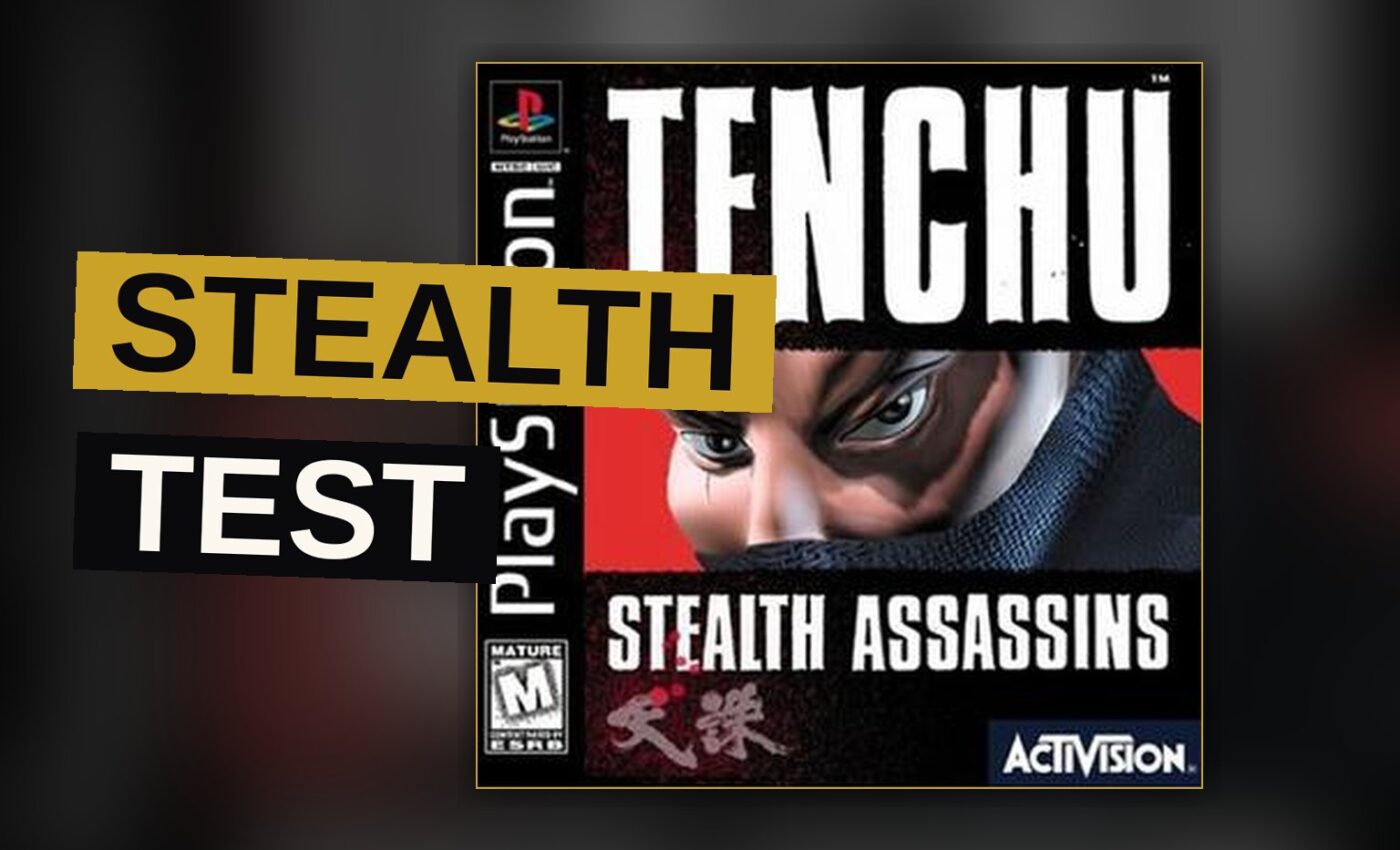
Tenchu: Stealth Assassins arrived on the original PlayStation in 1998 with a radical idea: the ninja’s real weapon is not the sword. It is the dark. Developed by Acquire and published in Japan by Sony Music Entertainment Japan, with Activision handling the rest of the world, the game made silence the point rather than the setup. It is the first entry in the Tenchu series, and it still holds up as the cleanest argument for why stealth became a genre instead of a gimmick.
Rikimaru, Ayame, and the Azuma Clan
The game sets two ninja against Sengoku-era Japan. Rikimaru is stoic, heavier, and carries one blade. Ayame is spirited, faster, weaker, and fights with two. Both belong to the Azuma ninja clan and have since childhood, serving Lord Gohda as secret spies who root out corruption and gather intelligence in his province.
That service runs into a demonic sorcerer. Lord Mei-Oh wants Lord Gohda destroyed, and he works through his demon warrior Onikage, who causes havoc across the province. The campaign stretches across missions against that threat, and it ends in a cavern lair where Mei-Oh falls as the ground collapses. Rikimaru sacrifices himself so Ayame and Kiku can escape.
Kiku is Lord Gohda’s daughter, and she treats Ayame as an older sister. Onikage stages an attack on a town castle as a distraction so Kiku can be kidnapped and used as leverage against her father. He is defeated, revives, and attacks once more before the final confrontation. That is the shape of the story, and it is told with the eerie restraint of feudal Japan rather than the noise of a power fantasy.
Eleven Levels, Three Layouts, One Grapple
Each mission opens with a skippable briefing. Then the player hits an equipment screen and picks a limited loadout. The only permanent item is the grappling hook. When it fires, the view snaps to first person, and the hook pulls the character toward any solid surface it hits.
The rest of the kit is consumable, and the list is a small history of ninja mythology:
- Health potions
- Trail markers
- Poisoned rice cakes
- Caltrops
- Shurikens (called throwing blades in Europe)
- Smoke bombs
- Grenades
- Land mines
The structure is eleven sandbox levels. Most end in a boss encounter. Each level has three possible layouts, and the game picks one at random per playthrough. Die, and the level restarts with everything gone except the grappling hook. That penalty is the whole design in one rule: it teaches you to treat every detection as a cost.
Navigation is the other half. Rooftops and walls are fair game. You can run, crouch into a sneaking position, hang from ledges, and hug nearby walls to stay unseen. Sneaking up on an enemy undetected earns an instant kill, and close-range kills trigger cinematic death animations. The Ki meter tracks the distance and alert status of enemies nearby, so the game is always telling you how close you are to being found.
Two Ninja, Two Ways to Play
The choice between Rikimaru and Ayame is not cosmetic, and it is the cleanest comparison the game offers.
| Rikimaru | Ayame | |
|---|---|---|
| Health | More | Less |
| Speed | Slower | Higher movement speed |
| Blades | One | Two |
The trade is legible before you press start. Rikimaru forgives mistakes; Ayame punishes them but gets there faster. Neither is the correct pick. That balance is why the mission design carries the game rather than the combat.
Sho Kosugi and the Motion Capture
The combat moves were not drawn by hand. Actor and martial artist Sho Kosugi and his son Kane were hired as motion capture actors for the game’s fighting animations. It is a small production note that explains a lot about why the swordplay reads as grounded even when the story turns to demons and mythology.
Acquire began work in 1996. It was the studio’s first project. The goal was a game built entirely with 3D graphics at a time when that was uncommon, and one that leaned on stealth instead of action. The team hit multiple technical challenges along the way. Director Takuma Endo ended up filling several roles in the production, including scenario writer.
Why Tenchu Still Matters
The commercial record backs the design. Tenchu sold over one million units worldwide by 2003, and estimates put it at five million across all versions by 2019. A sequel followed without the involvement of rights owner SMEJ: Tenchu 2: Birth of the Stealth Assassins, released worldwide in 2000. The series continued, but the first game is the one that set the terms.
What matters most is the restraint. Tenchu: Stealth Assassins was one of the first ninja games to treat stealth as the core of ninjutsu rather than a side option, and it built its missions around the idea that a disturbance is a failure. The Ki meter, the random layouts, and the item wipe on death all push the player toward patience. The grappling hook turns vertical space into a route instead of scenery. The fantasy and mythology layered over feudal Japan keep the tone strange without breaking it.
The flaws are real. The item loss on death is harsh enough to punish experimentation, and the three-layout rotation repeats faster than the mission count suggests. But the game’s central bet — that being unseen is more interesting than being strong — is the reason a whole lineage of stealth games exists. Tenchu: Stealth Assassins earns its place as the blueprint.
Get the Notebook.
The day's best stories and every fresh verdict, in plain English, in your inbox by seven. One email a day, no more.