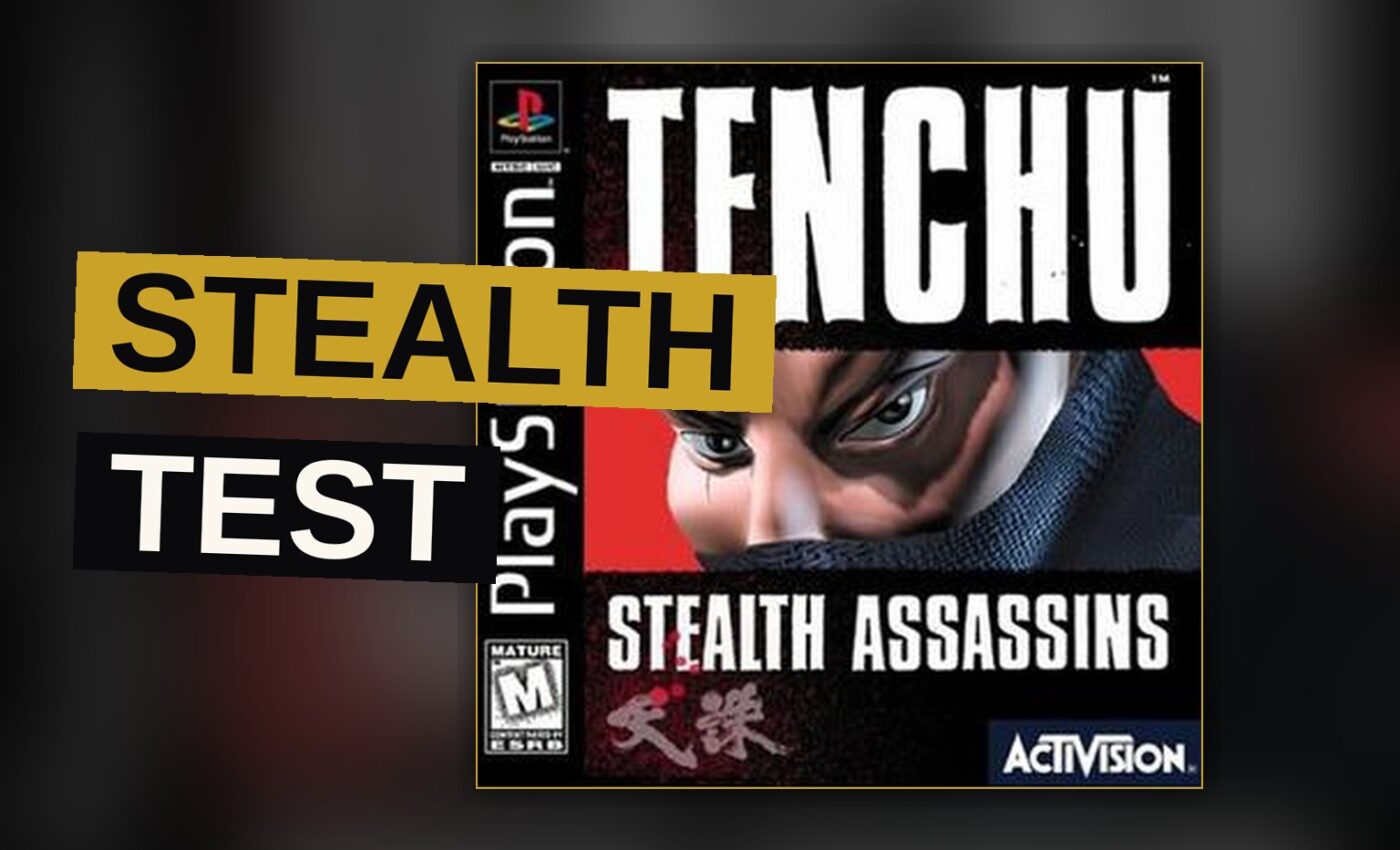
Tenchu: Stealth Assassins asks players to move through enemy camps without being seen, and it still holds up as one of the most demanding stealth games ever made for the PlayStation. The game drops players into a world of samurai warfare, where a single guard spotted means failure, and success means reaching the target without raising an alarm.
The World of Tenchu
The setting is feudal Japan, and the story follows a young assassin named Azumi who joins a group of spies to complete a series of missions. Each mission sends her into a castle, a temple, or a village filled with guards, and each one requires a different approach. The game does not waste time on dialogue; it gets straight to the objective, which is often nothing more than reaching a target and killing it.
The presentation is simple by modern standards, but the level design is dense and layered. Guards patrol in fixed paths, and the player must learn those paths to slip past them. The game rewards patience over violence, though it also offers a sword for when a fight cannot be avoided.
Stealth as Skill
The core of Tenchu: Stealth Assassins is its stealth system. Players can crouch, crawl, and hide behind cover, and the game tracks noise with a meter that fills when a character moves too loudly. A guard who spots a player turns the screen red and sounds an alarm, and the game ends if too many alarms sound. That pressure gives every mission a tension that few other stealth games of the era matched.
Azumi can throw weapons, use smoke bombs, and climb walls, and mastering these tools is essential for completing missions without detection. The difficulty curve is steep, and early missions can feel punishing until the player learns the rhythms of the guards.
Mission Variety
The game includes a mix of mission types, each with its own objective:
- Eliminate a target while avoiding detection
- Gather intelligence from a target without killing them
- Escape a location after a fight
- Complete a mission within a strict time limit
This variety keeps the pacing fresh, even when the basic structure of sneaking through a guarded area repeats across several missions. Some missions ask for stealth alone, while others force the player into open combat, which changes the tactics needed to succeed.
How Tenchu Holds Up Today
Tenchu: Stealth Assassins has aged better than most games from its era. The pixel art holds up well, and the game’s focus on stealth mechanics has influenced later titles in the genre. Its influence is visible in later stealth games that built on its systems, though none have matched its strict focus on noise and detection.
| Feature | Tenchu: Stealth Assassins | Modern Stealth Games |
|---|---|---|
| Stealth Focus | Central | Common but less strict |
| Detection System | Noise meter, guard reactions | Health bars, alert levels |
| Difficulty | Very high | Often lower |
| Mission Structure | Fixed objectives | More open |
The comparison shows how the game pushed the genre further than most of its contemporaries. Its noise-based detection system remains one of the most precise in stealth gaming history.
Where It Falls Short
The game is not without faults. The controls are tight but sometimes awkward, especially during climbing sequences, and some missions feel unfair due to guard placement that seems designed to frustrate rather than challenge. The lack of a save system outside checkpoints can also frustrate players who lose progress near the end of a mission.
These issues do not sink the game, but they do show its age. A modern remake would likely smooth out the control issues and add a proper save system, but the core gameplay would remain intact.
Final Word
Tenchu: Stealth Assassins remains a strong entry in the stealth genre, built around a simple idea executed with great precision. Its missions demand patience, planning, and repeated attempts, and the game rarely lets the player off easy. It is not for everyone, and its rough edges show the limits of its era, but its stealth design remains sharp and effective.
For players who want a test of skill rather than a casual stroll, Tenchu: Stealth Assassins offers one of the purest stealth experiences ever put on a console. It is a game that rewards effort and punishes carelessness, and it remains a rewarding, if demanding, experience today.