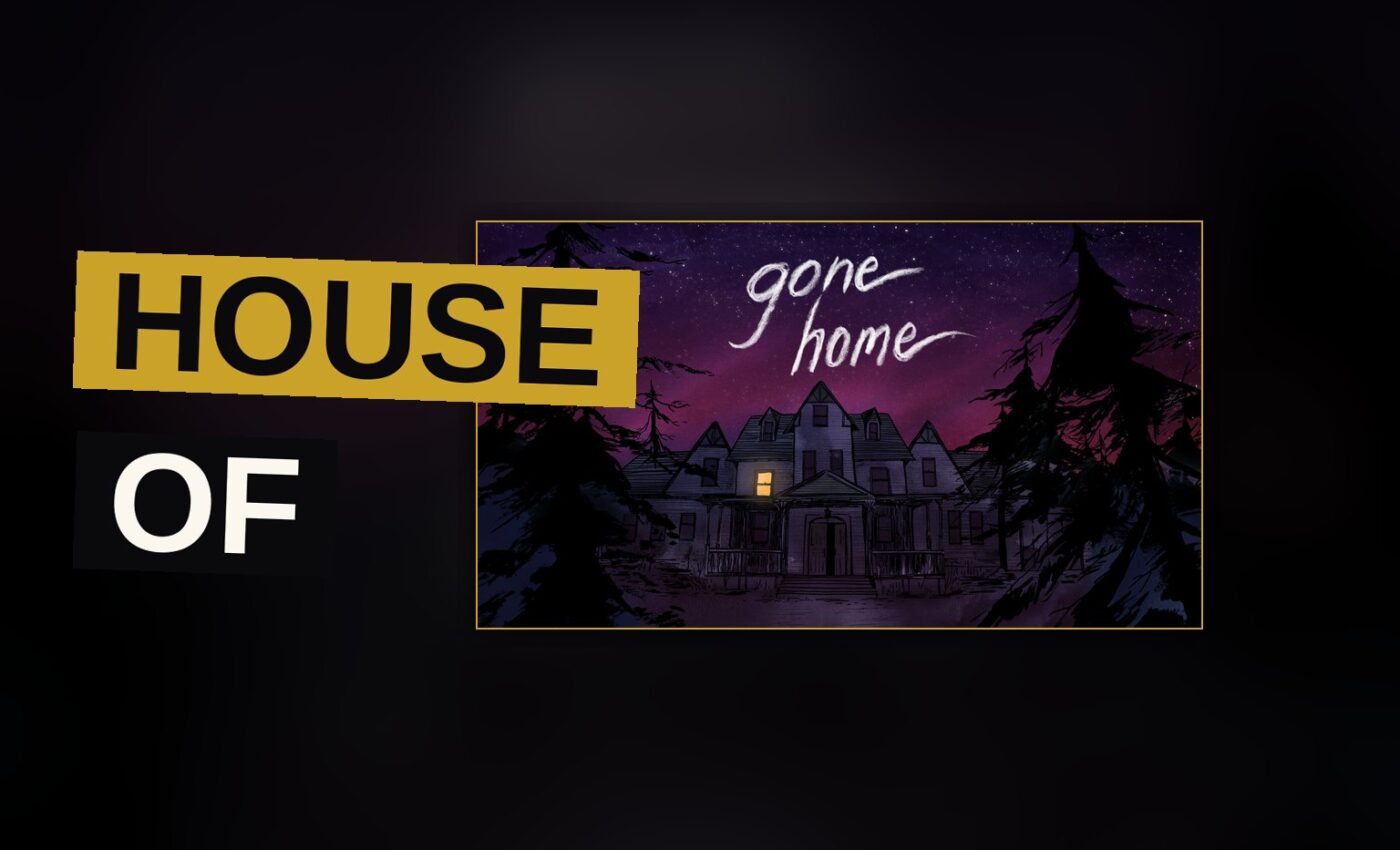
There is a note on the front door of the Greenbriar house, and it asks Katie not to go looking for what happened. Gone Home hands you the key anyway.
Trailer, via Fullbright.
A House in Boon County, June 1995
Katie Greenbriar is 21, back in Oregon after a year overseas, and expecting her family to meet her. The house is empty. The movers’ boxes are still stacked in the halls. Her father, Terry, reviews home electronics for a living after his own writing went nowhere. Her mother, Janice, works in wildlife conservation and has just been made director. Her 17-year-old sister, Samantha, is gone, and the note on the door is hers.
That is the whole setup. Gone Home does not give you a monster, a gun, or a timer. It gives you a dark house in a fictional Oregon county and asks you to walk through it.
Fullbright’s Small Team and a Borrowed Idea
The Fullbright Company developed and published Gone Home, and it first shipped for Microsoft Windows, OS X, and Linux in August 2013. PlayStation 4 and Xbox One versions followed in January 2016. The Nintendo Switch and iOS ports arrived in September and December 2018.
The studio’s prior work was BioShock 2: Minerva’s Den, and the team took concepts from that project into this one. The goal was an exploration game that hands the player the story out of order, through objects, while staying small enough for a small team to actually finish. That constraint is visible everywhere in Gone Home, and mostly it works in the game’s favor.
Every Drawer, Every Journal
Gone Home is a first-person game with almost no interactivity in the usual sense. You move Katie through the house. You open doors. You open drawers. You pick things up and turn them over. There are no defined goals, but the game rewards you for pushing into new rooms and finding new messages. Certain objects unlock access to other parts of the house, and that is the only gatekeeping the game does.
Sam’s journals carry the story. They are voiced by Sarah Grayson, and they lay out what happened while Katie was away. Katie’s own lines are performed by Sarah Elmaleh.
Lonnie DeSoto and the Riot Grrrl Tapes
Sam had a hard time at her new high school. Then she met Yolanda “Lonnie” DeSoto, a cadet in her school’s Junior Reserve Officers’ Training Corps program, and the two of them found each other over Street Fighter, punk rock, grunge, and the riot grrrl movement. After sneaking out to a concert, they became romantically involved.
Her parents found out. They told Sam she could not close her bedroom door when Lonnie was over. They went into denial that their daughter is a lesbian. Lonnie was set to ship out, and Sam fell apart.
The farewell show lands two days before Katie’s homecoming. That same week, Sam’s parents are away — supposedly camping, actually on a counseling trip, which is not what they told people. Lonnie leaves for her station, then calls Sam from a payphone. She got off the bus in Salem. She wants them to be together.
Sam packs her things, takes the car, and goes to find her.
What the House Does Well
Gone Home’s best trick is that it never once tells you how to feel about any of this. Terry’s failed writing career and Janice’s promotion are sitting in the same rooms as Sam’s tapes, and the game lets you decide which of those threads is the one you came for. The 1995 setting is not decoration. It is the reason the story can happen the way it does: a payphone, a bus station, a family that can keep a counseling trip secret from the neighbors.
The restraint is the point. A lesser game would have put a ghost in the basement. Gone Home puts a note on the door and trusts you to keep reading.
Where the Exploration Runs Thin
The problems are real, and they are structural. “Interactive exploration simulator” is a generous name for what is mostly walking and looking. The puzzle of unlocking new parts of the house is thin enough that it barely registers as a puzzle, and the pace is entirely yours to set — which means a player who moves quickly will finish before the house has a chance to say much.
The game also leans hard on the journals to carry the emotional weight. When the writing on a scrap of paper has to do the work that a scene would do in another game, some rooms land and some do not. And the ending asks you to accept that the entire mystery resolves off-screen, in a phone call and a car trip you never see.
That is a choice, not an accident, and it is defensible. It is also the reason Gone Home feels smaller on a second visit than it did on the first.
The Verdict on Gone Home
Gone Home is worth playing, and it is worth playing once, slowly, with the lights off and no walkthrough open in another window. The Fullbright team built a house that reads as a real house, filled it with a family that reads as a real family, and then got out of the way. The relationship between Sam and Lonnie DeSoto is handled without a single false note, and the decision to let Katie be a witness rather than a hero is the smartest thing in the game.
What holds it back from something better is ambition that stops short. The mechanics never grow past opening drawers. The house never pushes back. For a story about a girl who had to leave, Gone Home is oddly content to stand still.
- Title: Gone Home
- Developer and publisher: The Fullbright Company
- Initial release: August 2013, for Microsoft Windows, OS X, and Linux
- Later platforms: PlayStation 4 and Xbox One in January 2016; Nintendo Switch in September 2018; iOS in December 2018
- Setting: Boon County, Oregon, 7 June 1995
- Cast: Sarah Elmaleh as Katie Greenbriar; Sarah Grayson as Samantha Greenbriar
- Score: 7.4/10
Get the Notebook.
The day's best stories and every fresh verdict, in plain English, in your inbox by seven. One email a day, no more.