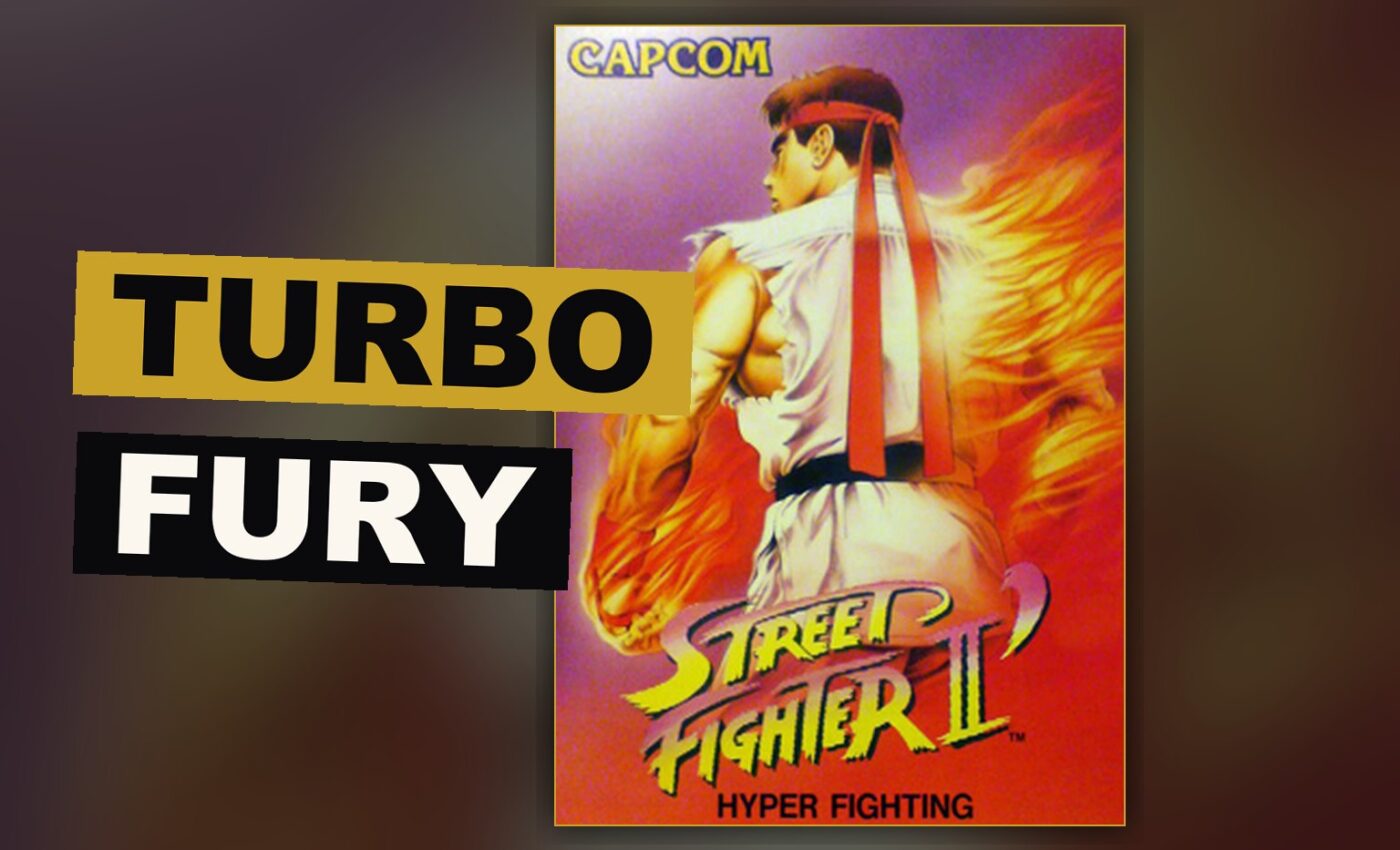
Street Fighter II Turbo: Hyper Fighting was Capcom’s third arcade revision of Street Fighter II, released in 1992 less than a year after Champion Edition, initially as an enhancement kit for that game. It made the game faster and gave several characters new special moves. On the Super NES, the Turbo cartridge is the version that turned a great home port into the definitive one, and thirty years on it is still the Street Fighter II most people mean when they say the name.
The Speed
The headline change is pace. Hyper Fighting plays noticeably faster than the original, and the SNES version lets you turn the speed up further with stars on the selection screen. At the higher settings the game becomes a different sport. Reactions matter more, jumps are riskier, and the slow chess of the original becomes something closer to a brawl. Purists argued about it at the time. The argument is over. Faster won.
The Moves
The new special moves reshape the cast. Characters who had been limited get tools that make them viable, and the balance across the roster, which had tilted hard toward a few fighters in earlier versions, evens out. That refinement is the quiet reason Turbo lasted: it is the version where the whole cast is worth learning.
The Bosses
Like Champion Edition before it, Turbo lets you play the four boss characters and lets both players choose the same fighter, which sounds small and was not. The mirror match is the purest test of skill in a fighting game, and the bosses added four playstyles that had been the game’s untouchable final exams.
The SNES Version
The port is excellent. The sprites are large, the animation is close to the arcade, the sound holds up, and the controller, with its six face and shoulder buttons, maps the six-button arcade layout without compromise. It is the rare home version of a fighting game from this era that plays like the real thing rather than a reminder of it.
The Remix
Capcom returned to the material in 2008 with Super Street Fighter II Turbo HD Remix for PlayStation 3 and Xbox 360, keeping the original code and redrawing every sprite and background in high resolution through Udon Entertainment, with online play. That release is a tribute to how well the design held. It did not need a new engine. It needed new art.
Where It Falls Short
It is an incremental release, and a player who owned the previous cartridge was paying full price for speed and a handful of moves. The single-player mode is an arcade ladder and nothing else. And the SNES hardware, good as the port is, drops frames when the screen fills with fireballs.
The Verdict
Street Fighter II Turbo is the version of the most important fighting game ever made that got everything right. On the SNES it is a cartridge that belongs in every collection, and it is still the game to put on when two people want to settle something.
Get the Notebook.
The day's best stories and every fresh verdict, in plain English, in your inbox by seven. One email a day, no more.