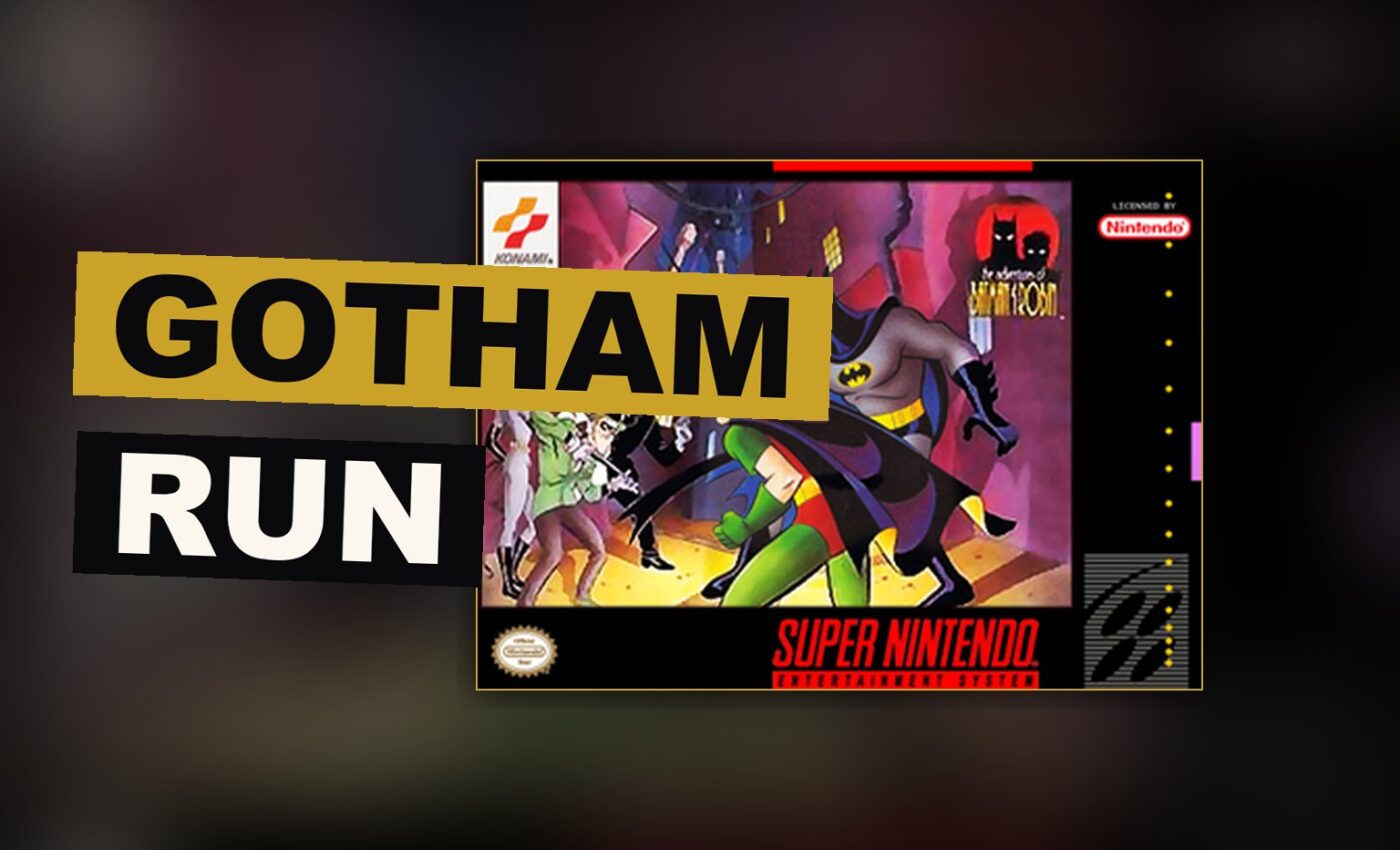
The Adventures of Batman & Robin arrived on the Super Nintendo as an action game built on the animated series of the same name. It puts players in the mask and cape of Batman for a run of stages set across Gotham City, moving from high roof paths to city streets to the inside of a moving train.
Look and Sound
The game’s style stands out first. Character figures and settings carry the dark look of the animated show, and the color choices turn toward deep blues and blacks broken by bright highlights. The music keeps pace, built around a strong synthesizer score that echoes the show’s theme music.
Batman moves fast on screen, with animation that holds up well from frame to frame. Enemies and bosses are drawn with the same care, and the short scenes between stages use art drawn straight from the cartoon.
Playing Through Gotham
The heart of The Adventures of Batman & Robin is direct action. Players fight through groups of enemies using strikes, gadgets and, at times, a vehicle stage. A motorcycle stage and a flying stage break up the stages spent on foot, giving the game some change in pace.
The difficulty is high.
Enemies come in tight groups, hits cost the player dearly, and points where the game saves progress sit far apart in some stages. That mix means moving forward takes time and care for players who are not already used to the controls.
the dark look of the animated show
That line sums up the game’s biggest strength: the look and sound carry it further than its hard design does.
The fighting can feel the same across the whole game. Enemies act in the same few ways from stage to stage, and the moves given to Batman stay narrow from start to finish. The vehicle stages offer a change of pace, but they rest on simple shooting and grow thin by the time the game ends.
Where It Falls Short
Stage design asks players to learn each stage by heart. Because hits cost so much and save points sit far apart, dying often means playing through a long piece of a stage again. That choice rewards repeat play over quick skill, and it can turn a short stage into a long sitting at the controls.
The music and sound stay strong throughout, even when the action turns hard. The score never lets up, and it keeps the mood steady even in the hardest parts of the game.
The Adventures of Batman & Robin also appeared on the Sega Genesis, built with a different engine and different stage design. The Super Nintendo version rests more on quick motion and close fighting, while the other version plays closer to a plain action game. Players who have tried both versions tend to note the difference in feel, even though the look and the source material stay the same across both.
The Super Nintendo game also lets players save with a password, letting them return to a chosen stage without starting the whole game over. That choice eases the weight of the difficulty somewhat, though it does not remove the need to play parts of a stage again after a death.
Final Verdict
The Adventures of Batman & Robin succeeds as a game that shows the look and sound of its source material with real care. It struggles as a pure test of skill, weighed down by fighting that repeats itself and difficulty that rises fast and stays high. Players who grew up on the animated series will find much to like in how the game looks and sounds, even if the design asks a great deal of patience in return.
The final stage stands apart from the rest, at least by this writer’s judgment, asking more resolve and memory of a player than any stage that came before it. That is where the password proves its worth, sparing anyone forced to try again the trouble of working through the whole game a second time.
The Adventures of Batman & Robin scores 7.4 of 10.