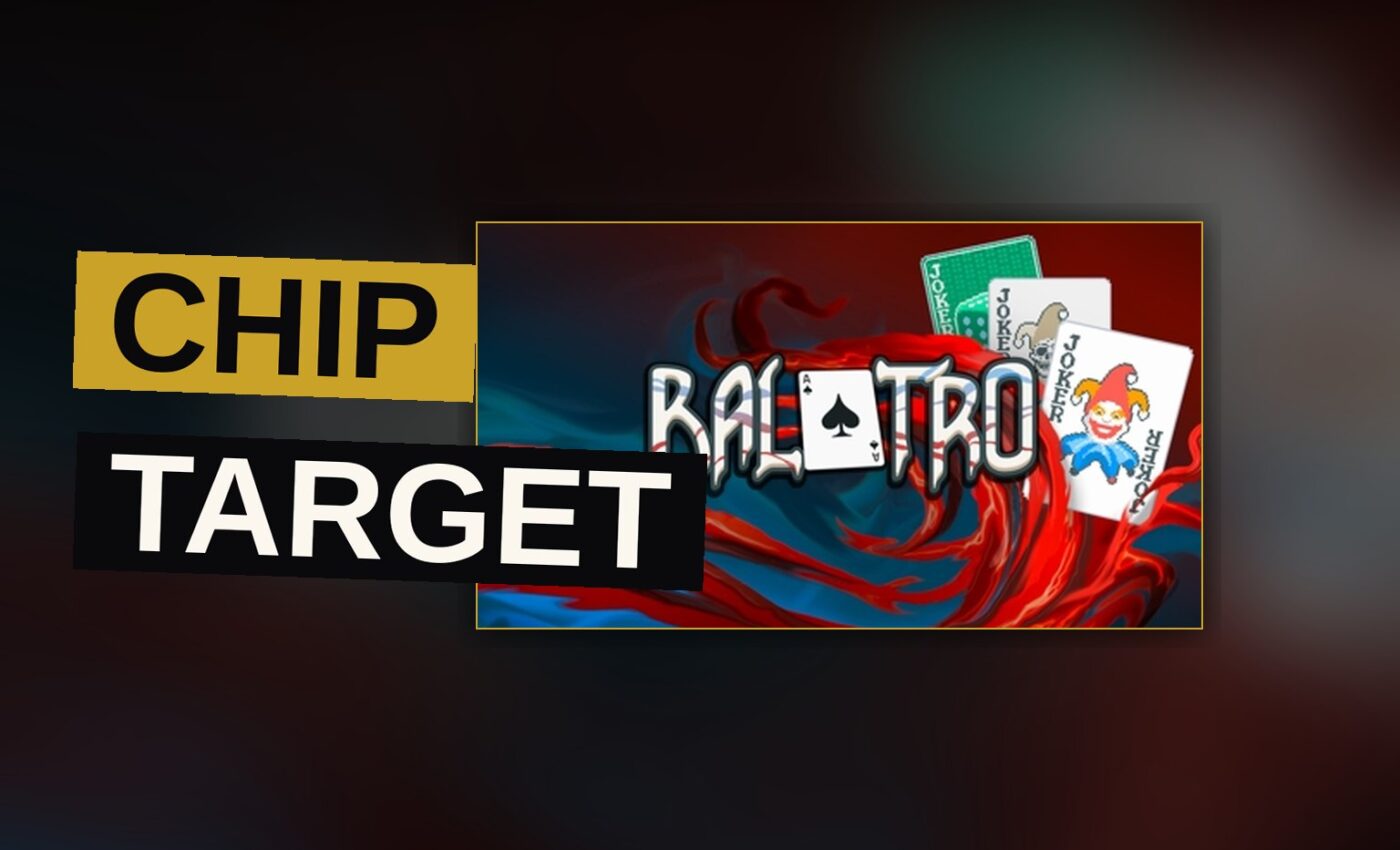
Balatro turns poker hands into a card-based game of chance and choice, and it does so with a hook sharp enough to keep players playing well past midnight. The game launched in 2024 for PC, PS4, PS5, Xbox One, Xbox Series X/S and Switch. It scores 9.0 out of 10.
Trailer, via Playstack.
The Core Loop
Every run in Balatro starts with a standard 52-card deck. Players build poker hands — pairs, flushes, straights — to hit a chip target set by each blind. Clear the target, bank some cash, and move on to the next round.
The twist is the Joker card system. Jokers are cards bought between rounds that change how hands score, and they combine in ways that turn a modest pair into a huge chip total. A run might end with a build that has almost nothing to do with normal poker play — building an entire hand around a single suit, for instance, until one flush wipes out a boss blind in a single turn.
Boss Blinds
Balatro structures each run around a set of blinds: Small, Big and Boss. Boss Blinds carry a rule that gets in the way of a run — some take away a suit, some force discards, some shrink the hand size. Players have to plan Joker builds around what a Boss Blind might punish.
Here is how a single set of blinds plays out:
| Round | Blind Type | Notable Rule |
|---|---|---|
| 1 | Small Blind | Standard chip target |
| 2 | Big Blind | Higher chip target |
| 3 | Boss Blind | Rule that gets in the way |
Runs climb through eight sets of blinds, with each one raising the chip target and the stakes of a weak build.
Building a Run
Between blinds, players shop for Jokers, card packs and other items using the cash earned from clearing a target. Money management matters as much as card building — saving cash between rounds pays interest, which rewards patient, controlled play over quick spending.
That single rule — interest on saved cash — changes how players approach the whole run.
The art style leans on a simple, plain look, paired with a soundtrack that stays quiet under the pressure of a Boss Blind fight. Nothing about the look is loud. The game does not need it to be.
Comparisons in the Genre
Balatro sits inside a crowded field of card-based roguelike games, but its poker base sets it apart from games built around combat decks.
| Game | Core System | Session Length |
|---|---|---|
| Balatro | Poker hands with Joker cards | Short, run-based |
| Slay the Spire | Combat deckbuilding against enemies | Longer, combat-paced |
| Luck be a Landlord | Symbol matching for payouts | Short, run-based |
Where a combat card game asks players to manage resources against a line of enemies, Balatro strips away combat entirely. The only opponent is the chip target itself.
Replay Value and Difficulty
Runs in Balatro rarely last long, which is part of the appeal. A single failed run can be started again in under a minute, and the game’s random Joker pool means no two runs build toward the same plan.
Unlockable decks add further change once a player clears a run. Some decks alter starting hand size, others remove a suit entirely, and some hand over an extra Joker at the very start.
The pace suits handheld play on Switch just as well as it does longer sessions at a desk on PC.
Balatro’s difficulty curve can rise sharply in later rounds, and a run built around the wrong Jokers can fall apart fast against a hard Boss Blind. There is no way to change a build mid-run, so a weak early shop can doom an otherwise strong start. The game also offers little guidance for players who do not already know poker hand rankings, which can make the first hour hard to follow before the rules become clear.
Balatro earns its 9.0 out of 10 score by taking a familiar card game and building a whole, gripping run structure around it. Balatro is available now on PC, PS4, PS5, Xbox One, Xbox Series X/S and Switch.
Get the Notebook.
The day's best stories and every fresh verdict, in plain English, in your inbox by seven. One email a day, no more.