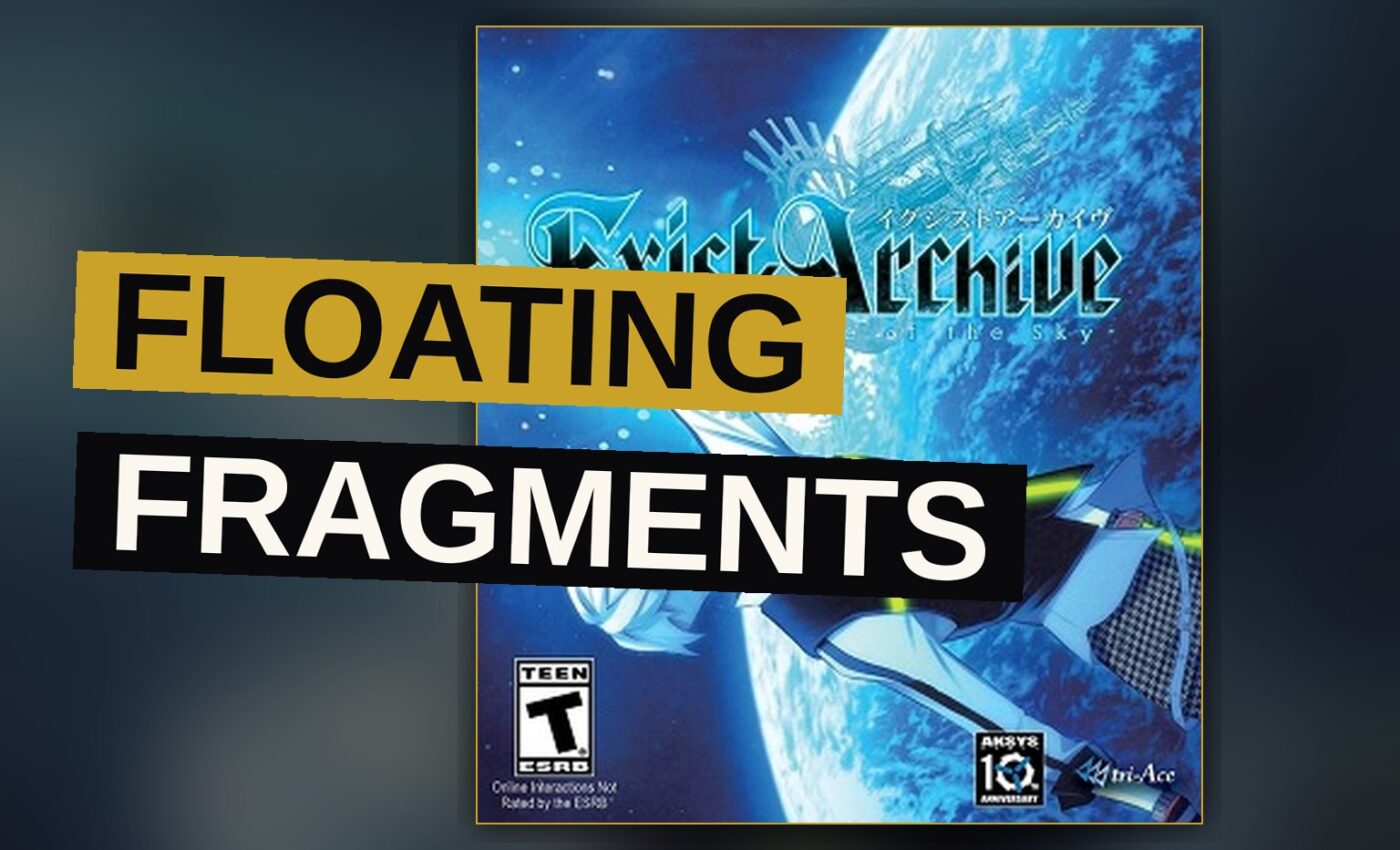
Exist Archive: The Other Side of the Sky asks players to move through a world built from memories, fragments, and the dead. It is a game about loss, grief, and the strange comfort of remembering things that can never be brought back. That ambition is visible in almost every frame, and yet the execution struggles to keep pace with it.
The game follows a young woman named Saki who wakes up in a strange town after a mysterious event. She has no memory of her past life, and the people around her seem equally lost. As she wanders through the town, she meets other survivors, each carrying their own fragment of a shattered world. The premise is simple: find the pieces, put them together, and try to understand what happened. That simplicity is deceptive, however; beneath the surface, the game builds a world that rewards patience and attention to detail, asking players to piece together the story through scattered clues rather than a single clear path.
Trailer, via Aksys Games Official.
A World Built From Fragments
The setting is the game’s strongest element. Towns are assembled from memories, objects, and photographs that float through the air like leaves. The sky itself is a constant presence, shifting from bright blue to stormy grey depending on the player’s progress. This visual style is consistent throughout, giving the game a distinct identity that sets it apart from other survival titles on PS4 and Vita.
Combat is basic by design. Players move between towns, collect items, and fight enemies using a simple attack button. There is no deep combat system here, and the game does not pretend otherwise. The focus is on exploration, conversation, and piecing together the story through scattered clues. In this way, the game trusts its narrative instincts over any need for mechanical depth, and the result is a game that feels more interested in mood and atmosphere than in spectacle.
Memory and Loss
The narrative is where Exist Archive: The Other Side of the Sky finds its heart. Saki’s journey is not just about surviving; it is about trying to recover a sense of self that has been torn away. The game leans heavily on themes of memory and loss, and it handles those themes with a quiet sincerity that feels deliberate rather than forced.
“I am not lost.”
That line, spoken by Saki early in the game, sums up the central tension. She is searching for answers, but she is also searching for herself. The towns she visits are filled with people who have also lost their memories, and the game captures their confusion and fear with a restraint that feels earned. The game’s handling of grief and memory is its most distinctive feature, and it is a strength that carries the entire experience.
Technical Rough Edges
The game’s technical rough edges are where it stumbles. On Vita, the frame rate dips frequently during busy scenes, and the game struggles to keep up with the player’s movements. On PS4, the situation improves, but the Vita version remains the primary platform for the game, and its performance issues are noticeable enough to break immersion. The game’s ambitions are large, but its hardware constraints are real, and they show.
The controls are functional but not refined. Movement feels stiff, and the camera often fails to follow the action smoothly. These are minor complaints, but they add up over a play session that can stretch across several hours. Over time, the stiffness of movement and the awkward camera angles become hard to ignore, sapping some of the joy out of the exploration that should be the game’s centerpiece.
Sound Design and Music
The music deserves special mention. The soundtrack shifts from delicate piano pieces to tense, atmospheric tracks that match the game’s tone perfectly. It is one of the strongest elements of the package, and it helps carry the game through its quieter moments. When the visuals falter, the music is there to fill the gaps.
The voice acting is solid, though it is limited to brief lines rather than full performances. Characters speak in short bursts, which fits the game’s pacing but also limits the emotional range available to the performers. The brevity of the dialogue works in some scenes but can feel thin in others.
A Short Journey
The game is relatively short by modern standards, clocking in at around ten hours for a full playthrough. That brevity works in its favor. The game does not drag, and it holds together a cohesive vision across its runtime. For a game this focused on memory and loss, a longer runtime might have diluted its impact. Every hour is devoted to the game’s central themes, and the brevity keeps the focus sharp.
The ending arrives quickly, and it delivers a resolution that ties together the threads of the story without resolving every loose end. Some players may find this satisfying; others may want more closure. The ending respects the game’s central mystery while leaving room for interpretation, which is a rare choice in games that typically prefer tidy conclusions.
Final Word
Exist Archive: The Other Side of the Sky is a game of contrasts. Its visual identity is strong, its theme is genuine, and its music is excellent. But its technical rough edges and shallow combat hold it back from greatness. It is a game worth playing for its ideas, even when the execution falls short.
Get the Notebook.
The day's best stories and every fresh verdict, in plain English, in your inbox by seven. One email a day, no more.