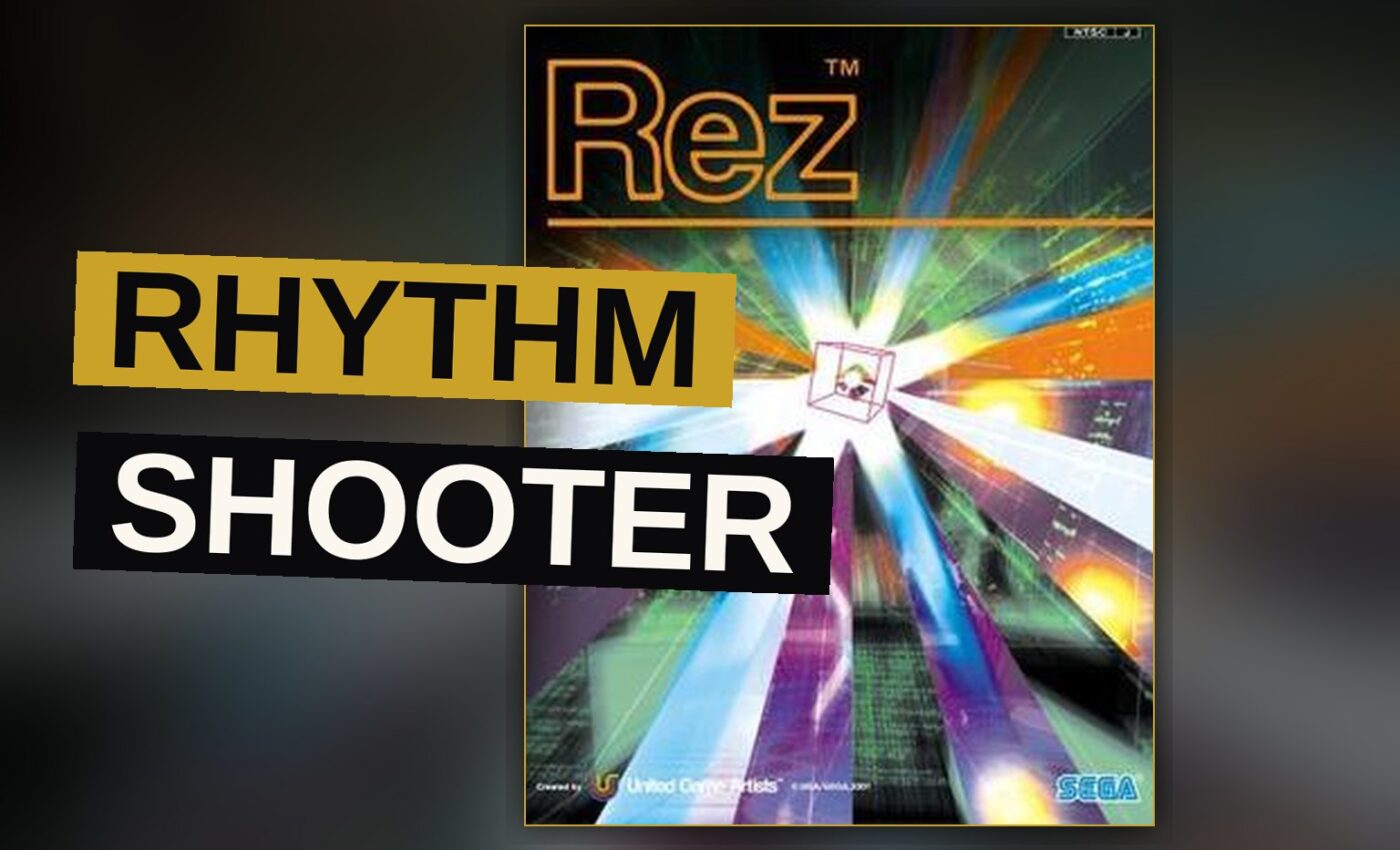
Rez is a game about the moment when sound and light become the same thing. It is also a game about shooting things. The two are not separate. The shooting is the music, and the music is the shooting. Released in 2001 for the Dreamcast and PS2, Rez remains one of the few games that feels like it was transmitted from a better timeline.
The game drops you into a wireframe cyberspace. You pilot a floating avatar through a series of stages, each one a journey toward a massive, evolving boss. You lock onto enemies, fire volleys of shots, and absorb the data they leave behind. It is, on paper, an on-rails shooter. In practice, it is a symphony.
Sound as Architecture
Every action in Rez makes a sound. Your shots land with a percussive click. Locking onto a target adds a hi-hat. Destroying an enemy sends a bass pulse through the mix. The game’s soundtrack, featuring a roster of electronic artists, is not background music. It is the environment.
The genius of Rez is that it never lets you forget the music is there. The levels are built around the tracks, and the tracks are built around a steady, driving rhythm. The boss fights are the clearest example. Each boss is a massive structure of shapes and colors, and as you damage it, the music intensifies. Layers are added. The bass gets deeper. The tempo holds, but the texture thickens. When the boss finally breaks apart, the sound resolves into a clean, full release. It is not a victory fanfare. It is a chord.
The Trance State
The game aims to put you in a trance. The visual design is sparse but precise. Polygons shimmer. Grids stretch into infinity. The color palette shifts from deep blues to hot reds to electric greens. There is nothing realistic about it, and that is the point. The game is not trying to show you a place. It is trying to show you a state.
The controls are simple. One button fires, one button locks on, and the analog stick moves your avatar. There is no health bar in the traditional sense. When you are hit, you lose your form, and you have to rebuild it by collecting data orbs. The challenge is real, but it is never the point. The point is flow. When you are playing well, the game feels less like a test of reflexes and more like a meditation with a pulse.
The music is the game.
That is the truth of Rez. Every mechanic, every visual, every moment of tension and release is built around the audio. The game does not use music to enhance the action. The action is the music. It is a rare piece of design where the parts are so thoroughly fused that you cannot pull them apart without destroying the whole.
Levels and Their Shapes
Each area has a distinct identity. The opening is a cold, blue descent. The longest area is a purple labyrinth that feels like a fever dream. The final area is a climb through a digital heaven that ends with the game’s most famous moment: a boss shaped like a massive, glowing figure, and a sequence where the player’s own avatar is pulled into the center of the rhythm.
| Version | Platform | Notable Difference |
|---|---|---|
| Original | Dreamcast | Slightly rougher visuals, core experience identical |
| Original | PS2 | The standard most players saw, remains the reference |
| HD remake | Modern consoles | Higher resolution, same design |
The PlayStation 2 version of Rez was the one most players saw, and it remains the standard. The Dreamcast version is slightly rougher, but the core experience is identical. There is also a later HD version for modern consoles, but the original holds its own. The game’s age shows in its resolution, but not in its design. The design is timeless.
Score and Final Word
Rez is not for everyone. Players who want a dense, story-driven experience will find it thin. Players who want a challenge will find it forgiving. Players who want a shooter will find it strange. But players who want to feel something — who want to understand how a game can be an instrument — will find nothing else like it.
The published critical consensus gives Rez a score of 9.2 out of 10. That number is fair. It is a masterpiece of pacing, of audio design, and of pure, unadorned vision. It is short, and you can finish it in an afternoon. But you will not forget it. The game’s final image, a burst of light and sound that resolves into silence, stays with you. It is a rare thing: a game that is exactly what it wants to be, with nothing wasted and nothing missing.
Rez earns its score. 9.2 of 10.
Get the Notebook.
The day's best stories and every fresh verdict, in plain English, in your inbox by seven. One email a day, no more.