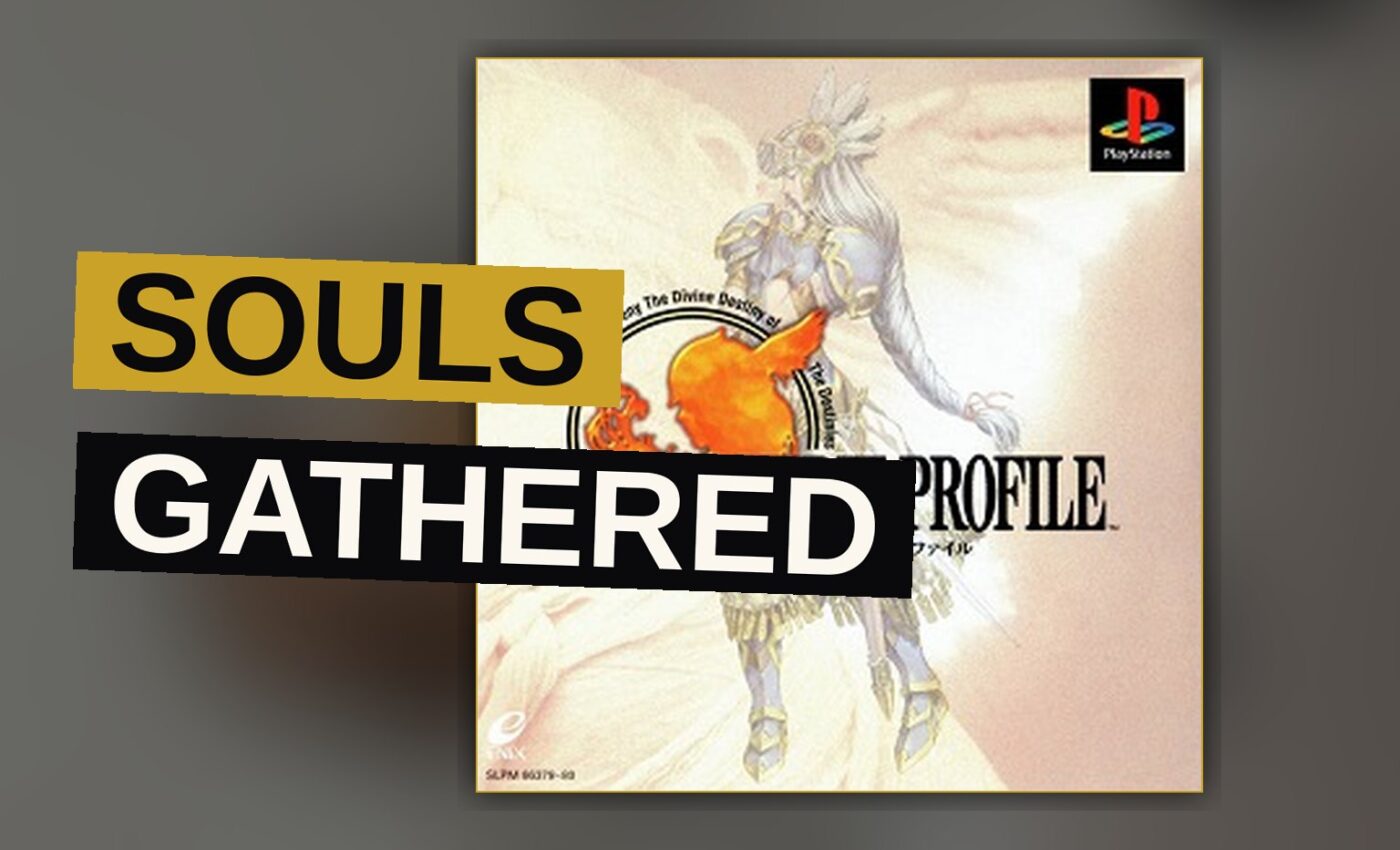
Valkyrie Profile asks players to sit through a death scene for half an hour before they get a sword. That opening sets the tone for a game built around loss, fate and the strange rules of the Norse afterlife. The original PlayStation role-playing game, released in 2000, casts players as a mercenary hired by Odin to gather souls for Valhalla. The story moves through a war between humans and gods, and the game’s central mechanic forces players to choose which characters live and which die.
The game’s structure is unusual. Players spend time in the world, fighting battles, gathering allies and building bonds, then switch to a separate screen where they make choices about who survives. Those choices change the story, and the game keeps track of how each character dies, storing the memory for later. It is a system that rewards patience and punishes haste, and it gives Valkyrie Profile a weight that few games from this era attempt.
The World of Midgard
The setting is a human kingdom caught between two warring factions, and the game leans heavily on Norse mythology. Odin, Thor, Loki and Freya all appear, drawn as living figures rather than distant gods. The world is rendered in 3D, with towns, castles and forests that look dated by modern standards but hold up as functional spaces. Characters move with stiff, blocky animations, and the camera often struggles to keep up during battle, but the art direction carries a strong sense of place.
The music, composed by Motoi Sakuraba, is a highlight. It mixes orchestral strings with electronic textures, creating a score that shifts between grand and intimate. The main theme, “Odin’s Sacrifice,” becomes a recurring leitmotif throughout the game, underscoring the game’s central theme of sacrifice and judgment. The sound design is sparse but effective, with clean sound effects and a clear mix that lets the music breathe.
Battle and Bond Mechanics
Battles use a turn-based system with a twist. Each character builds a chain of attacks, and the game tracks the order of attacks, letting players plan several moves ahead. This creates a rhythm that rewards planning and punishes carelessness. The system is simple to explain but hard to master, since the chains can grow complex and the game rarely explains itself clearly.
The bond system is where Valkyrie Profile gets ambitious. Players assign characters to a party of eight, and each bond carries a strength stat that affects how quickly the party gains experience. Choosing the wrong combination can slow progress significantly. The game also tracks how characters die, storing their memories in a separate menu. These memories unlock new dialogue and reveal hidden details about the story, giving players a reason to replay sections with different choices.
| Mechanic | Strength | Weakness |
|---|---|---|
| Chain battle system | Rewarding planning | Hard to explain |
| Bond system | Encourages replay | Confusing tracking |
| Memory storage | Rich lore | Tedious to manage |
The bond system is the game’s most distinctive feature, and it shapes every decision players make. It forces players to think about who they want to save, not just who they want to fight alongside. The game respects this choice by showing the consequences in its ending, though some players find the final scenes underdeveloped compared to earlier chapters.
The Death Scenes
The death scenes are the game’s most controversial element. Each character’s death is shown in full, with animation and voice acting that treat the moment seriously. Some scenes are brief, but others stretch past ten minutes, showing a character’s final thoughts, fears and regrets. These scenes are meant to build attachment, but they can feel heavy-handed, especially when the player has little stake in the outcome.
The game also includes a sex scene near the middle, which some players find out of place given the otherwise serious tone. The scene is optional, and skipping it does not break the story, but its presence has become part of how the game is remembered.
Replay Value and Legacy
Valkyrie Profile was not a huge success on release, but it gained a dedicated following over time. Its influence can be seen in later games that borrow its bond system and its focus on storytelling. The game’s ideas were expanded in a sequel, Valkyrie Profile: Lenneth, which offered a different perspective on the same story.
The original remains a solid, if flawed, example of its era. Its combat is engaging, its world is rich and its storytelling is ambitious. The game’s flaws are real: the camera struggles, the difficulty spikes occasionally and the pacing slows in the middle chapters. But the core loop — fighting, bonding and choosing — holds together, and the game’s willingness to commit to its themes earns it a place among the better PSOne titles.
Valkyrie Profile is a game that asks for attention and delivers something rare for its time: a story that cares about the individual. It is not a perfect game, but it is a memorable one, and its influence can still be felt in modern role-playing games that borrow its systems.