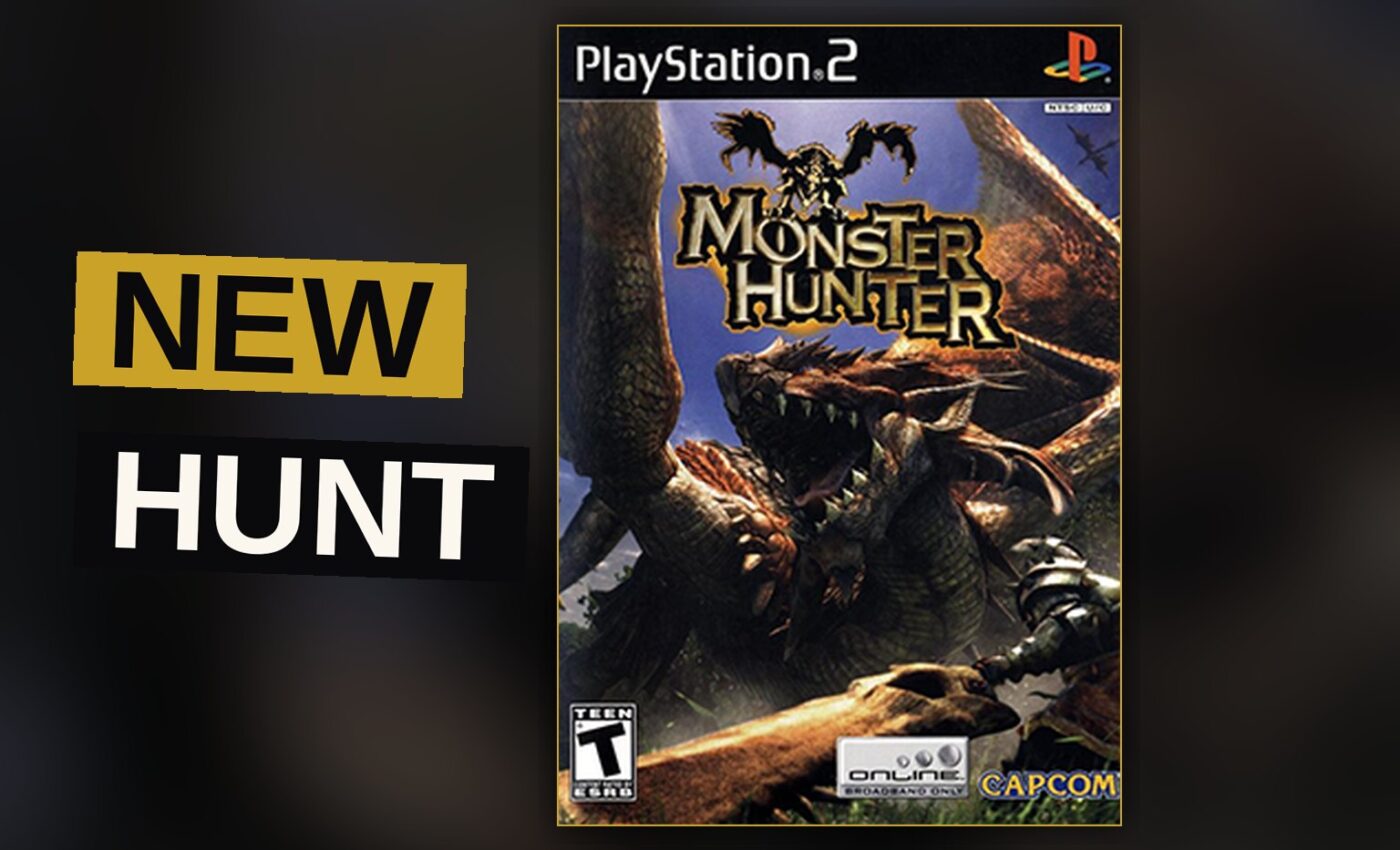
Capcom did not soften Monster Hunter: World for a bigger audience. It cleared the brush instead. The fifth mainline entry in the series arrived on PlayStation 4 and Xbox One in January 2018, with a Windows version following in August, and it keeps every hard rule that made the older games a wall for newcomers — then removes the walls that were only ever technical limits.
Trailer, via IGDBcom.
The New World and the Fifth Fleet
The player creates a hunter and ships out with the Fifth Fleet, summoned by the Research Commission to the New World, an unpopulated landmass where monsters roam and researchers try to keep up. The base is Astera, a hub for buying and selling goods, managing inventory, crafting gear and picking up quests. The Commission’s assignment is simple to state: track down and either kill or capture the large monsters outside the base.
Fourteen Weapons and a Forge
The hunter has no intrinsic attributes. Everything comes from equipment. Weapons are drawn from the series’ fourteen archetypes — the long sword, the bow, the hammer among them — and each one sets the moves and abilities available in a fight. Armor pieces carry combat skills that help or hurt depending on how they are matched. Most gear is built at a forge from monster parts, quest rewards and field finds, which locks the game into its core loop: hunt what you can handle, craft better weapons and armor, then hunt what you could not.
Zorah Magdaros and the Everstream
The plot turns on the Elder Crossing, the migration of Elder Dragons to the New World every ten years. The Fifth Fleet meets Zorah Magdaros, a volcanic, turtle-like Elder Dragon the size of a mountain, on the way in. The Expedition learns it is dying and heading for the Rotten Vale, a massive graveyard.
A capture mission fails when Nergigante, a spiked Elder Dragon that feeds on other Elder Dragons, interferes. Zorah Magdaros then enters the Everstream, the underground river running beneath the whole continent. If it dies there, its released bio-energy destroys the New World. The emergency plan is to drive it to the ocean, where that energy will form a new aquatic ecosystem.
What the Zones Were Hiding
Dropping the “zones” that segmented the older maps is the change that matters most. Environmental spaces are now fully connected, monster artificial intelligence and physics are more advanced, and co-op runs up to four players with a more persistent structure. The tutorials and interface were refined to bring new players in. None of that is decoration. It is the difference between a game you fight and a game you play.
The Loop, Ranked
What Monster Hunter: World asks of a player, in order of how much it gives back:
- Learn one weapon archetype before touching a second.
- Hunt the monsters you can already beat, and take their parts.
- Craft armor with the resistances the next target demands.
- Push into the Elder Dragons, where the gear you built is the only argument you get.
Where the Game Lands
The connective tissue is the achievement. A fully open environment makes the ecosystem legible, and legible monsters are huntable monsters. The Elder Dragon storyline gives the loop a reason to escalate past gear checks, and Zorah Magdaros is a genuine set piece rather than a wall.
The cost is that Astera and the Commission’s cast — Handler, Commander, Admiral, Field Team Leader, Seeker, Huntsman and the rest — carry more names than weight. The game is better at monsters than at people.
KEY FACTS
– Release: January 2018 (PlayStation 4, Xbox One); August 2018 (Windows)
– Developer/Publisher: Capcom
– Platforms: PlayStation 4, Xbox One, PC
– Genre: Action role-playing
– Modes: Single player, co-op up to four players
– Metacritic: 9.0/10
Get the Notebook.
The day's best stories and every fresh verdict, in plain English, in your inbox by seven. One email a day, no more.