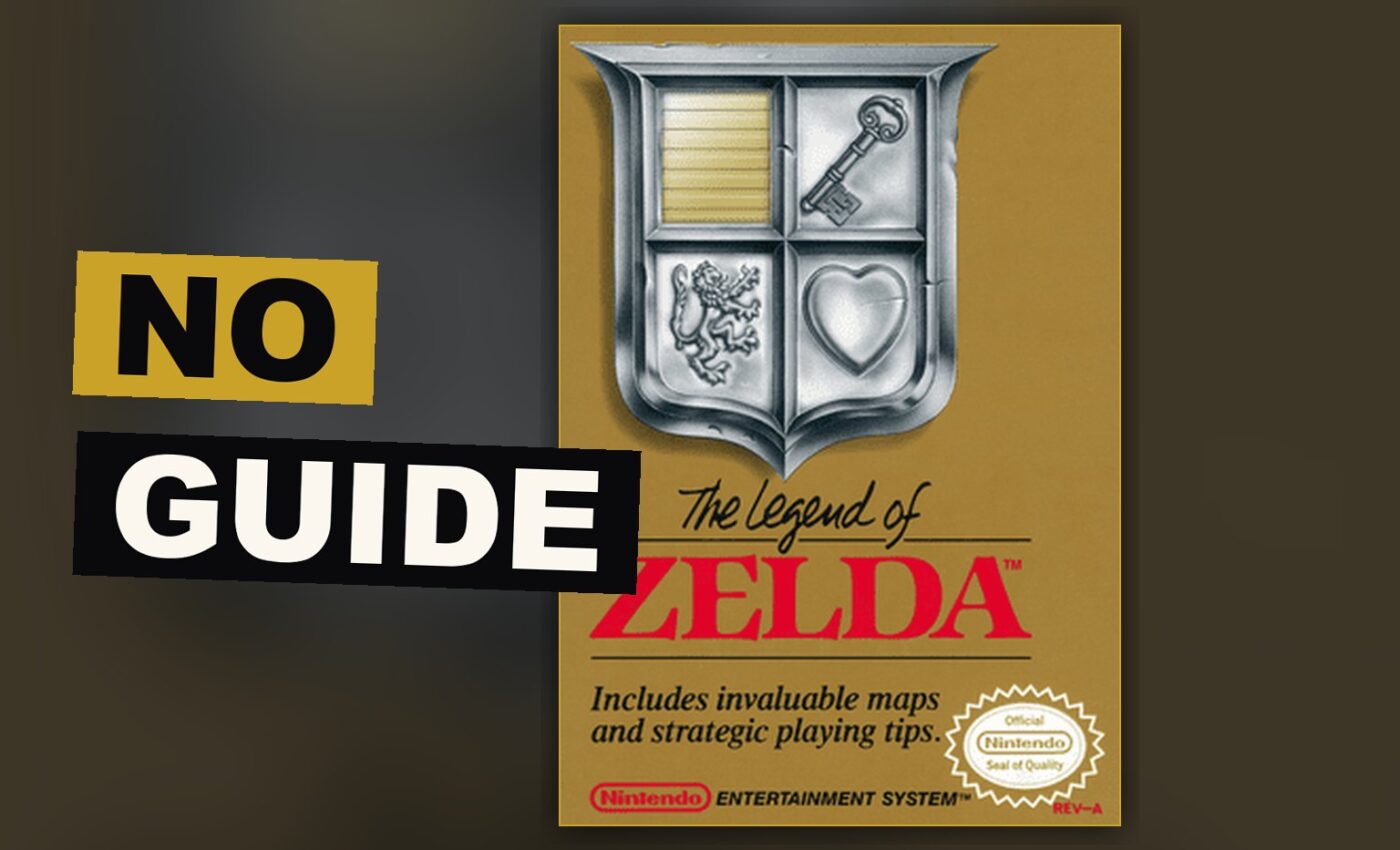
The Legend of Zelda drops players into a world with no guide and no clear direction from the start. That absence of instruction is the whole point.
A World Built on Secrets
The game gives players a sword, a small patch of forest, and little else. From there, every choice is theirs. Burn a bush, break a wall, push a stone — the world of The Legend of Zelda rewards curiosity more than skill.
That design still holds up. Dungeons are numbered but not ordered, and finding them at all is half the challenge. Nothing points players toward the next step. They have to look.
Fighting Kept Simple
Fighting in The Legend of Zelda is plain by design. A sword strike, a shield to guard against attacks, a few items picked up along the way — that’s the extent of it.
- Sword for close fighting
- Shield to guard against attacks
- Small charges for breaking walls
- Bow and shots for distant enemies
- Lamp for lighting dark rooms
None of these tools are hard to understand. Their value comes from where and when players choose to use them.
Music That Sticks
The main theme in The Legend of Zelda is short, simple, and hard to forget. It repeats constantly, yet rarely grates. The dungeon music, by contrast, is quiet and uneasy, built to match the doubt of walking into rooms with no visible way out.
Where the Design Shows Its Age
Not everything holds up. Some secrets require actions with no clue given at all — burning one particular bush, breaking one particular wall, with nothing pointing players there first. That kind of obscurity was common for games made at that time. It still frustrates now.
The world above ground can also feel puzzling without a plan behind it, and walking back over old ground is frequent. Players who want direction will not find much of it here.
The Numbers
- Platform: NES
- Genre: Adventure
- Arrangement: Open world above ground, nine dungeons
- Save system: Kept in memory
- Chief feature: No fixed path required to beat the game
The Verdict
The Legend of Zelda set a course that adventure games still follow. Its open design, its willingness to let players get lost, and its refusal to explain itself are not weaknesses so much as choices — choices that reward patience and punish players who want everything handed to them.
Some of those choices have aged badly. Certain secrets are too well concealed, and the lack of guidance can turn into annoyance rather than discovery. But the heart of the game, the sense of stepping into an unknown world and learning it through trial and error, still works.
The Legend of Zelda remains an early and important work in its genre, worth playing today for reasons beyond fond memory.