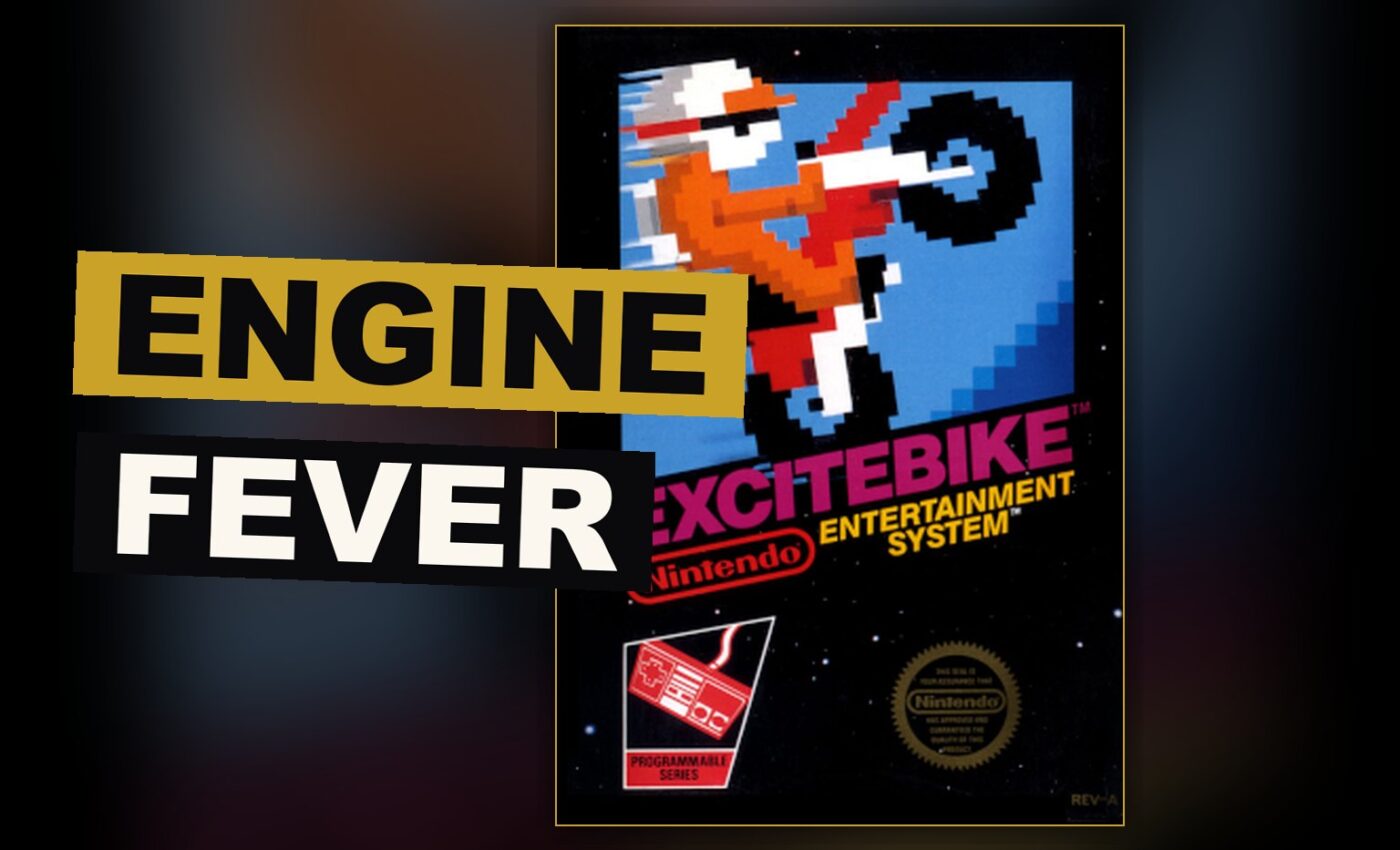
Excitebike puts players on a racing machine and asks for one thing: control without carelessness. The NES title, built around racing on rough ground, still holds up as a lesson in simple design done well.
Course Design and Control
The game gives riders a course packed with ramps, soft ground and other racers. Control comes from timing, not luck. Hit a ramp wrong and the machine falls; hit it right and the run gains distance and time. The soft ground checks pace and punishes impatience. Riders learn fast that patience through the wet ground beats blind acceleration.
Every race runs against an engine meter tied to how hard the lever is held down. Push it too long and the engine fails, ending the run entirely. Ease off at the right moment and the meter cools, keeping the machine in the race. That balance between push and ease is the whole game. There are no arms, no story, no extra element to draw attention from the core task of managing pace against the engine.
“Ease off at the right moment and the meter cools, keeping the machine in the race.”
Excitebike also lets players build their own courses, placing ramps and obstacles by hand. That feature was unusual for its time and gave the game a life past its original races. It is a small addition, but it extends the game’s replay value well beyond the standard courses.
Presentation and Standing
The controls are keen and exact, which matters more here than in most racers. A ramp has to be timed off a particular point on the course, and the game expects careful timing. Miss the mark and the machine falls, costing time and forward motion. That precise timing is rewarding once learned. It is also harsh to new players, who will fall often before finding the rhythm the game demands.
In appearance, Excitebike is plain by later standards, all even color and repeating scenery. That simple design keeps the focus on the course itself. Nothing on screen draws attention from the ramps or the meter, which suits the design. The sound is plain but useful rather than striking, and it stays out of the way.
Excitebike became an early model for racing games that followed, particularly in how it handled ramp physics and course hazards. Its influence shows up in later racing titles that borrowed the engine meter idea or the timing of ramps directly. The building of courses, too, pointed toward later work made by players in gaming. None of that history changes how the game plays today.
Excitebike does not try to be more than it is. It is a racing game about patience and timing, plain in appearance and built around an engine meter that punishes impatience. The course editor adds replay value that few games of its time offered. It holds up as an important racing title, one whose ideas continued past its own console.