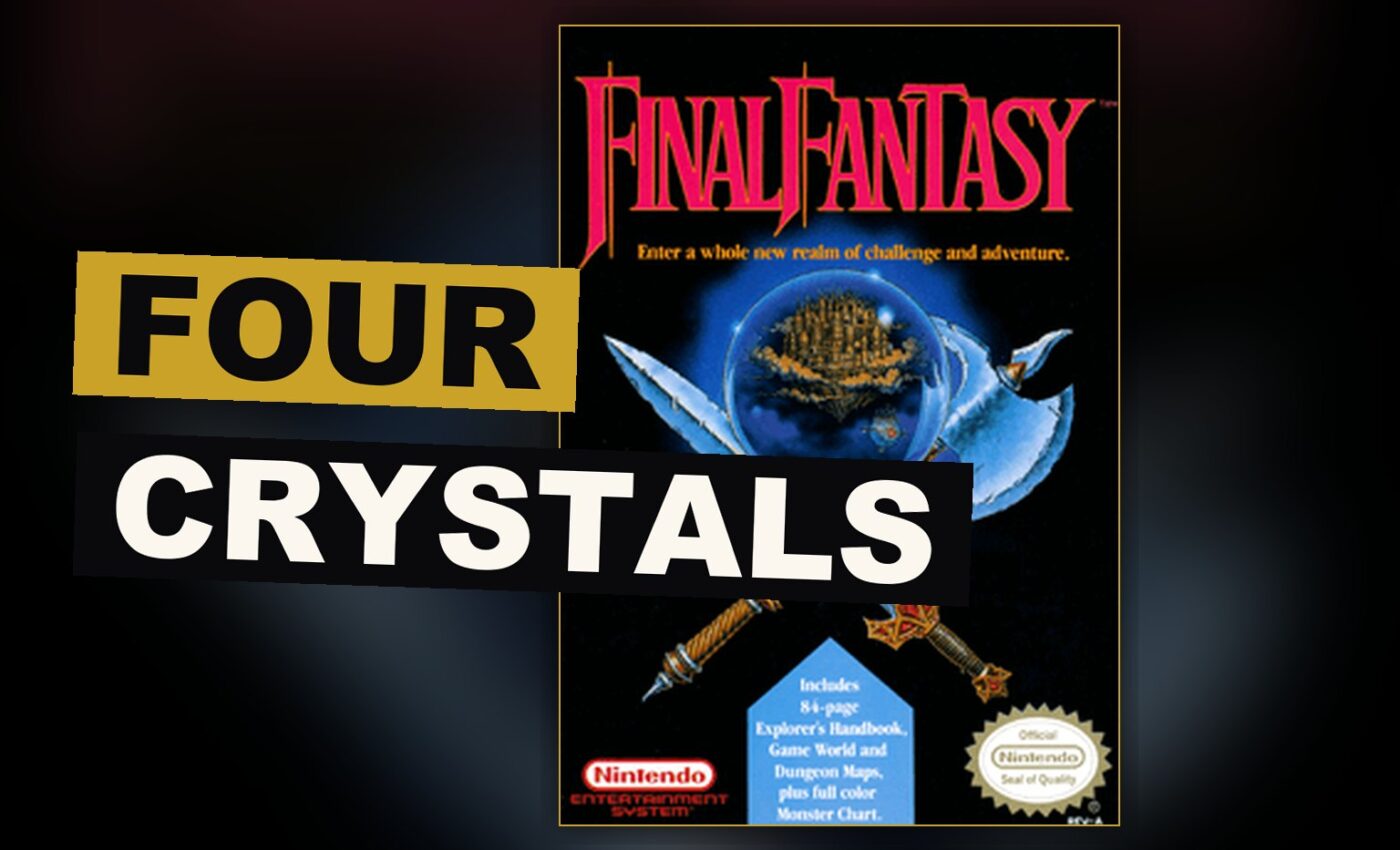
Final Fantasy for the NES puts players in charge of four fighters, sends them across a wide land, and asks them to stop a growing darkness from swallowing the world. It is a simple idea. The game built around it turned out to be one of the most influential of its age.
Four Fighters, One Quest
Players choose their party from six classes at the start: fighter, thief, monk, red wizard, white wizard, and black wizard. That choice shapes every fight that follows.
Battles run on a system built around menus and taking turns, viewed from the side on a plain grid that rarely changes shape across the whole adventure. The opening hours ask for patience. Monsters near the first town hit hard, and gold comes in gradually enough that better swords and gear stay out of reach for a while.
Once the party clears the first few dungeons and starts earning real income, the pace picks up. The class system starts to pay off.
A World Worth Crossing
The outer world is large for a cartridge game, split by ocean and mountains, and later opened further by a flying ship that reveals the whole land at once. Towns are small but distinct, and each one holds a piece of the story or a needed item.
Dungeons vary in shape and challenge, though a few late-game halls depend too heavily on repeated twists and chance meetings with monsters. Boss fights stand out as the game’s strongest moments. Several demand real planning from the whole party rather than attacking without thought, and losing one often sends players back to build strength before trying again.
That sudden rise in difficulty will frustrate some and satisfy others.
The music holds up well. Its themes, particularly the field and battle tracks, carry real weight for hardware of this age, and they stay in memory well after the console is off.
By The Numbers
- Platform: NES
- Party size: 4 fighters, chosen from 6 classes
- Battle style: turn by turn, run through menus
- Travel: wide outer world, later includes a flying ship
- Score: 7.2 out of 10
The interface shows its age. Menus are awkward, item management takes longer than it should, and there is no way to move quickly through battle animations that repeat constantly. Building gold and strength for the mid and late game becomes a real cost in time.
The story is thin by later series standards, but it does not need to be detailed. Four fighters, four crystals tied to the natural world, one dark force. That is enough base to carry the systems forward.
Final Fantasy is not a smooth game by modern standards. Its menus are awkward, its early hours test patience, and its dungeons repeat more than they should. But its class system, its boss fights, and its music still carry weight, and its hold on the genre that followed is hard to deny. Final Fantasy earns a 7.2 out of 10.