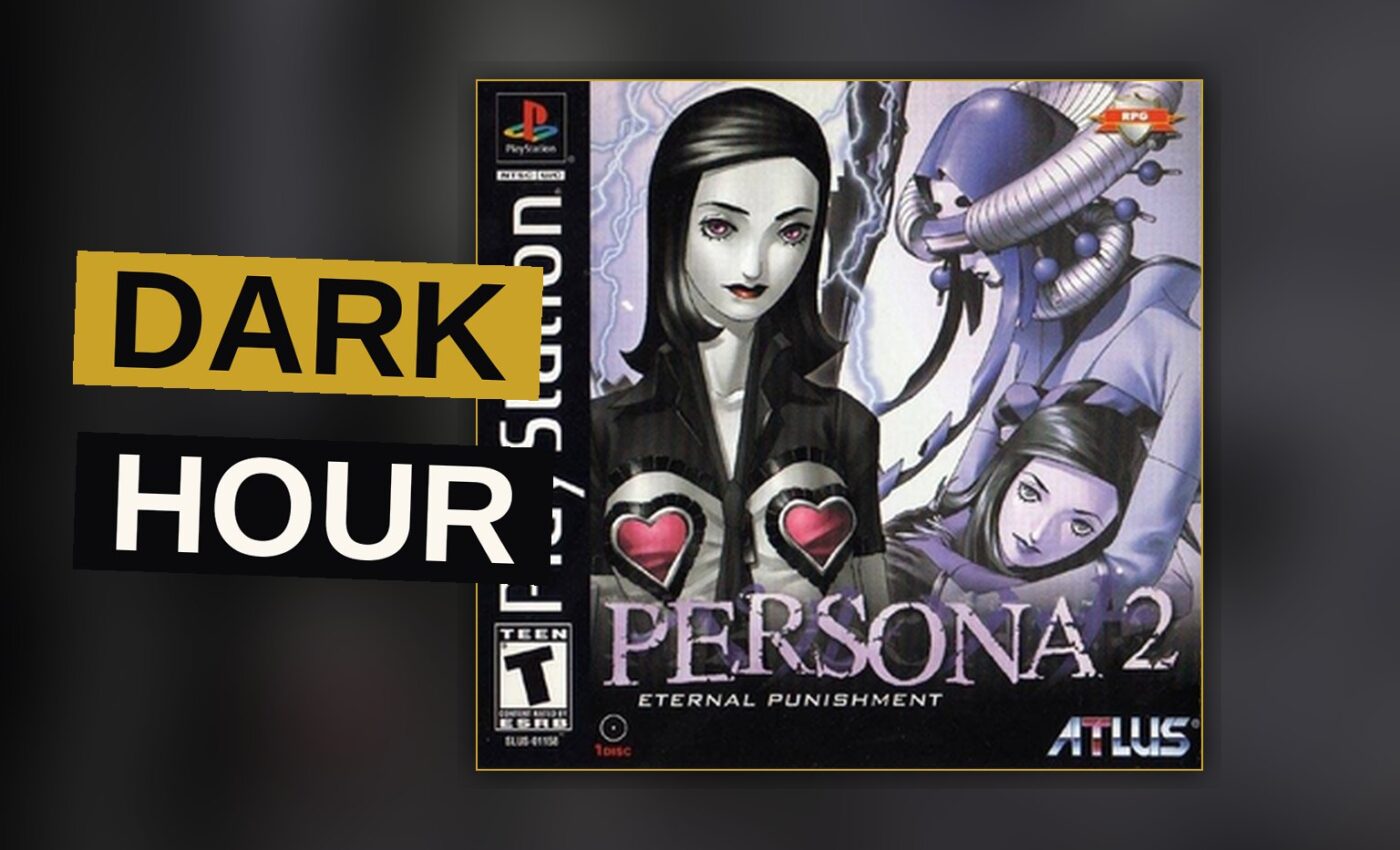
Persona 2: Eternal Punishment asks players to look away from the light and see what lies beneath it. Set in a city split between the surface world and a shadowy realm called the Dark Hour, the game follows a group of high school students who wield Personas, spiritual avatars that grant them power. It is a sequel that does not follow the main Persona series directly, but it shares enough DNA to make the connection feel less jarring than it might otherwise.
The game was released for the original PlayStation, and it carries forward a style of play that mixes exploration, social links, and combat into a single, dense package. It is not a perfect game, but it is a bold one, willing to push boundaries in ways that few titles of its era attempted.
The World Between Light and Dark
The setting is the core of Persona 2: Eternal Punishment. The Dark Hour is a separate dimension that exists outside normal time, and it is here that the story unfolds. Players move between the two worlds freely, solving puzzles, talking to characters, and uncovering secrets about the city’s history and the nature of reality itself.
The writing leans heavily into surrealism and psychological horror. Characters are not always what they seem, and the game does not hesitate to make the player uncomfortable. This approach will not appeal to everyone, but it gives the story a distinct identity that sets it apart from other JRPGs of the period.
Combat and Social Links
Battles in Persona 2: Eternal Punishment use a turn-based system with a twist. Personas can be fused together to create new ones, and the game rewards players who experiment with different combinations. This fusion system is one of the game’s strongest features, offering a layer of depth that goes beyond simple stat increases.
Outside of combat, the game tracks relationships through its social link system. Each character has their own arc, and spending time with them outside battles pays off in small ways, like better equipment or access to new areas. It is a slow-burning process, but it gives the player a reason to engage with the cast beyond the main plot.
What Works and What Does Not
The game is not without flaws. Some side quests feel like filler, and the pacing can drag during extended stretches of dungeon crawling. The difficulty spikes occasionally, particularly in boss fights that require precise timing and memorization.
The translation also shows its age. Certain lines of dialogue feel stilted or awkward, which can pull players out of the experience. These issues are not fatal, but they do chip away at the overall quality of the presentation.
Comparing Persona 2: Eternal Punishment to Its Predecessors
| Feature | Persona 2: Eternal Punishment | Previous Persona Titles |
|---|---|---|
| Setting | Split between surface world and Dark Hour | Standard fantasy or urban settings |
| Fusion System | Central mechanic around fusing Personas | Present but less developed |
| Social Links | Character arcs tied to relationship building | Less prominent |
| Tone | Surreal, psychological horror | More grounded |
The comparison highlights what Persona 2: Eternal Punishment brings to the table. It takes risks that previous games in the series did not attempt, and while some of those risks miss, others land with force.
Final Word
Persona 2: Eternal Punishment is a game that rewards curiosity and punishes carelessness. It asks players to accept its odd logic and commit to its strange world, and when it succeeds, the payoff is genuine. The fusion system and social link mechanics remain strong even today, and the game’s willingness to explore darker themes is admirable.
It is not a flawless title, and some of its rough edges are hard to ignore. But as a piece of Japanese role-playing game history, it holds a place that few other games from its era can claim.