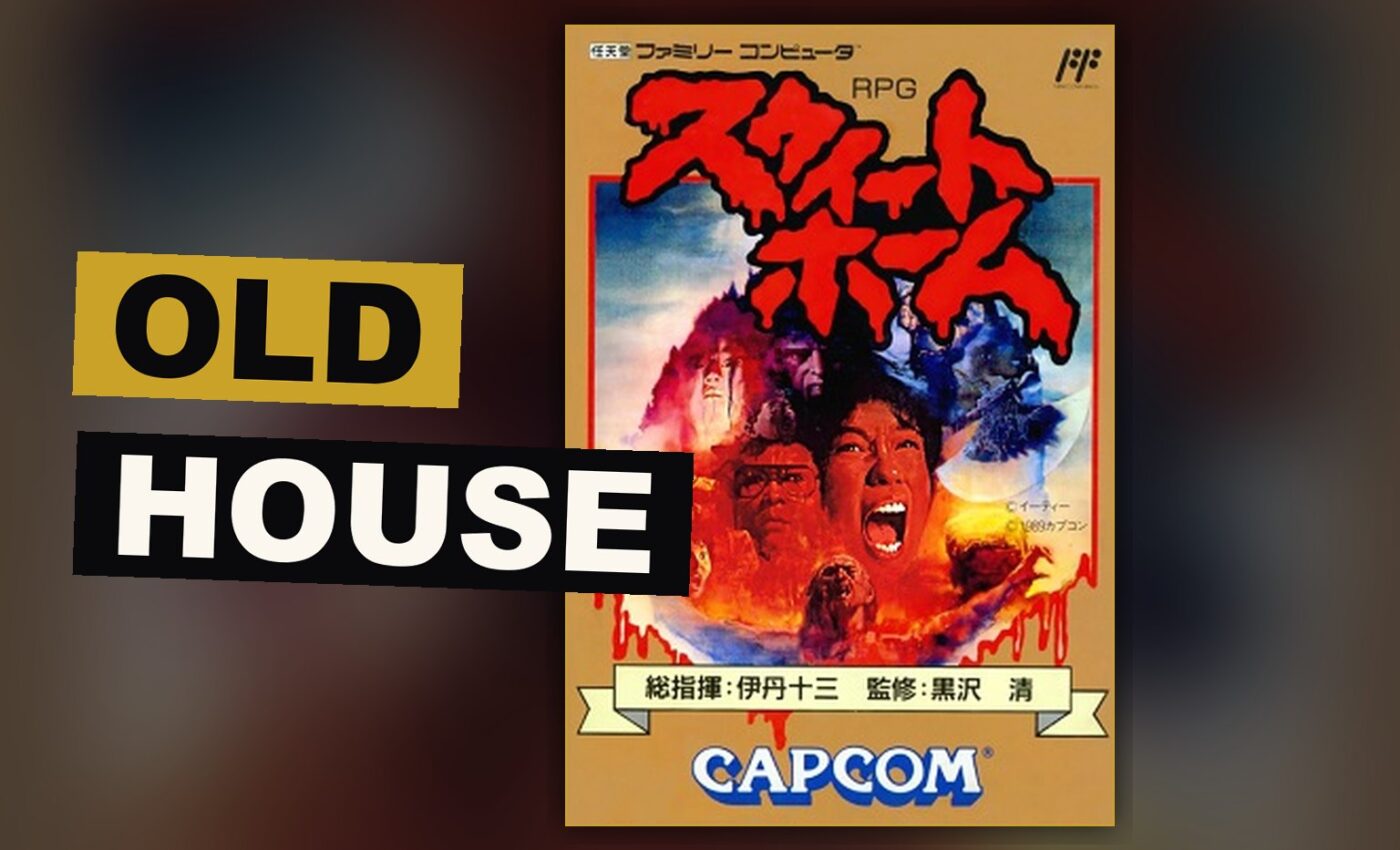
Sweet Home is a 1989 role-playing game developed and published by Capcom for the Famicom, made alongside a horror film of the same name, and it is one of the most important games most people have never played. It never left Japan. Its ideas did. The mansion, the limited inventory, the door-opening animations and the multiple endings of the Resident Evil series all trace back to this cartridge, and the cartridge is still worth the trouble of finding.
The Mansion
A team of five filmmakers enters an old mansion in search of precious frescos hidden inside. The house has other plans. The five are trapped, the mansion is haunted, and the game becomes an expedition through rooms that want them dead. Each character has a tool and a role, and the group can split into parties to explore, which means a player is always deciding who goes where and who is left alone.
The Horror
Sweet Home is a role-playing game with turn-based combat, but it does not play like one. Death is permanent. A character who dies is gone for the rest of the game, and the ending you get depends on who survives. That single rule changes everything. Every encounter carries a cost, every corridor is a risk, and the tension of a horror game arrives through mechanics rather than jump scares.
The Details
The game’s texture is what makes it frightening. Doors open with a small animation that delays what is behind them. Frescos and diary pages tell the mansion’s story in fragments. Items are scarce and inventories are tiny, so choosing what to carry is a decision with consequences. On an 8-bit console in 1989, these were startling ideas, and Capcom would spend the next decade refining them.
The Film
The game was developed with the film, and it is one of the few movie tie-ins in history that outlasted its movie. The film is a footnote. The game is a foundation.
Where It Falls Short
It is an 8-bit RPG, and it has the pacing of one. Random encounters interrupt exploration, the combat is simple menu-driven trading of blows, and the grind for experience sits awkwardly against the horror. The graphics do what they can and no more. And the game never received an official release outside Japan, so a Western player needs a fan translation to follow the story.
The Verdict
Sweet Home is a landmark that plays like a prototype, and both halves of that description are true. Its ideas are the reason survival horror exists. Its execution is the reason it took another seven years to perfect them.
Get the Notebook.
The day's best stories and every fresh verdict, in plain English, in your inbox by seven. One email a day, no more.