Donkey Kong for the Game Boy begins as a remake and ends as something else entirely. The four arcade levels are there — Mario climbing a construction site, dodging obstacles, pulling the rivets out from under the ape. Then Donkey Kong gets up, takes Pauline, and runs into the Big-City. What follows is 97 additional levels spanning nine worlds, and that is the game.
The Rivets Come Out
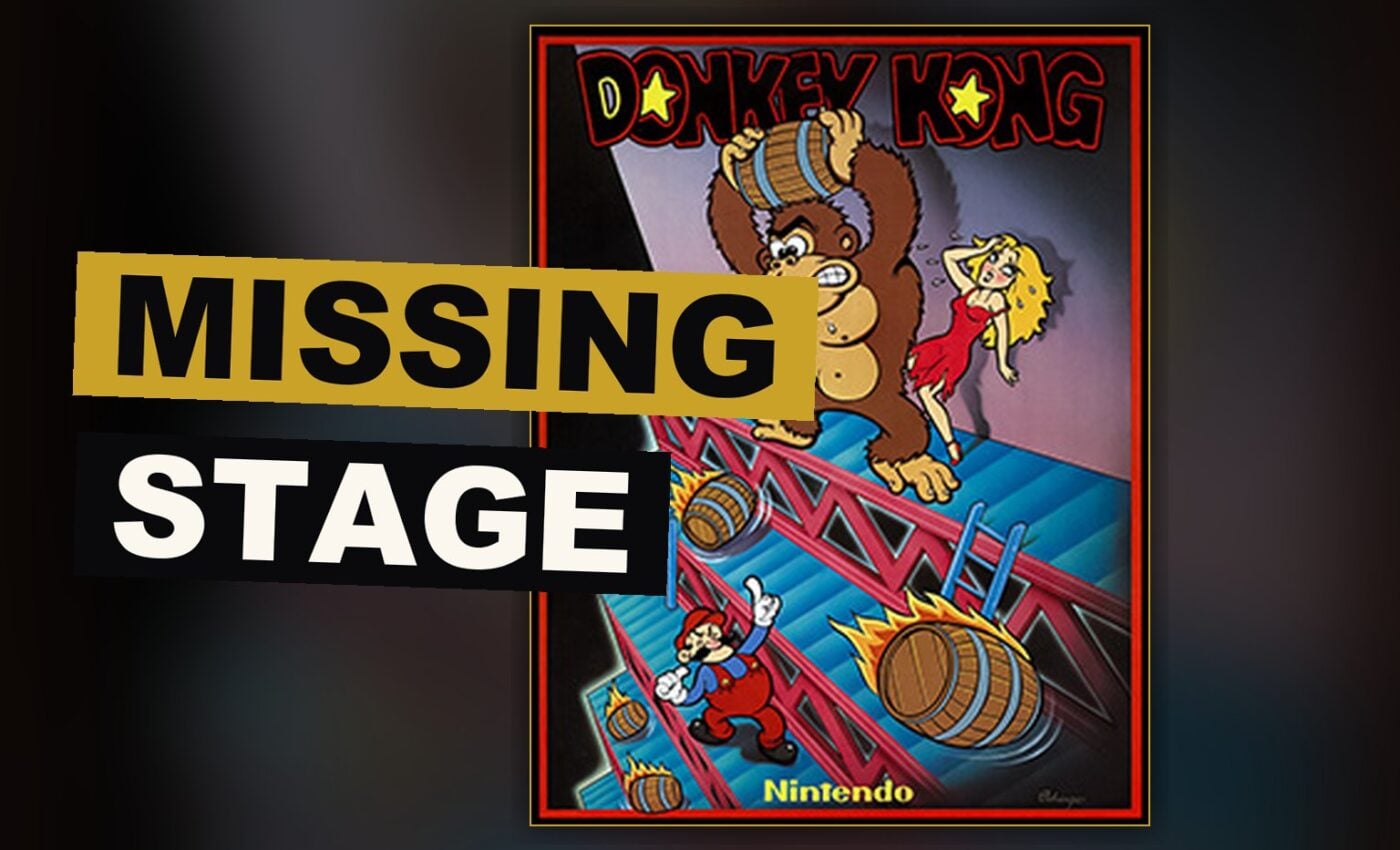
The setup is the 1981 arcade classic, restaged. Donkey Kong kidnaps Pauline and carries her off to a construction site. Mario follows him to the highest point and makes him fall 100 meters by pulling the rivets supporting the platforms. Mario and Pauline reunite. Then Donkey Kong recovers, grabs her again, and escapes into the Big-City. Mario pursues.
That ending sequence is the hinge. It turns a port into a platform adventure, and it is the smartest thing the game does.
97 Levels and a Key
The bulk of Donkey Kong is the nine worlds that follow. Each level is a side-scrolling area no larger than 1.5 times the Game Boy screen. The player locates a key and carries it to a locked door within a time limit. The levels hold three collectibles — a hat, a parasol, a purse — and collecting all three is a goal in itself.
Mario’s moveset is bigger than the arcade original allowed. He throws the hammer upward to keep using it on another platform. He backflips for extra height, handstands into a triple jump, and spins on wires to launch himself. He picks up and throws objects and enemies, as in Super Mario Bros. 2. Some enemies can be stood on as platforms.
Falling Is Not Always Fatal
The old Donkey Kong killed Mario for any fall. This one only kills him if he lands on his head. Otherwise he is briefly stunned. That difference is the change I would point to first in how the game feels to play.
The player starts with limited lives, and losing them all results in a game over. The pull here is the puzzle, not the reflex.
Built for the Super Game Boy
Donkey Kong was the first Game Boy game designed for the Super Game Boy, the Super Nintendo Entertainment System (SNES) peripheral that allows users to play Game Boy games on a television. On that hardware the game is colorized, digitized speech is added, and the ending music uses the SNES sound chip.
Shigeru Miyamoto led development, ending a decade-long hiatus after the unsuccessful Donkey Kong 3 (1983). The team focused on puzzle-oriented play to account for the Game Boy’s small display. It was the last game developed before Miyamoto shifted to an advisory role on the franchise.
The player controls the Italian plumber Mario, who must rescue his girlfriend Pauline from the gorilla Donkey Kong.
That line comes from Wikipedia’s description of the game, and it is accurate as far as it goes.
What the Numbers Say
- Released: June 1994 in Japan and North America; September 1994 in Europe
- Platforms: Game Boy, Nintendo 3DS
- Developers: Nintendo, Pax Softnica, Nintendo Entertainment Analysis & Development
- Levels: 97 original, 101 total including the arcade remake
- Worlds: 9
- Copies sold: 3.07 million
- Metacritic user score: 6.5/10
A Killer App With a Ceiling
Donkey Kong earned its reputation as a killer app for the Super Game Boy, and the sales back it up — 3.07 million copies puts it among the bestselling Game Boy games. The design problem it solved is real: the developers focused on puzzle-oriented gameplay to account for the Game Boy’s small display, and the result is compact puzzles rather than endurance tests.
That choice costs something. The 97 levels repeat their structure — find the key, carry it, beat the clock — and the repetition wears. The collectibles give each stage a second goal, but my read is that the purse, hat and parasol do not change how a level is solved. They add a reason to replay it.
The moveset is the game’s best argument. Backflips, handstands and wire spins give Mario a vocabulary the arcade original never had, and the puzzle rooms are built to use it. When a level asks for a backflip into a thrown hammer, the game is at its sharpest.
The 6.5/10 Metacritic user score lands about right. Donkey Kong is a clever reimagining with a genuine hook and a long tail of sameness. It is worth playing for the trick it pulls — remake turning into sequel — which still works.
Get the Notebook.
The day's best stories and every fresh verdict, in plain English, in your inbox by seven. One email a day, no more.