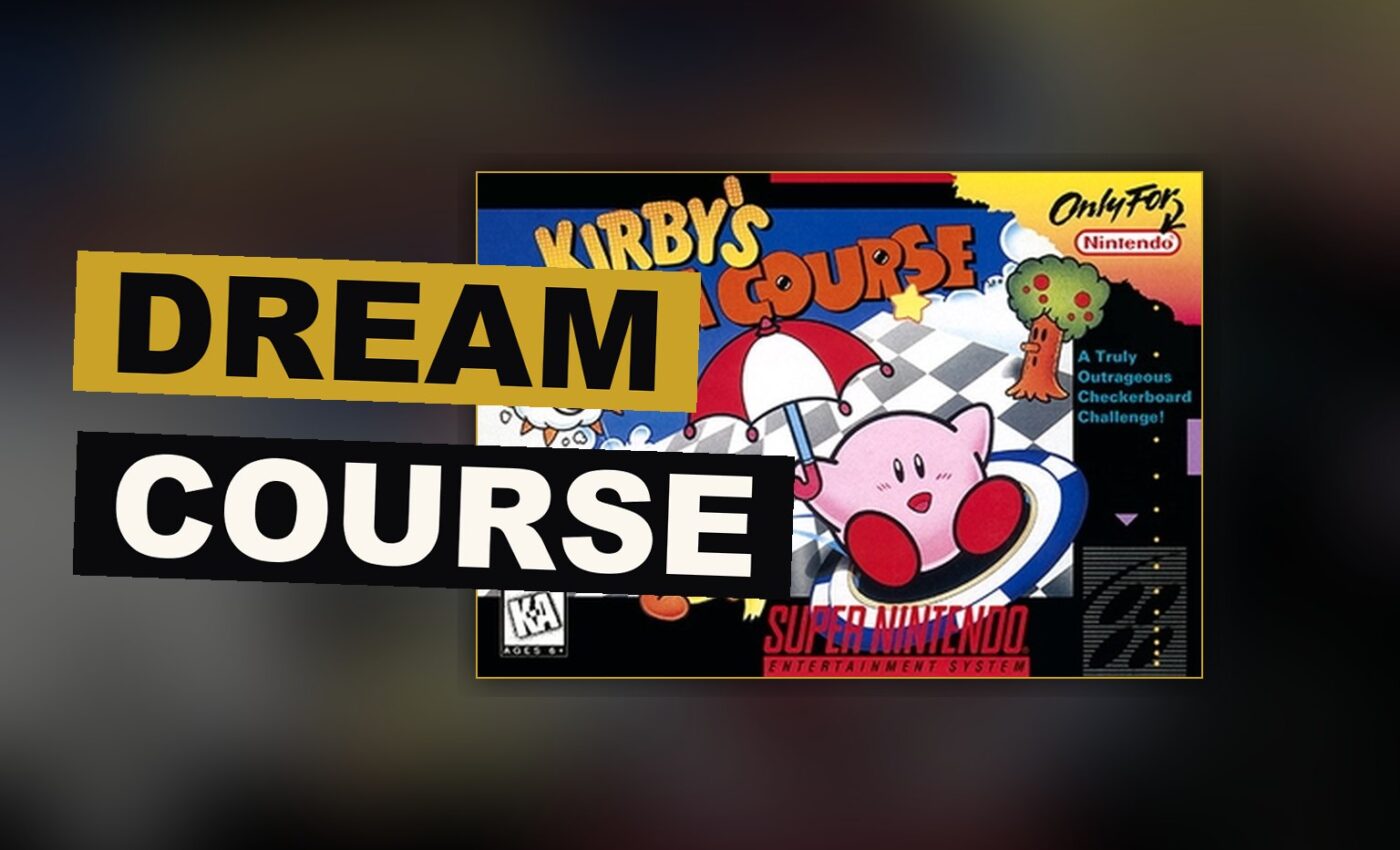
Kirby arrives on the SNES, and the mix works. Kirby’s Dream Course trades clubs and open greens for a round ball that must be aimed and launched across small floating stages, and the result still feels fresh today.
The Setup
The goal in Kirby’s Dream Course is simple to state and hard to master. Players guide Kirby, rolled into a ball, around a course shaped like a green, trying to send him into a cup in as few turns as possible. Enemies appear on each stage, and eating them gives Kirby their powers, which change how he moves and how the ball acts.
- Aim and power meters that demand care
- Enemy types that grant new abilities on contact
- Stage designs built more like puzzles than golf greens
- A cup system that rewards planning over haste
Why the Puzzle Idea Works
Calling Kirby’s Dream Course a golf game is not enough to describe it. Each stage plays like a physics puzzle, where the right path is rarely the obvious one. Ramps, extra passages and enemy position force players to think several shots ahead, and a wrong shot can send Kirby far from the cup.
Each stage on the SNES moves quickly from one turn to the next, with little pause between shots.
That pace keeps the difficulty from feeling harsh. Losing a stage rarely costs much time, so players can try again and change their approach without much trouble. The rise in difficulty across the game’s later stages is steady, and by the final courses the puzzles ask for real care.
Look and Sound
The presentation is bright and plain, true to the series’ tone. Character designs are simple but expressive, and the course art keeps each stage easy to read even when the designs get hard. The music stays light and cheerful, matching the game’s calm surface even as the puzzles beneath grow harder.
Where It Falls Short
Kirby’s Dream Course is not perfect. The game offers little direct guidance on strategy, leaving some of the harder puzzle logic to trial and error. Play with others adds some value beyond one round, but the core experience is built for a single player, and that focus shows in how the later stages are paced.
Still, the core game holds up. Few titles built for the SNES combined puzzle design and character platforming as well as this one does, and its ideas feel distinct even set against other Kirby games from the same time.
Kirby’s Dream Course earns its place as one of the more original games in Kirby’s early history. It takes a familiar sport, takes it down to direction and force, and builds something that rewards careful thought more than fast hands. That mix gives it staying power beyond its first showing on the SNES.