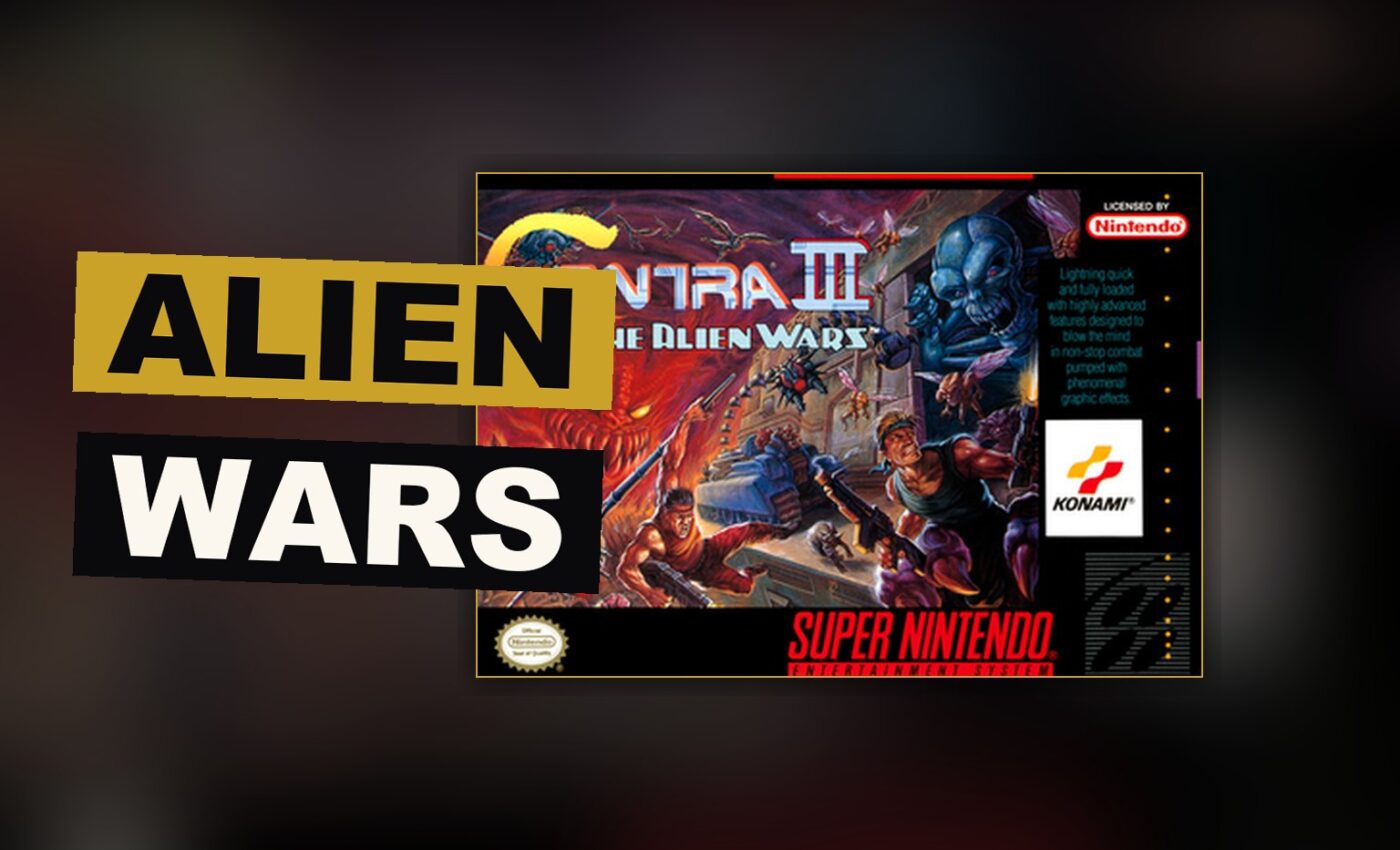
Contra III: The Alien Wars wastes no time. The aliens are already at war with Earth, and the game never lets up. Konami built a run and gun shooter for the Super Nintendo Entertainment System that treats a quiet moment as the least of your concerns.
Bill Rizer and Lance Bean Return
The game is set in 2636, two years after Super Contra. Commandos Bill Rizer and Lance Bean are called back to fight an alien invasion of Earth. It is the third home console entry in the Contra series, after Contra (1988) and Super C (1990) on the Nintendo Entertainment System. In PAL regions, Konami retitled it Super Probotector: Alien Rebels and swapped the player characters for robots.
Nobuya Nakazato directed Contra III, the first Contra title he directed. He designed it with more comical elements, a more cinematic soundtrack, and tighter stage design than its predecessors. The Super NES hardware shows: the graphics are improved over the earlier games, and the aliens have a horrifying look unlike what players were used to seeing.
Six Stages, Two Perspectives
Contra III has six stages. Four are side-scrolling, traditional to the series. Two use the Super NES’s Mode 7 rendering mode for an overhead perspective, where the player navigates the stage to find and destroy predetermined targets and can rotate the screen to move.
Players run, jump, and shoot through the side-scrolling stages. The controls respond perfectly. Characters shoot in any direction, lie on the floor, jump, and scale walls. A spinning jump fires both guns in an aerial somersault, though both weapons are at risk of being lost if you die during the move.
| Mode | Stages | Perspective |
|---|---|---|
| Side-scrolling | Four | Traditional run and gun |
| Overhead | Two | Mode 7, rotatable screen |
Every stage ends with a boss, and some have a mid-stage boss. The bosses are the strongest part of Contra III: big, scary, well made, each with a different skill and a different way to be defeated. That makes the game unpredictable. You never know how to beat the next one, and dying is almost certain. The mini-bosses, by contrast, are very easy.
Weapons That Trade Power for Precision
You start with a precise but very weak machine gun. Power-ups drop from flying pods and replace the shot type of the equipped gun: homing missiles, torpedoes, a flamethrower, a laser, and a spread shot that reaches a wide area. Bombs and a temporary barrier shield may also drop. Bombs are limited and damage every enemy on screen. Losing a life costs you the power-up on the equipped gun, so every death is a step backward.
The Japanese version is easier than the others. It has unlimited continues, and the final boss appears when the game is played on normal difficulty.
A Port History Worth Knowing
Contra III drew praise on release, and the arcade feel that reviewers singled out comes from how the game looks and sounds. Retrospective reviews have ranked it among the best Contra games, and it is counted among the greatest video games of all time. It holds a Metacritic score of 7.0/10.
Konami ported it to the Game Boy as Contra: The Alien Wars (1994), handled by Factor 5, where it drew positive reviews for its Super Game Boy enhancements. A Game Boy Advance port, Contra Advance: The Alien Wars EX (2002), drew more critical reviews for removing features from the original. The Super NES version was rereleased several times.
Where the 7.0 Lands
The 7.0 is a fair score, and it is not a knock on the action. Contra III does the core job: the shooting is sharp, the six stages are tight, and the bosses are the reason to keep playing. The overhead Mode 7 stages are the weak link. They break the momentum the side-scrolling stages build, and they ask for a different kind of patience than the rest of the game rewards.
The weapon system is the other sticking point. A power-up that vanishes on death punishes the player who is already struggling, and the spinning jump doubles that risk. The Japanese version’s unlimited continues and normal-difficulty final boss suggest Konami knew the balance was harsh.
None of that undoes the sound and visual design that critics singled out, or the boss design that still holds up. Contra III earns its place among the best of the series. It is a 7.0 of 10 — excellent action with two stages and a punishing upgrade system holding it back.
Get the Notebook.
The day's best stories and every fresh verdict, in plain English, in your inbox by seven. One email a day, no more.