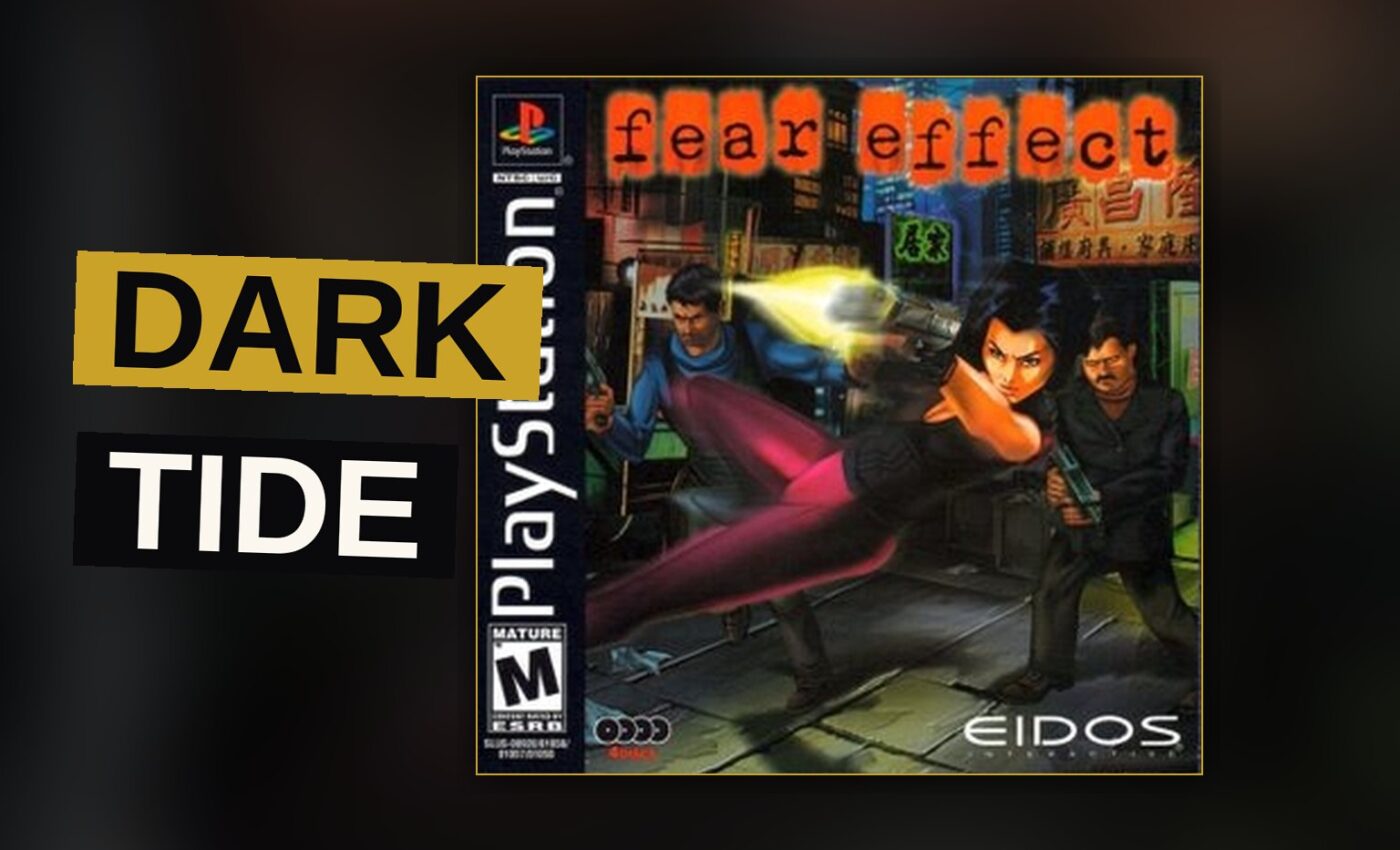
Fear Effect asks players to watch a lot of people die. That is the whole game. It is a stealth action title built around three agents who move through a wet, shadowy world, and the game spends most of its runtime showing those agents getting killed by enemies they could not see. The result is a game that feels less like a thriller and more like a slow-motion autopsy of its own cast.
The premise is simple. Players control Helena, an agent with psychic powers, and her allies Connors and Slade, as they investigate a conspiracy involving human trafficking and supernatural creatures. The game is set across several locations, each rendered in a dark, moody style that leans heavily on fog, shadows and dim lighting. It looks good for its time, though the visuals are limited by the hardware. The problem is that the game’s systems and design keep working against the player, turning a tense narrative into a frustrating slog.
The Cast
Helena is the main character, a young woman with telepathic abilities that allow her to sense enemies and communicate with her teammates. Connors is a hardened soldier type who handles combat, while Slade is a tech expert who can hack systems and disarm traps. Together they form a small team that moves through each mission, taking out enemies one by one.
The dialogue is sparse but effective, with occasional moments of tension between the characters that give the story some weight. The game’s writing tries to build a sense of camaraderie, but the way missions play out often undermines that effort. Because enemies are hidden and difficult to detect, players end up killing their own teammates by accident, which breaks the illusion of trust the game is trying to establish. That sense of trust is central to the game’s intended tone, and the design keeps subverting it.
Stealth vs. Combat
Fear Effect is built around stealth, and it is here that the game shows its biggest flaw. Enemies are placed in rooms without obvious indicators, and the game does not alert players when they are being watched. This means that moving forward often results in a sudden ambush, followed by a frantic scramble to avoid detection. The tension is supposed to come from careful movement and cautious observation, but the lack of feedback makes it feel random rather than deliberate.
When stealth fails, combat is the fallback. The game allows players to fight openly, but doing so is rarely practical. Enemies are numerous, and the player’s health bar is small. One hit from an enemy often sends a teammate to the ground, and the game does not offer much in the way of cover or defensive options. The result is a combat system that feels more like punishment than challenge. Players are left with little recourse once an enemy spots them, and the game’s difficulty compounds that problem.
Difficulty and Death
The game is notoriously punishing. Enemies deal large amounts of damage, and the player’s health is fragile. Dying in Fear Effect means losing progress, and the game does not make it clear what exactly is lost. This creates a cycle of caution, where players spend more time worrying about dying than enjoying the game. The uncertainty of what gets lost after a death adds to the anxiety of every encounter.
There is also a layer of difficulty that comes from the game’s pacing. Missions are long, and the game expects players to backtrack through areas they have already cleared. This repetition, combined with the fear of death, makes the experience feel longer than it should be. Every trip back through a previously searched room adds to the grind, since the game does not mark what has been done or let players skip already cleared sections.
Presentation and Sound
On a technical level, Fear Effect is competent. The character models are detailed for the time, and the environments are atmospheric. The sound design supports the mood, with tense music and ambient noises that add to the sense of dread. However, the frame rate is inconsistent, and the game stutters during busy combat scenes. These issues are minor compared to the gameplay problems, but they do detract from the overall experience.
The game also includes a mode where players can replay missions with different difficulty settings. This is a welcome addition, though it does not fix the fundamental problems with the core design. It simply makes the bad parts easier or harder. The replay mode gives players a way to approach the same missions again, but it does not address the underlying issues with enemy placement or combat balance.
Mission Structure
The missions in Fear Effect follow a similar pattern. Players enter a location, search for clues, trigger an alarm, and then fight their way out. Each mission is broken down into distinct phases:
| Phase | Activity |
|---|---|
| Search | Explore the environment, find clues |
| Alarm | Trigger an alarm, enemies appear |
| Escape | Fight through enemies and reach the exit |
This structure repeats across the game’s chapters, which can make later missions feel familiar even when the setting changes. The game does not introduce new mechanics to break up the routine, so players are left with the same set of tools throughout. The repetition of the search-alarm-escape loop is a defining feature of the game’s pacing.
What Works
The game is not without merit. Its presentation is strong, and its story attempts to create a sense of dread that few games of its era attempted. The characters are distinct, and the voice acting gives them personality. The pacing of the story is steady, with plot twists that keep players engaged between missions. None of this saves the game from its core failures, but it shows that the developers had a vision that went beyond mere technical limitations.
The Verdict
Fear Effect is a game that tried to do something different. It wanted to be a tense, psychological thriller, and it succeeded visually. But the systems that should have delivered that tension instead turned the game into a frustrating, unforgiving experience. The stealth mechanics are broken, the combat is punishing, and the difficulty is inconsistent. These flaws are not minor cosmetic issues; they are fundamental problems that define how the game is played.
The game is not recommended for anyone looking for a rewarding experience. Players who want a challenging game will find plenty of frustration here, but they will also find a game that does not respect their time. The game’s reputation as a cult classic is understandable, but that reputation is based on its ambition rather than its execution.
Fear Effect is a game that is best remembered for its ambition rather than its success. It tried to create a tense, atmospheric experience, and it came close. But the systems that should have supported that atmosphere kept failing, leaving players with a game that is more frustrating than thrilling.