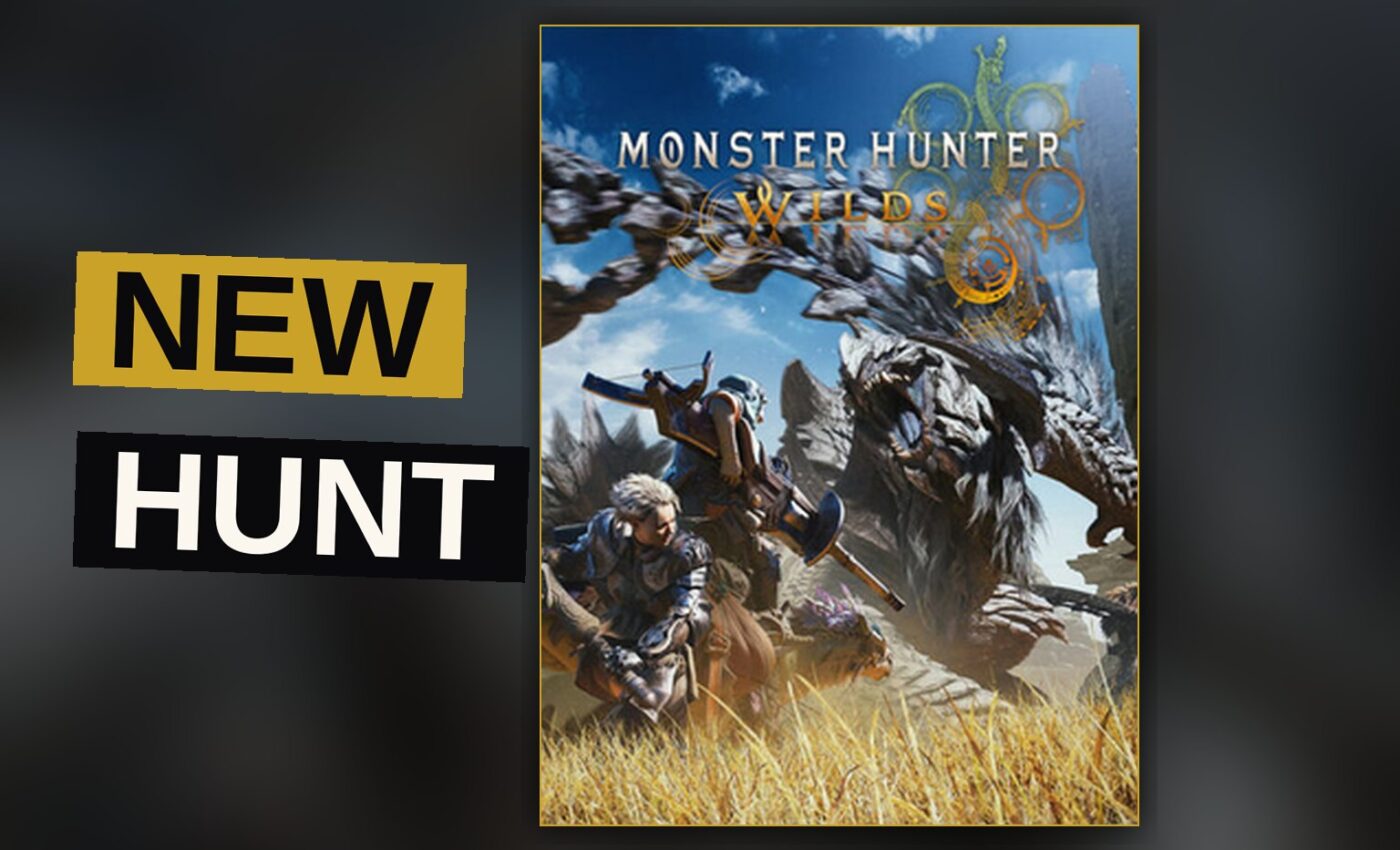
Monster Hunter Wilds arrives as the newest entry in Capcom’s long-running hunting series, built for PS5, Xbox Series X/S and PC. It keeps the core loop that made the franchise a hit — track a beast, learn its patterns, take it down, craft new gear from the parts — while pushing the scale and presentation further than any prior game in the line.
Trailer, via PlayStation.
The Shifting Sands
The new setting is built around a living desert that changes as storms roll through it. Sandstorms cut visibility. Water pools form after rain and dry up again. Wildlife moves to different parts of the map depending on conditions, and monsters react to the shifting terrain in ways that change how a fight plays out from one hunt to the next.
This is not just backdrop. The weather system directly affects hunting strategy, since a monster caught in a storm behaves differently than one in open, clear ground.
The Hunt Itself
Combat still rewards patience and precision. Fourteen weapon types return, each with its own rhythm, and newcomers can lean on a simplified control scheme while veterans dig into the deeper combo trees. The game also introduces a mount system that lets hunters ride smaller creatures across the map, cutting down on empty travel time between encounters.
A few systems stand out as clear upgrades over past entries:
- Faster fast-travel and mount traversal, reducing dead time between fights
- A revamped tracking system that removes much of the old trial-and-error scouting
- Expanded crafting menus that let players compare gear stats side by side
- A wounding system that lets sustained damage open new attack opportunities on a monster’s body
Each of these changes trims friction without simplifying the actual fights, which remain as demanding as ever against the game’s largest monsters.
Alma and the Story Around the Hunt
The narrative leans harder into character than past games in the series, following a hunter guided by a companion named Alma through the shifting desert region. It’s a lighter story than most action games attempt, but it gives the hunts a throughline instead of leaving them as disconnected missions.
The dialogue won’t win awards for depth. It doesn’t need to.
Multiplayer and Progression
Co-op remains central to Monster Hunter Wilds, and it’s smoother than before. Players can drop in and out of hunts with less friction, and cross-play support between PS5, Xbox Series X/S and PC means friend groups aren’t split by platform choice. Gear progression still follows the series’ familiar hook: hunt a monster, break its parts, craft armor and weapons from what you collect, then take on tougher monsters with what you’ve built.
That loop is as addictive here as it’s ever been. Session length tends to stretch far past what players plan on, because there’s always one more hunt that looks quick.
Performance Across Platforms
On PS5 and Xbox Series X/S, the game runs at a steady frame rate through most encounters, with occasional dips during the busiest fights involving multiple large monsters at once. PC performance depends heavily on hardware, but players with modern rigs report a smoother experience overall, with higher frame rates and shorter load times than the console versions.
The desert environments push visual fidelity further than past Monster Hunter titles, from sand particle effects during storms to detailed monster animations that sell the weight of every hit.
Not every change lands perfectly. Some longtime fans may find the streamlined tracking system removes a bit of the mystery that made early hunts feel like genuine investigations. The story pacing can also lag in early chapters before the game opens up into its wider hunting grounds. These are minor complaints set against a game that otherwise delivers on nearly every front it aims at.
Monster Hunter Wilds succeeds because it doesn’t abandon what made the series work. It builds on it. The dynamic desert, the wounding system, the mount traversal and the smoother co-op all serve the same core hunt-craft-hunt loop that’s kept players coming back for years, just with far less friction getting in the way.
For newcomers, this is likely the easiest entry point the series has offered. For longtime hunters, it’s a clear evolution rather than a reinvention, and that’s exactly what a franchise this established should be aiming for at this stage.