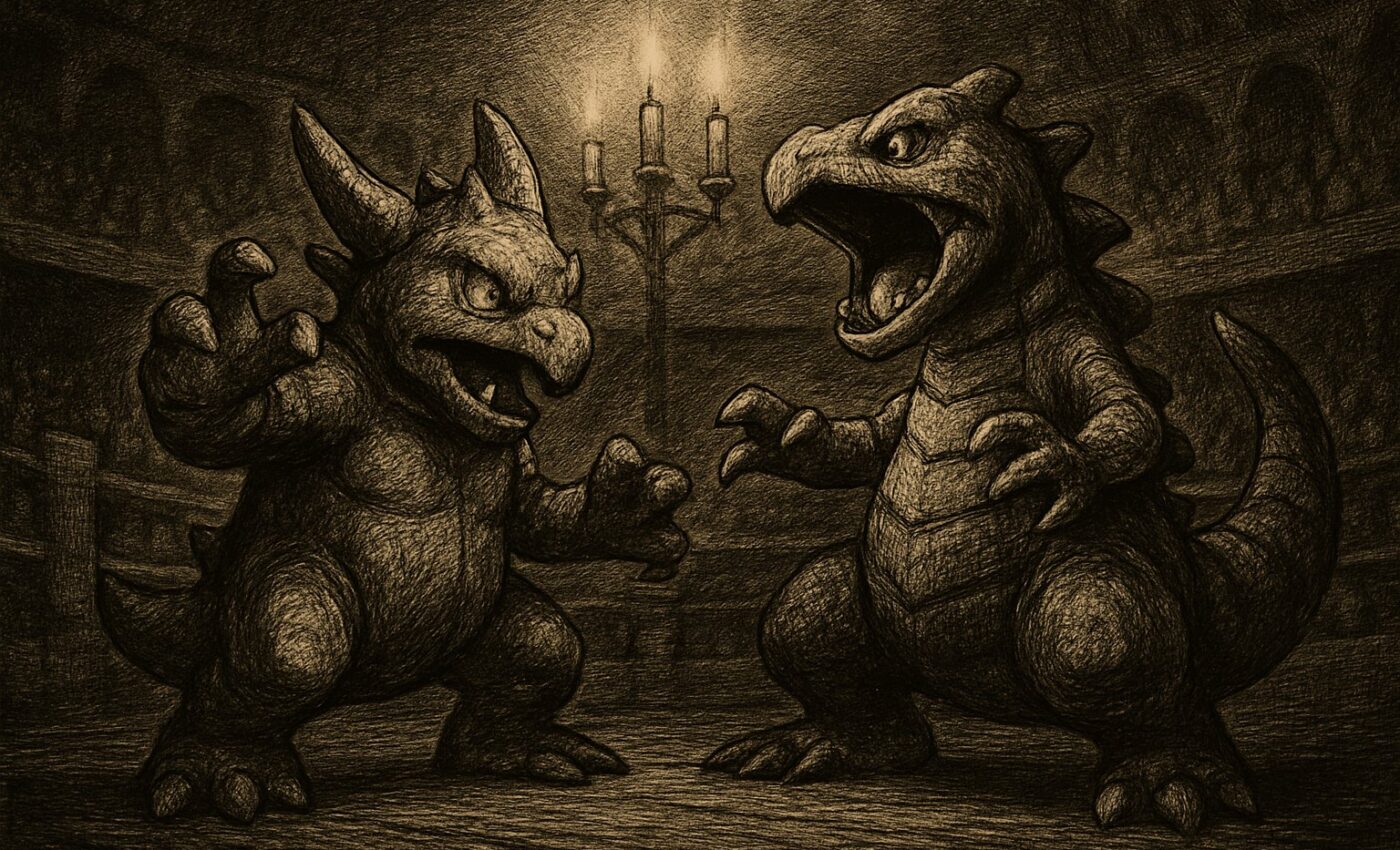
Pokemon Stadium brings the Game Boy monsters into the Nintendo 64, and the change pays off. Small sprites become large, animated fighters that meet each other on a stadium floor. The result is a fighting game built entirely on the bones of a series built on narrative, and it mostly works.
The Transfer Feature
The biggest draw here is the transfer accessory. Players can connect a Game Boy cartridge of Pokemon Red, Blue or Yellow and bring their own trained team straight into the N64 game. That single feature turns Pokemon Stadium into something more personal than a standard companion title. A team raised over dozens of hours on a handheld now stands in a real arena, trading real hits.
Not every player owns the accessory, though, or a save file full of trained Pokemon. Pokemon Stadium accounts for that with rental teams, ready-made groups anyone can pick up and use right away. They are fine, but they lack the weight of a team built by hand.
Fighting in the Arena
Battles remove the deeper planning of the handheld games and put something faster in its place. Matches move in short, quick exchanges. Attacks land with real animation instead of a text box, and that alone makes the fights feel like fights rather than menus.
The four Castle challenges and the Prime Cup tournaments give shape to play without a partner. They are hard. Anyone walking in with a weak or badly matched team will get punished fast, since Pokemon Stadium does not go easy on weaknesses in strategy.
Pokemon Stadium also packs in a set of extra games for up to four players, and this is where the cartridge turns into a party. They are simple. That simplicity is the point. Searching for treasure, avoiding obstacles, racing against the clock — none of it demands deep skill, which makes these extra games an easy sell for a room full of players who do not care about training details or type matchups.
Presentation and Sound
The stadium itself looks good for the hardware. Pokemon models are large but full of character, and the arena camera gives battles a sense of scale that the handheld games could never manage. Sound design rests on simple electronic effects and quick cries for each Pokemon, and it fits the cheerful energy of the whole package.
Time between battles is on the long side. It is a small friction, but it is there every match.
The core problem is depth, or the lack of it. Battles here are made simple. Players who spent hours mastering stat management and move choices in the original games may find the fighting here shallow by comparison, built more for spectacle than for the kind of planning the source material rewards.
There is also the matter of getting the full experience. The transfer feature is the single best reason to own Pokemon Stadium, but it requires owning both a Game Boy game and the connecting hardware itself. Without that setup, players are left with rental teams and a smaller share of what the cartridge offers.
Facts and Figures
- Platform: Nintendo 64
- Genre: Pokemon battling and party games
- Key feature: Transfer support for bringing in teams from Pokemon Red, Blue and Yellow
- Modes: Castle challenges, Prime Cup tournaments, group games (up to four players)
- Score: 8 of 10
Pokemon Stadium succeeds as a display of what the series can look like in motion, not as something meant to stand in for the planning the handheld games built their name on. Watching a trained team fight in full form remains the strongest reason to begin the cartridge, especially for anyone who put real hours into the original Game Boy games. The extra games add a second life for group play, even if that content sits apart from the core fighting.
None of it goes as deep as those who love the handheld series might want. But as a bridge between a handheld series built on narrative and a home console fighting game, Pokemon Stadium delivers enough spectacle and enough real features, especially the transfer support, to stand as a strong title in the Nintendo 64 library.