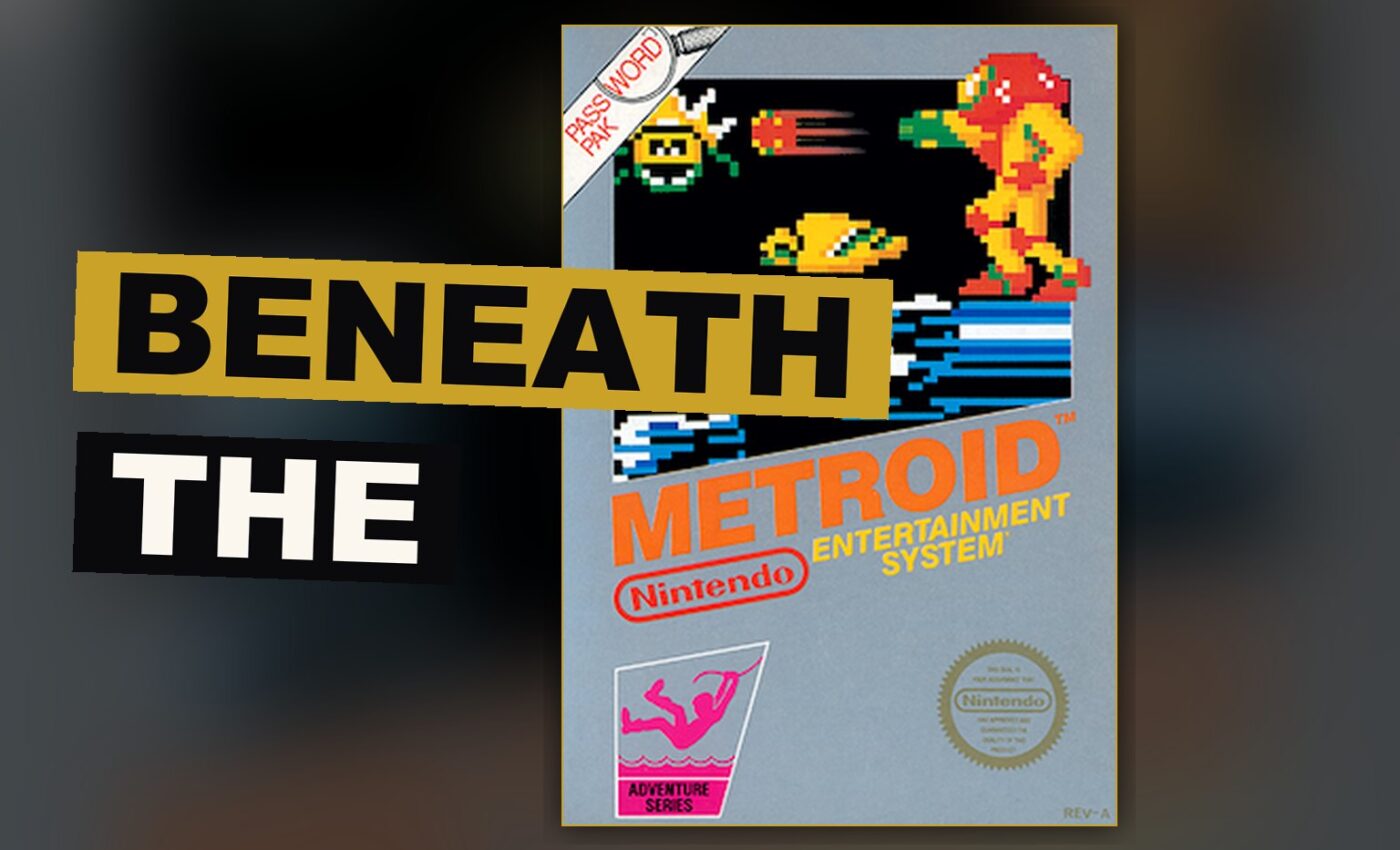
Metroid drops players into a world buried beneath the surface, with no guide and no instructions. That absence of direction is the point. Nintendo built a game around discovery itself, and the result still holds up as one of the more daring designs on the NES.
A World Beneath the Surface
The world unfolds as a network of caves and passages, many of them hard to find. Players guide a fighter sent to stop enemy forces from using a dangerous creature known as Metroid. The design of this world rewards patience. Rooms turn back on themselves. Walls conceal paths behind them. Progress depends on memory and repeated effort rather than any prompt from the game itself.
Players often move through rooms they already passed, going back over ground already covered. A player can spend many minutes without progress, only to discover a path that was open the entire time. That difficulty can feel like a weak point, but it also builds the sense of a real, connected place rather than a set of separate levels.
New Powers and Devices
The items found along the way give the game its shape. Each new device changes how the player moves through the world and opens parts that were closed off before. Among the key finds:
- A rolling form that lets the player fit into narrow spaces
- A cold shot that stops enemies in place and can be used as a step
- A stronger shot that extends the player’s reach
- Extra containers that raise total health
- A suit that lowers damage taken in dangerous rooms
Each find rewards curiosity. Getting one often means the way forward opens again, sending the player somewhere closed before. That habit of discovery and growing strength is the game’s central idea, copied by many titles since.
Fighting and Difficulty
Enemies hit hard, and health does not come back on its own. The extra containers are the only way to raise total health, and losing to a boss can send a player far back. The difficulty is harsh by modern standards, and Metroid does not make things easy for new players.
Boss fights, including the fight with Mother Brain, call for gathered devices and careful play. There is no written help explaining strategy. Players learn by trying, failing, and trying again.
Sound and Mood
The music, built from bare, echoing tones, matches the loneliness of the world below. Some rooms carry almost no music at all, just quiet sound that makes the place feel even more empty and cold. That choice was unusual for the time, when many NES games used constant, cheerful tunes.
The look of the game matches that mood. The world is shown in dark greens, browns and purples, giving the sense of a place never touched by anyone before. Nothing about the look feels friendly.
A Code System Built for Patience
Metroid uses a code system instead of a save system built into the cartridge, a common choice for its time. Players write down long codes to pick up where they left off. It feels dated by today’s standards, but it matched the game’s demand for steady effort. The world was never meant to be finished in one sitting.
The lack of any guide within the game remains the biggest barrier for new players. Some will turn away from the confusion. Others will find that same confusion to be the game’s strongest quality.
Metroid asks a lot of the player: patience, memory and steady courage when lost. In return, it offers a world that feels truly worth seeking out, layer by layer, device by device. Few games from its time managed that same balance of danger and reward.