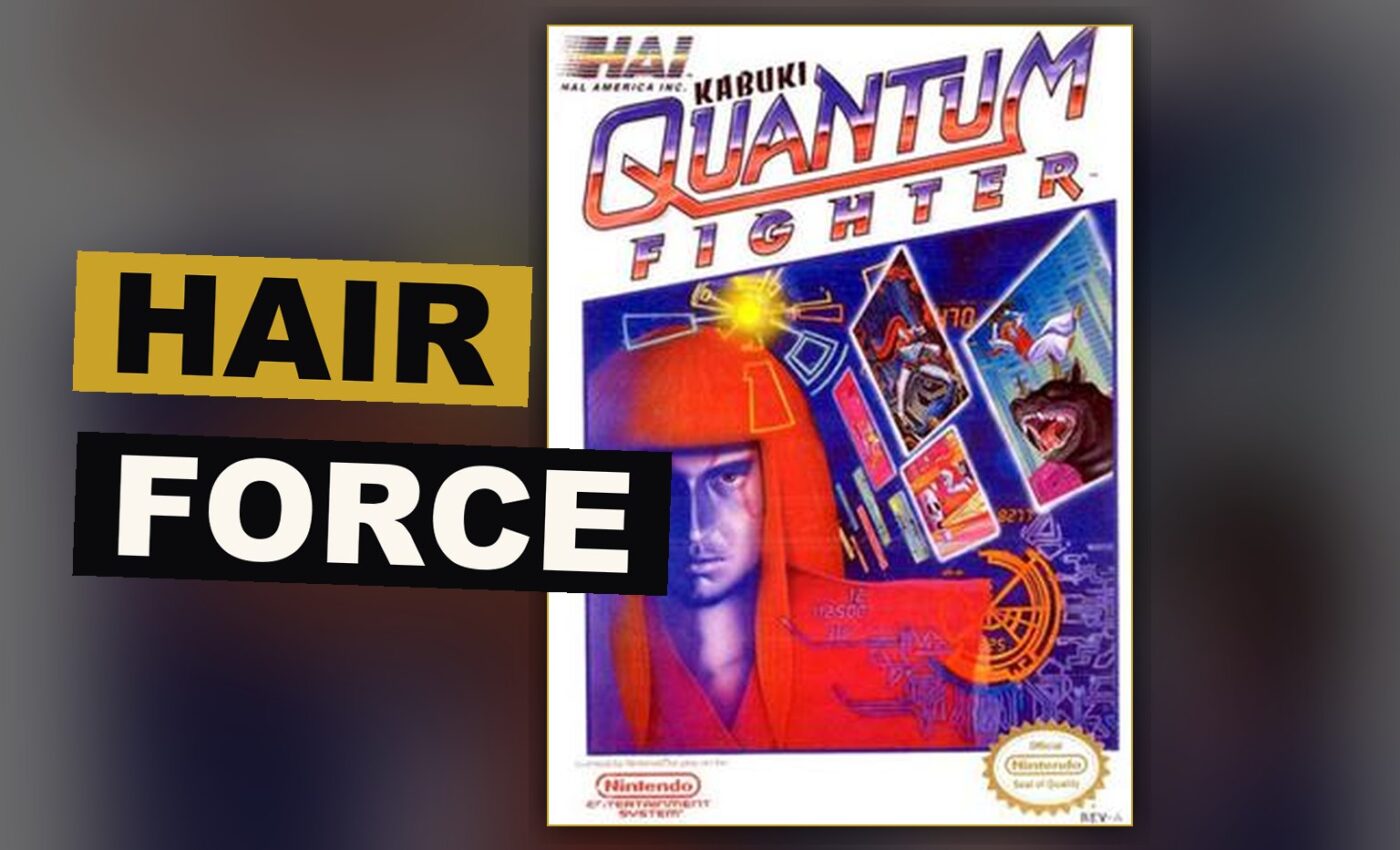
Kabuki: Quantum Fighter is a 2D action platformer developed by Human Entertainment and published by HAL Laboratory for the Nintendo Entertainment System. It came out in Japan on December 21, 1990, under the title Jigoku Gokurakumaru, reached North America in January 1991, and arrived in Europe on February 20, 1992. It never appeared on any other platform.
That last fact does a lot of work. By the time Kabuki: Quantum Fighter landed in North America, the Super Nintendo was already on shelves. This is a game built for hardware that was being retired, and it carries both the strengths and the limits of that position. It is also, for better and worse, the only version of this game anyone ever got.
A Colonel Named Scott O’Connor
The premise is nonsense in the best way. The year is 2056. A virus has appeared in the main defense computer of the planet Earth, and nobody knows where it came from or what it is. Players control Colonel Scott O’Connor, a 25-year-old military agent who transfers his brain into raw binary code using experimental technology, then enters the machine to fight the rogue program from inside.
When O’Connor gets into the system, his body takes the self-image of his great-great-grandfather, a kabuki actor. That is the whole joke of the title, and it is a good one. A military man becomes a stage performer because the computer renders him that way, and the game commits to the bit without winking at it.
The virus behaves like a real one once it is inside the virtual world. It leaves debris behind. It spawns mutant creatures. It builds parasite environments with a biological character, which means the insides of a defense computer look like something wet and alive rather than like circuits. That is a deliberate choice, and it is the source of most of the game’s atmosphere.
The Hyperion Probe
The final level explains the mystery. The virus is of alien origin. It was picked up by the lost Hyperion probe, which had been launched to a neighboring planet and never came home. O’Connor stops the virus before it can order the Hyperion to fire its laser weapons and destroy the human population.
This is a strong ending for a game of this vintage, because it ties the biological imagery to something concrete. The virus is not a metaphor and not a hacker with a grudge. It is something the planet dragged back from space on its own hardware, and the weapon that threatens everyone is the same probe that carried it home.
Hair, Chips and Quantum Bombs
The field is generally side-scrolling. Each level ends in a single room with a boss. O’Connor attacks with his long hair and with chip-based weaponry, which is the detail that separates Kabuki: Quantum Fighter from the dozens of other NES platformers that ask you to jump on things.
The chip weapons are the Energy Gun, the Fusion Gun, Quantum Bombs and the Remote-Controlled Bolo. That is a real arsenal, and it gives the combat more texture than the usual one-button attack. The hair is the signature move, though. A kabuki actor whipping his hair across a mutant in a computer is an image no other game on the system offers.
Kabuki: Quantum Fighter (Japanese: 地獄極楽丸, Hepburn: Jigoku Gokurakumaru) is a 2D platform game developed by Human Entertainment and published by HAL Laboratory for the Nintendo Entertainment System.
What Human Entertainment Got Right
Human Entertainment built a game that knows what it is. The side-scrolling field is clean and readable. The boss rooms give each level a clear destination. The weapon set gives players something to think about between jumps, and the biological corruption of the virtual world gives the art team room to make the computer look sick rather than sterile.
The kabuki self-image is not decoration either. It shapes how O’Connor moves and fights, and it gives the game a visual identity that survives the hardware. Plenty of NES platformers are interchangeable. This one is not.
Where the Hardware Holds It Back
The limits are real. A single-player game with a side view and no second character is a narrow design, and the NES could only carry so much of the biological detail the premise promises. The parasite environments and mutant creatures are described in the fiction with a richness the cartridge cannot fully deliver.
The release schedule did the game no favors. A North American launch in January 1991 put it directly against the console transition, and the European release on February 20, 1992, arrived even later. Kabuki: Quantum Fighter was exclusive to the NES by choice or by circumstance, and either way it was asking players to stay on old hardware.
The Score
Kabuki: Quantum Fighter is a 7.5 out of 10.
That number is fair. The game is a well-made NES platformer with a premise that is stranger and more specific than most of its peers, and it executes that premise with a clean side-scrolling field, a real weapon set and a final level that pays off the setup.
It is not a game that transcends its platform. The single-player, side-view structure is standard, and the fiction is richer than the hardware can show. But the kabuki self-image, the chip-based weaponry and the Hyperion reveal give it a personality that outlasts the console it was built for.
- Score: 7.5/10
- Developer: Human Entertainment
- Publisher: HAL Laboratory (HAL America Inc, Nintendo of Europe, Pack-In-Video)
- Platforms: Family Computer, Nintendo Entertainment System
- Japan release: December 21, 1990
- North America release: January 1991
- Europe release: February 20, 1992
- Genre: Platform
- Modes: Single player
- Perspective: Side view
The part worth watching is the premise. A 25-year-old colonel who puts his brain into binary code and comes out looking like his great-great-grandfather is the kind of idea that could have carried a worse game, and Human Entertainment built a good one underneath it. The 7.5 holds.
Get the Notebook.
The day's best stories and every fresh verdict, in plain English, in your inbox by seven. One email a day, no more.