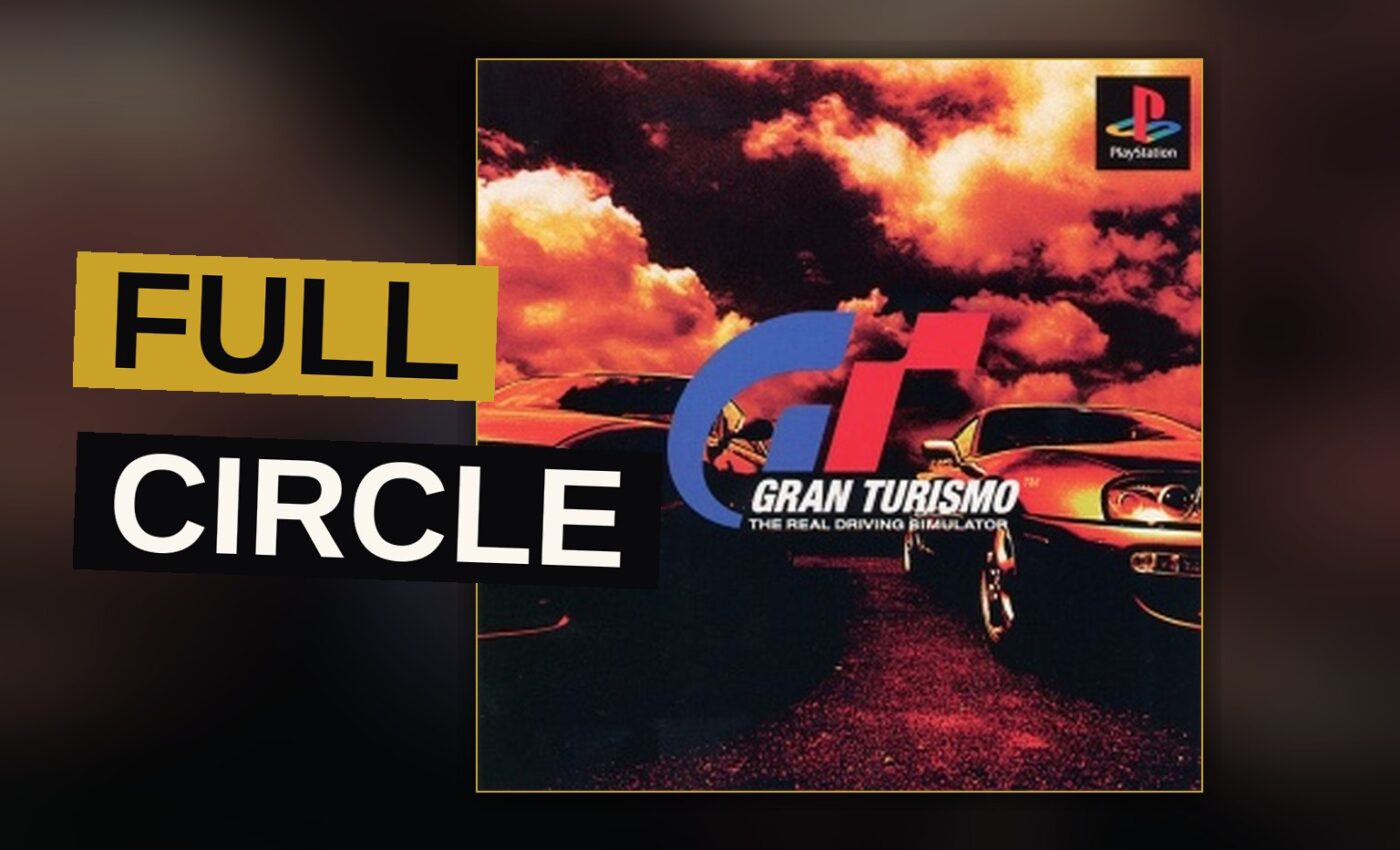
Gran Turismo took five years to make, shipped 10.85 million copies to become the best-selling PlayStation game, and averaged 95 percent in GameRankings’ aggregate, the highest of any racing game by the time that site closed in 2019. Kazunori Yamauchi directed it and Shuhei Yoshida produced it for Sony Computer Entertainment in 1997, and it is one of the few games of its era that publications still call one of the greatest ever made without hedging.
Two Modes
The structure is a split. Arcade Mode is racing for its own sake. Simulation Mode, called Gran Turismo Mode in Japan and the PAL regions, is the real game: you earn licenses, buy cars, tune them and work your way up through events. The license tests are the part players remember, because they are a driving school disguised as a game, and passing them is the moment Gran Turismo stops being about winning and starts being about driving well.
The DualShock
Gran Turismo was the first game built to fully support the PlayStation’s DualShock controller, analog sticks and rumble both. That mattered. Analog steering is the difference between a car that turns and a car that you turn, and the game’s whole appeal depends on that difference. The rumble told you what the tires were doing. Nobody had felt that on a console before.
Respect for the Machine
The cars are from real manufacturers and they behave like real cars, within the limits of 1997. Weight shifts. Front-drive and rear-drive cars feel different. Tuning changes the way a car takes a corner in ways you can feel through the stick. The game does not let cars take damage, which was a concession to the manufacturers and to the hardware, and it is the one place the simulation blinks.
The AI
You race against artificially intelligent drivers on a range of tracks, and the AI is the game’s weak point. Computer cars follow their line and do not much care that you are in it. Races are won by being faster over a lap, not by racecraft, and once your car outclasses the field the events become processions.
Where It Falls Short
The no-damage rule means walls are a tactic, not a punishment. The grind for credits in Simulation Mode is long, and the early cars are slow enough that the first hours test patience more than skill. And the game’s seriousness, which is its virtue, leaves little room for fun of the loud, arcade kind.
The Verdict
Gran Turismo started a series with more than ten sequels and spin-offs, and none of them changed the idea, because the idea was right. It treated a car as a thing worth understanding, and it built a game around that respect.
Get the Notebook.
The day's best stories and every fresh verdict, in plain English, in your inbox by seven. One email a day, no more.