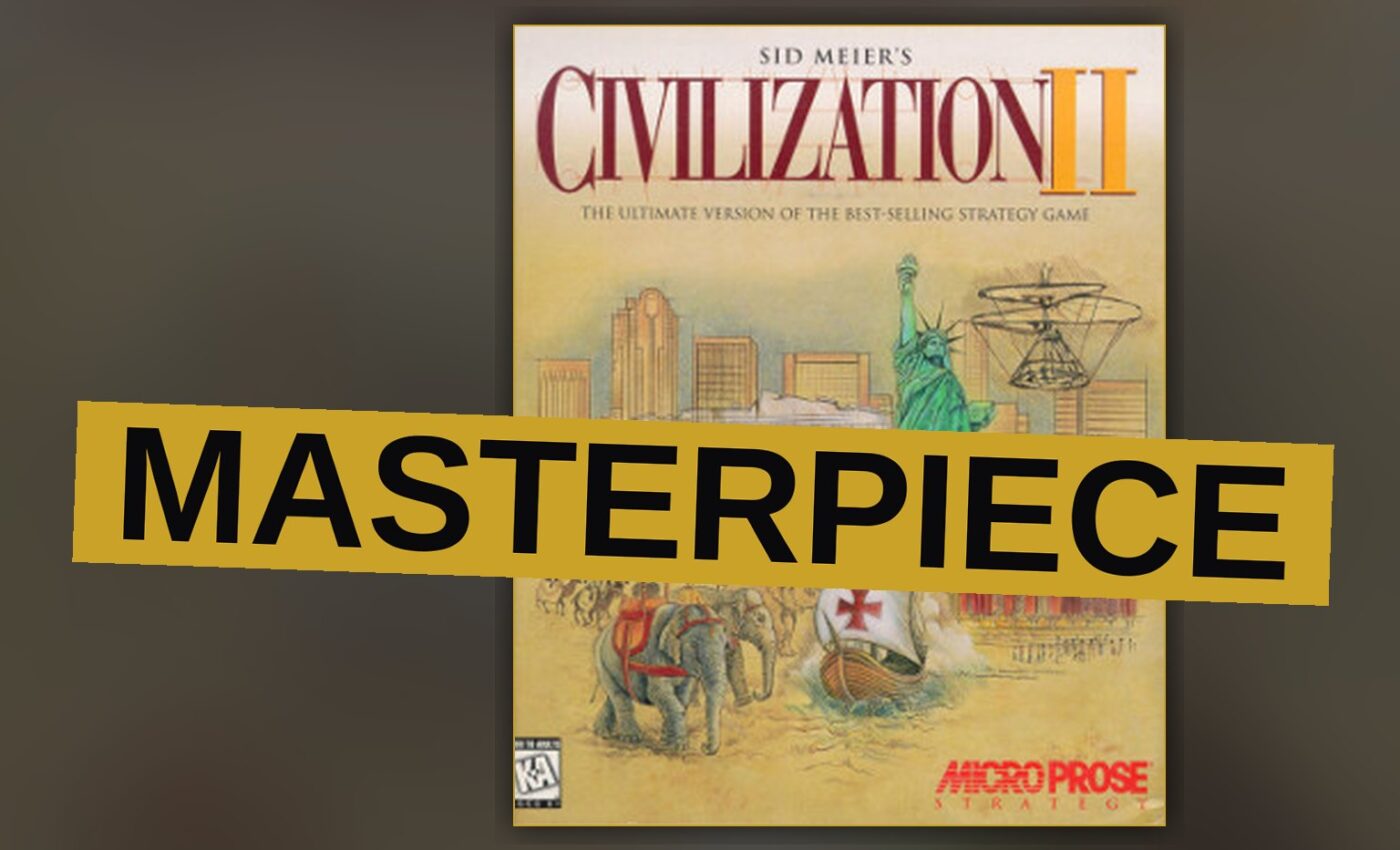
Sid Meier’s Civilization II arrived on PC in 1996, and Activision later carried it to the PlayStation. The port keeps the whole machine intact: you start in 4000 BC with a settler and a few units, build a civilization from a primitive tribe, and race rival empires to dominance.
Twenty-One Civilizations on a Tile Map
You pick from 21 historical civilizations or name your own. The roster runs from Americans and Aztecs to Vikings and Zulus, with barbarians roaming as NPCs. The computer controls multiple rival civilizations, and it does so intelligently — not as scenery, but as competitors that expand, negotiate and fight.
The map is made of tiles. You generate a random one to your specifications or take a pre-made map. Terrain types, special resources and improvements like irrigation sit on different tiles. Everything outside your starting units’ immediate vicinity is black. Exploration is the first job, and it stays a priority.
Cities, Units, and the Long Expansion
Cities occupy one tile and harvest food, trade and production from the tiles around them. They build units, city improvements or wonders of the world. Most civilizations expand constantly, founding new cities until the map is settled.
Units work like chess pieces. They vary in function, mirroring historical soldiers and occupations, and each occupies a tile and moves every turn. Most can attack; a minority handle non-military work.
- Americans, Aztecs, Babylonians, Carthaginians, Celts
- Chinese, Egyptians, English, French, Germans
- Greeks, Indians, Japanese, Mongols, Persians
- Romans, Russians, Sioux, Spaniards, Vikings, Zulus
Once civilizations make contact, diplomacy begins. War lets you take another civilization’s cities outright. The win conditions split cleanly: conquer everyone, or manufacture advanced space technology and leave the planet behind.
The Multiplayer Addon Changes the Math
Only single-player shipped at first. The Multiplayer Addon opened the game to human opponents, and that is where the design shows its teeth. A computer rival plays to its programming. A person reads your borders, times your weaknesses and lies to your face during negotiations. The same rules produce a different game.
Two Ways to Win, One Map to Settle
Conquest and the space race are not cosmetic endings bolted onto the same match. They pull the middle of the game in opposite directions. A player chasing space technology spends production on research and infrastructure while a warmonger spends it on units, and the map’s tiles decide which plan the terrain will actually support.
What the PlayStation Version Keeps
The PlayStation port holds the core loop without gutting it. Turn-based strategy this deep usually asks for a mouse and a desk. That it works on a console at all is the achievement worth naming. The scale is the point — three million units sold by 2001, awards, and a permanent place on best-games-of-all-time lists — and none of it comes from spectacle.
Civilization II was followed by Civilization III, which tells you what MicroProse built here: a foundation, not a one-off. The 4X loop of explore, expand, exploit and exterminate has been refined for three decades since, and the refinements have mostly been trimming. This is the version where the whole idea sits in plain view, unhurried, asking you to manage a civilization rather than watch one.
That patience is the review. Civilization II does not flatter the player with animation or story. It hands over a map and a settler, then gets out of the way. The PlayStation release proves the design never depended on the platform.
Score: 9.33 of 10.
Get the Notebook.
The day's best stories and every fresh verdict, in plain English, in your inbox by seven. One email a day, no more.