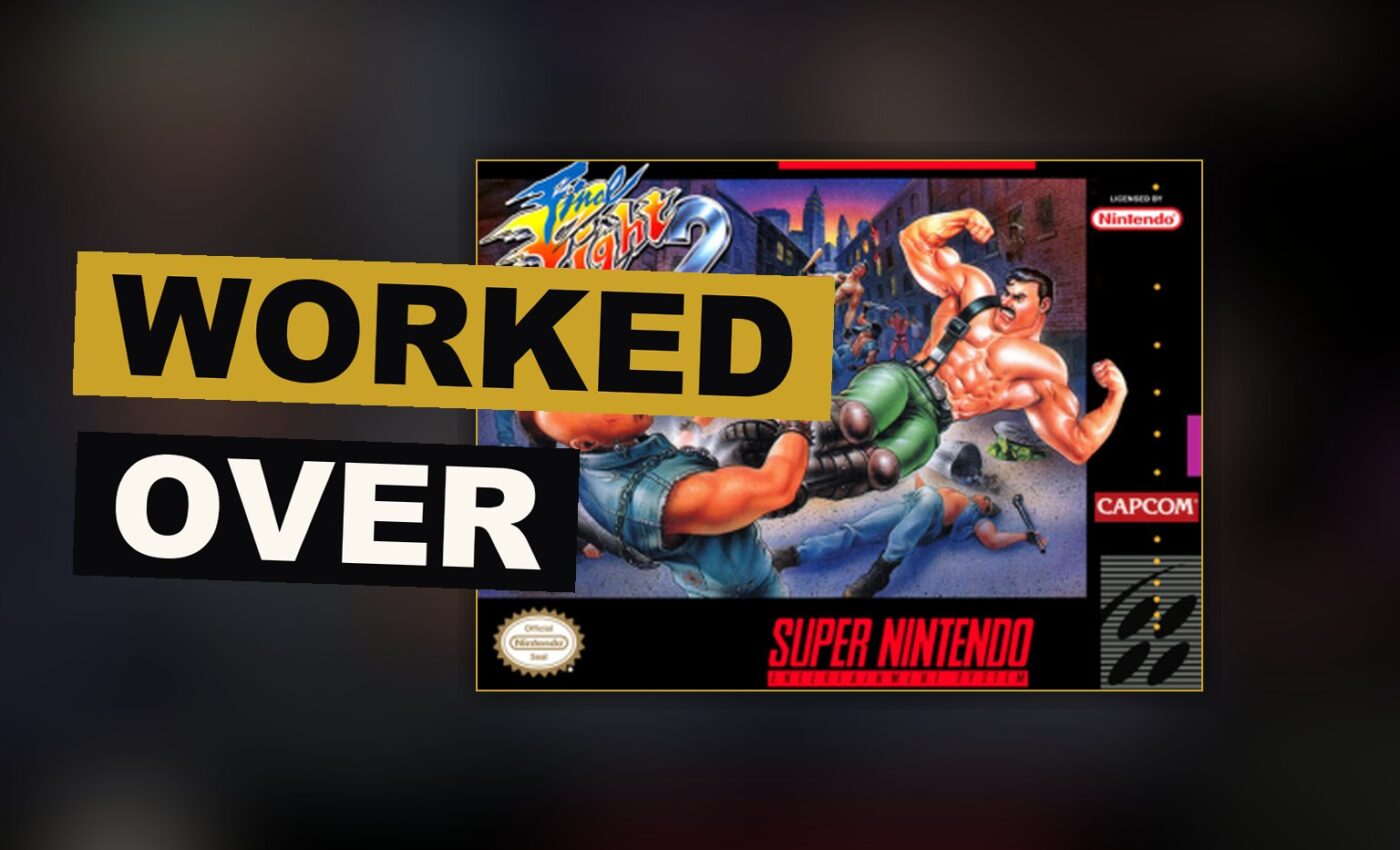
Final Fight 2 landed on the Super Nintendo Entertainment System in 1993 with no arcade version behind it. The original Final Fight was a coin-op first. This one was built by Capcom’s consumer division for the home console, and that fact shapes everything about it.
Haggar Returns Without Cody or Guy
The first thing to know is who’s missing. Cody and Guy, the other two heroes of the 1989 original, are gone. Only Mike Haggar, the wrestling mayor of Metro City, comes back as a playable character.
Capcom replaced them with two new fighters. Carlos Miyamoto is a South American martial artist of Japanese descent who carries a sword for his Special Move. Maki Genryusai is a female master of the fictional Bushin-ryū Ninpō school, which makes her a close match for Guy’s style from the first game.
The plot gives them a reason to travel. The surviving Mad Gear gang members have regrouped under a new leader named Retu and kidnapped Guy’s fiancée Rena and her father Genryusai, who was Guy’s former sensei. Maki is Rena’s younger sister. She calls Haggar, and he brings Carlos along.
Two Players, Six Stages, Three Characters
The biggest upgrade over the Super Nintendo port of the first game is cooperative play. Final Fight 2 supports two-player simultaneous action, a feature the earlier home version lacked. A code lets both players pick the same character if they want.
Each fighter has their own set of techniques. Haggar uses professional wrestling moves. Maki fights with ninjutsu. Carlos swings a sword. The core loop stays the same as the original: two main buttons for Attack and Jump, press them together for a Special Move, and a third button can be assigned to that move instead.
You fight through six stages, each set in a different Eurasian location:
- Hong Kong
- France
- Holland
- England
- Italy
- Japan
The order matters because the trail builds toward the finale. After the fights across Asia and Europe, the three heroes reach Japan and face Retu. They beat him, rescue Genryusai and Rena, and Guy writes a letter from abroad thanking them.
Breakable Drums and a Guy Doll
The stage design sticks close to the first game. You clear out underlings, then hit a boss at the end of each area. Food items and bonus points hide inside breakable drums and barrels.
Three weapons can be picked up: a tonfa, a piece of lumber and a knife. There are also two special items. A Genryusai Doll makes you invulnerable for a limited time. A Guy Doll gives you an extra life.
Recurring enemy types show up throughout, just as they did in the original. The structure is familiar on purpose. Capcom did not rebuild the formula here.
Where the Sequel Falls Short
Final Fight 2 does not deviate much from the original in terms of gameplay. In this paper’s view, that is the game’s central limit. The sequel adds a second player and two new fighters, but it does not add a new idea.
The six stages are distinct places, yet they run on the same beat: waves of enemies, then a boss. The weapons and dolls are nice finds, but they don’t change how a stage plays. The tonfa, the lumber and the knife are variations on a single action. The Genryusai Doll buys you time. The Guy Doll buys you a life. Neither asks you to think differently.
What Capcom got right is the roster. Maki is the most interesting addition. Her Bushin-ryū style gives the game a second fast fighter alongside Haggar’s slower grappling, and she ties directly into the plot through her sister and father. Carlos is thinner by comparison. The source notes his sword for the Special Move and little beyond that.
This paper’s assessment is that the two-player mode is the strongest reason to pick this over the first Super Nintendo release. Beat ’em ups live on shared screen time, and the earlier port had no cooperative mode at all. Final Fight 2 fixes that.
Capcom followed with Final Fight 3, another Super Nintendo-exclusive sequel, which brought Guy back. None of the new characters from Final Fight 2 returned, though Maki showed up in various Capcom fighting games years later. That tells you how the company viewed this cast. One character survived the trip. The rest did not.
The 2009 Virtual Console release on Wii gave the game a second life worldwide. That re-release matters because Final Fight 2 is easy to skip in a series history. It sits between the landmark original and the more ambitious third entry, and it does not try to top either.
What the Sequel Gets Done
Final Fight 2 is a competent sequel that plays it safe. The cooperative mode and Maki Genryusai justify the trip. The rest is the first game with a new map and a new boss. Capcom built a solid beat ’em up for the Super Nintendo Entertainment System and stopped there.
That restraint is not nothing. The combat holds up, the six stages move at a good pace, and the two-player option turns a solo grind into something worth sharing. But a direct sequel should push past its source, and this one mostly repeats it. The drums, the barrels, the weapons and the boss pattern all return unchanged.
Get the Notebook.
The day's best stories and every fresh verdict, in plain English, in your inbox by seven. One email a day, no more.